Browse

Log in / Register
 Share

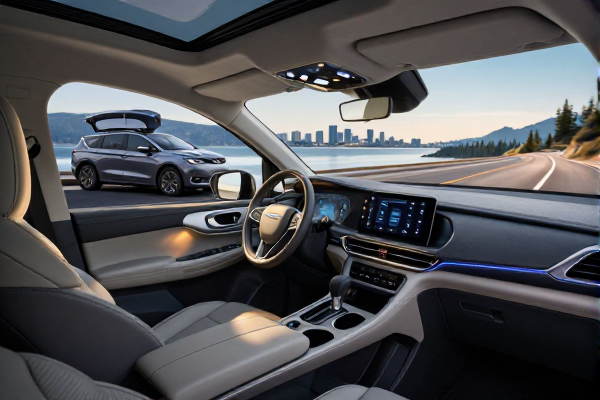
As of July 2026, Chrysler continues to bet its entire brand on a vehicle many thought would have faded into history: the minivan. The 2027 Chrysler Pacifica, refreshed with sharper styling and higher-end trims, arrives at a time when SUVs and crossovers have swallowed the family-car market. Yet Chrysler, which has no other models in its lineup, is doubling down. Does the Pacifica still make sense for modern families, or is it a nostalgic relic clinging to a shrinking niche? A recent family road trip put the updated van to the test.
The minivan’s association with motherhood is both its legacy and its curse. When the Dodge Caravan and Plymouth Voyager launched in 1983, they redefined family transportation. But by the early 2000s, the “minivan mom” label became a stigma, and buyers fled to SUVs that offered a similar interior space with a more rugged image. Today, only four traditional minivans remain on the U.S. market: the Toyota Sienna, Honda Odyssey, Kia Carnival, and the Chrysler Pacifica. Among them, Chrysler still leads in sales—a surprising feat given that the brand has no other vehicles to drive foot traffic.
For 2027, Chrysler focused its updates on higher trim levels, aligning with the brand’s long-term plan to move upscale. The base model starts just above $40,000, but the average new-car transaction price in June 2026 was $49,758, according to Kelley Blue Book—so most buyers will naturally gravitate toward the pricier trims. The most visible change is the front fascia, now more angular with full-width LED headlights. The Chrysler badge itself is now illuminated, a detail borrowed from recent concept cars. Higher trims also get 20-inch wheels that give the van a more planted stance. The color palette now includes Hydro Blue, a vibrant shade that stands out in a sea of silver, white, and black.
During a week-long trip from Vermont to New York, the Pacifica proved remarkably easy to maneuver for a vehicle its size. Parking on a crowded ferry was no problem, and the steering is light enough for tight city streets. The ride is composed, though not sporty. The V6 engine provides adequate power, and the nine-speed automatic shifts smoothly. Interior space remains a strong suit: the Stow ’n Go seats fold into the floor, a feature competitors still envy. The updated infotainment system includes wireless Apple CarPlay and Android Auto, plus a larger touchscreen on higher trims.
Where the Pacifica falls short is in the premium feel Chrysler is chasing. The cabin materials, while improved, still lag behind the Honda Odyssey’s upscale touches in the Touring trim. The Kia Carnival offers a more modern dashboard design and a better warranty. And the Toyota Sienna comes standard with a hybrid powertrain that delivers 36 mpg combined—far better than the Pacifica’s 19 city and 28 highway. Chrysler has not announced any hybrid or electric plans for the Pacifica beyond the existing plug-in hybrid model, which has limited range and is not available on all trims.
Chrysler brand chief Matt McAlear acknowledged that no one grows up with a minivan poster on their wall. The goal is to make the Pacifica desirable enough that buyers choose it for both rational and emotional reasons. The refreshed design and premium touches help, but the brand’s next moves will be critical. Chrysler has promised new vehicles that will elevate the brand, including a potential electric crossover. For now