Browse

Log in / Register
 Share

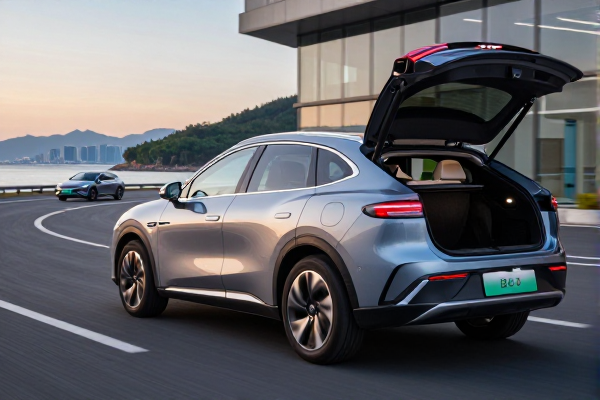
Editor's Note: The following analysis is based on the latest data and trends as of September 15, 2026. It examines how Chinese new-energy vehicles (NEVs) are navigating geopolitical headwinds and consumer preferences to become a dominant force in global markets.
Chinese NEVs are rewriting the rules of global auto competition. While US and EU tariffs try to slow them down, demand for Chinese electric vehicles (EVs) continues to surge. In Bangkok, long lines still form at BYD booths. In Brazil, a BYD factory just rolled out its 100,000th car. And in Europe, Chinese brands sold 138,000 vehicles in May 2026 alone—up 64% year-over-year.
These numbers tell a story of resilience and strategy. Since 2020, China’s NEV exports have jumped from just 69,000 units to 2.6 million in 2025—a 36-fold increase. The country’s total vehicle exports hit 7.1 million last year, making China the world’s largest auto exporter. And the momentum hasn’t stopped: In the first seven months of 2026, exports reached 6.14 million vehicles, up 66.8% from the same period in 2025.
Why are Chinese NEVs winning despite tariffs? The answer lies in three pillars: product quality, pricing strategy, and ecosystem globalization.
First, the vehicles hitting overseas markets are not cheap entry-level models. They are mid-to-high-end cars that have already been battle-tested in China’s hyper-competitive domestic market. For example, XPeng’s MONA L03 launched simultaneously in Munich and China in July 2026. BYD’s ATTO 3, sold as Yuan PLUS in China, costs about $16,500 domestically but commands over $41,000 in Europe. This premium pricing reflects a shift in brand perception: “Made in China” now signals advanced technology and reliability.
Second, Chinese automakers are localizing aggressively. SAIC has set up R&D teams in Europe and Southeast Asia, adapting vehicles to local regulations and road conditions. BYD operates a full supply chain in Brazil, from lithium iron phosphate battery processing to final assembly. Geely invested in Malaysia’s Proton, providing tech and management know-how. These moves go beyond simple exports—they build deep roots in foreign markets.
Third, the ecosystem is expanding. Stellantis partnered with Leapmotor on electric powertrains. CATL and UK’s Octopus Energy launched a joint venture to bring Chinese battery-swapping technology to Europe. Such collaborations show that Chinese EV technology is becoming a global standard, even in markets where direct sales face barriers.
But the road is not smooth. Turkey slapped a 40% additional tariff on Chinese EVs in 2023. The EU imposed countervailing duties of up to 35.3% in 2024. The US followed with a 100% tariff on China-made EVs in 2024, and Mexico added up to 50% tariffs on passenger cars from non-FTA countries in 2026. These measures are designed to protect domestic industries, but they also force Chinese automakers to innovate.
“Different regions present different challenges. This is an inevitable stage of global expansion—a comprehensive test and a chance to learn,” said Luo Hao, assistant to the general manager of BYD’s branding and public relations department.
Exclusive insight: How US tariffs are reshaping Chinese EV strategy
For American readers, the key question is whether Chinese NEVs will ever enter the US market at scale. Currently, the 100% tariff makes direct exports nearly impossible. But Chinese brands are finding alternative routes. BYD plans to set up 6,000 flash-charging stations overseas by March 2027, including locations in North America through partnerships. Meanwhile, Chinese battery makers like CATL are supplying US automakers directly, embedding Chinese technology inside American vehicles.
Industry analysts note that the US tariff may actually accelerate Chinese investment in third countries. For example, BYD’s factory in Brazil could serve as a hub for exports to the Americas, bypassing direct China-to-US shipments. Similarly, Geely’s Proton partnership in Malaysia gives it a tariff-free entry point into Southeast Asia and beyond.
Consumer evidence: Real-world impact
In Rio de Janeiro, office worker Lucas switched from used cars to a Chinese NEV. He says the compact design fits narrow streets, and low charging costs cut his living expenses. In South Africa, roadside assistance business owner Shane replaced his unreliable older cars with a Chinese EV, keeping his business running smoothly. These stories highlight a key advantage: Chinese NEVs deliver affordable, reliable mobility for everyday users in emerging markets.
What’s next?
At the end of 2025, FAW-Volkswagen produced its 30 millionth vehicle, Chang’an Automobile hit 30 million Chinese-brand vehicles, and total annual auto production and sales both exceeded 31 million units. BYD overtook Tesla in 2025 as the world’s largest EV seller, and founder Wang Chuanfu reiterated the goal of becoming “No. 1 globally” in scale within five years.
Chang’an plans to open more than 1,000 sales and service outlets in Europe by 2030. BYD aims to have 6,000 flash-charging stations overseas by March 2027. These investments show that Chinese automakers are playing the long game.
The bottom line: Chinese NEVs are not just overcoming tariffs—they are using them as a catalyst for deeper localization and smarter global strategies. The shift from “Made in China” to “Created in China, built for the world” is already underway. For US consumers, the question is not if Chinese EVs will arrive, but when and in what form. As the global auto industry pivots toward green, smart mobility, Chinese players are proving they can lead the race.
*This article is