Browse

Log in / Register
 Share


As of April 26, 2026, Australia’s Albanese government is still driving hard toward an all-electric future without a security roadmap for the cars themselves. The contradiction is becoming hard to ignore: Canberra’s climate agenda demands record numbers of connected vehicles, yet Canberra has not put in place anything close to the national-security guardrails Washington now treats as standard.
The result is a policy collision in slow motion. On one side, an aggressive climate architecture that treats electric vehicles as a near-mandatory abatement lever. On the other, a stunning absence of controls on the sovereign and cyber risks embedded in Chinese-made software, telematics, and remote vehicle systems.
The Climate Change Authority has been blunt about what hitting Australia’s 2035 emissions target would require. Half of all light vehicles sold would need to be electric. The cumulative effect would put more than 5 million EVs on Australian roads in less than a decade.
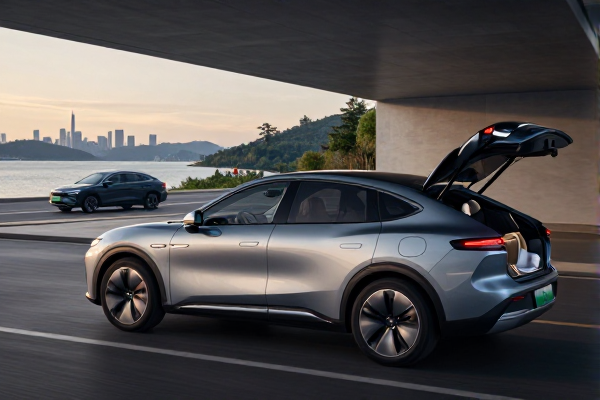
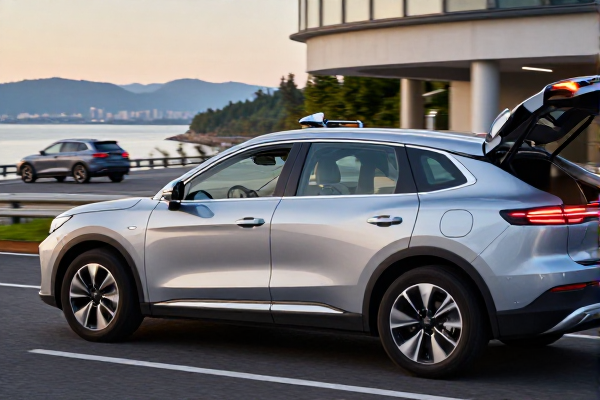
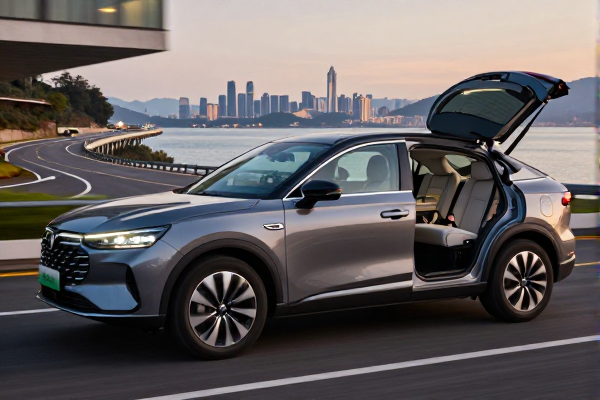
That number is not an abstraction. Each EV is effectively a smartphone on wheels, with constant data connections to the manufacturer, cloud services, and over-the-air update servers. When the majority of those vehicles are produced by companies operating under Beijing’s state and security apparatus, the data flow becomes a strategic question.
Australia has not asked that question. The government has not established a formal certification process for connected-vehicle software from high-risk vendors. It has not restricted the transfer of sensitive telemetry from Australian roads to offshore data centers. It has not even produced a public threat assessment of Chinese EV platforms through the National Intelligence framework.
This is where Australia’s inaction becomes a cautionary tale for U.S. readers. The United States has spent the past several years building a legal wall around Chinese connected-vehicle technology. The Department of Commerce’s connected-vehicle rule, finalised in 2025, prohibits the import or sale of vehicles with Chinese or Russian hardware and software for critical systems. It was a direct response to intelligence assessments that such vehicles could help Beijing locate, track, and potentially immobilize targets.
Washington did not wait for a cyberattack to justify the rule. It looked at the architecture of modern EVs — GPS, cabin microphones, driver monitoring, emergency braking, and remote shutdown capabilities — and concluded that the risk was too great to leave to market forces.
Australia, by contrast, has no equivalent screening mechanism. There is no ban, no sunset date, no conditional approval process. There is only a climate target that quietly assumes Chinese EVs will fill the gap because they are cheaper than most Western alternatives.
What makes this more politically loaded is who is expected to pay for Australia’s EV transition. The government’s own modeling assumes tradies and farmers — the people who depend on diesel-powered utes and tractors for their livelihoods — will absorb a disproportionate share of the adjustment burden. Fuel taxes and vehicle levies are the background pressure valves that make EV subsidies and infrastructure spending look affordable on paper.
In other words, the security risk is not being neutral or evenly distributed. The policy effectively asks diesel-dependent tradespeople and agricultural regions to underwrite a transition whose primary vehicle supply is dominated by a geopolitical rival. That is not a climate strategy. That is a subsidy chain with no security gate.
Australia also faces a sovereign risk that goes beyond data collection. In a crisis, a connected vehicle can become a remote-controlled asset on domestic roads. U.S. national security officials have warned that Chinese-owned EV networks could be used for surveillance, for logistics disruption, or as a force multiplier in an adversary’s asymmetric toolkit.
Australia’s strategic posture increasingly depends on its alliance with the United States. But on the road, Canberra is opening the back door. Chinese telematics in critical electric infrastructure, charging networks, and fleet logistics is not a theoretical future threat. It is the present reality of the EV market pipeline.
The Albanese government has not even required manufacturers to provide a clear legal chain of custody for vehicle software code. That is a glaring omission given the Australian federal government already holds security-of-infrastructure powers over ports, energy grids, and telecom networks. A connected vehicle is arguably more intrusive than any of those, and yet it is almost entirely outside the current risk framework.
A responsible policy would start with three steps. First, commission and publish an unclassified threat assessment of Chinese EV platforms, similar to what the U.S. intelligence community has already done. Second, establish a minimum security standard for connected-vehicle data storage and cross-border transfer, mirroring the Commerce Department’s critical-system restrictions. Third, require EV importers to disclose all software dependencies, remote access tiers, and emergency control protocols before market approval.
None of these steps would kill Australia’s climate target. They would simply make the target compatible with national security. The Climate Change Authority’s 2035 pathway could still be met with diversified supply chains, stronger verification, and clearer accountability.
Australia’s EV transition is marching to a clock. The 2035 target is not far away, and the manufacturing pipeline for Chinese EVs is already deep. Delaying security regulation until after the market is saturated would be a disorderly and costly fix. The United States has shown that prevention is cheaper than retroactive control.
The Albanese government likes to describe its climate policy as both responsible and urgent. But there is nothing responsible about mandating millions of connected vehicles while ignoring the security implications. Urgency cannot be an excuse for blindness.
Canberra still has room to steer away from this collision. The question is whether it will learn from Washington before the first 5 million Chinese-connected cars turn Australia’s roads into a data stream with no security firewall.