Browse

Log in / Register
 Share
Share
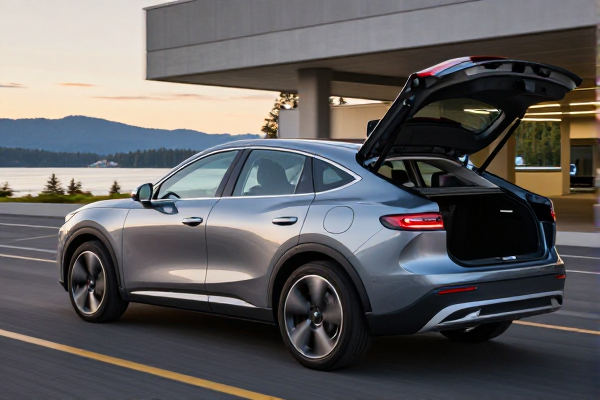
As of Feb. 27, 2025, a YouTube experiment is making EV enthusiasts rethink backup power. Creator Efficient Alex connected his Chinese-made Leapmotor B10 crossover to his home and ran the whole house for 24 hours without touching the main power supply. The SUV did not just keep the lights on; it handled the fridge, dishwasher, oven, microwave, and even an afternoon drive.
V2L stands for Vehicle-to-Load. It is a feature that allows an EV's high-voltage battery to send alternating current through standard outlets inside or outside the car. For years, this was mostly used for camping trips or powering tailgate parties. But the Leapmotor B10 test takes the idea into an entirely different territory: the whole house.
Alex did not use a home battery or a solar array. He simply switched off the utility feed and linked the electric car to his electrical panel through a dedicated V2L adapter. That turned the car into a temporary off-grid power source for every standard wall socket in the house.
The guiding rule was simple: he would not change his normal routine during the test. If he wanted coffee, he brewed it. If he wanted to vacuum, he vacuumed. The point was to see whether the car could support a regular family schedule rather than just a carefully rationed emergency drill.
That distinction matters. During a power outage, most people immediately cut back on their energy use. Alex went the opposite direction. By refusing to alter his daily habits, he created a more realistic, higher-stress test for the vehicle.
The car did not have a quiet night, either. Fridges cycle all day long, dishwashers demand a sudden burst of heat, and ovens run for extended periods. These are exactly the loads that stress portable generators and tiny home battery units.
Alex reported that the refrigerator kept its internal temperature right where it should be. That means the compressor never struggled or pushed stored food into the danger zone. Maintenance of correct temperature is one of the best tests of steady electrical supply, since a voltage drop can make the compressor work longer and harder.
The dishwasher produced clean dishes. The vacuum cleaner had full suction. The oven heated up normally, and Alex cooked a full dinner without any issues. If the frequency or voltage from the car had drifted, modern appliances would likely have shut down, flashed warning codes, or underperformed. None of that happened.
The YouTuber also monitored temperatures and appliance performance during the test. Some people assume that running everything through an EV means weaker power or flickering voltage. The B10 showed otherwise.
The most impressive part of the experiment was consumption. During the 24-hour period, Alex also drove the car about 15 miles. At the end, the battery had dropped from 100 percent to 76 percent.
That means a full day of home electrical use, including heated meals, hot water from the dishwasher, cold-food protection, and a decent drive, consumed only around one-quarter of the car's battery capacity.
For context, an average U.S. home uses between 30 and 50 kilowatt-hours per day. If the B10 consumed roughly that amount, the battery is enough to keep a typical household running for nearly two days without driving. And if you skip the daily commute, you could stretch that even further.
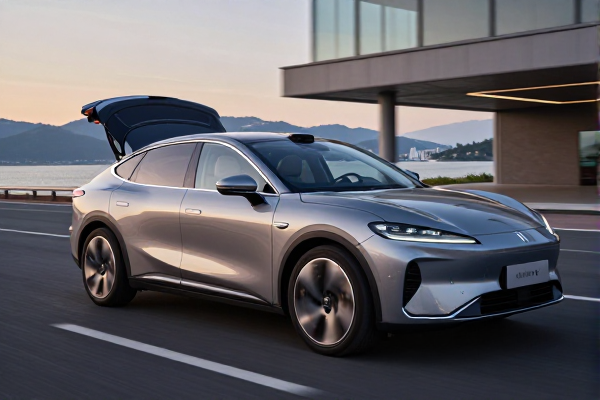
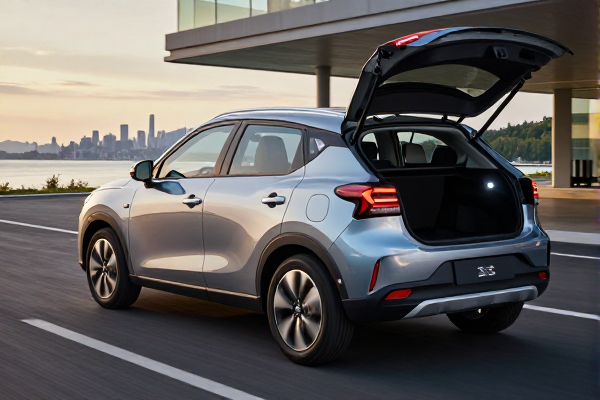
The Leapmotor B10 is a compact electric SUV built in China and recently introduced in several European markets. It sells for about $41,600, which undercuts many Western rivals in terms of price and standard equipment.
The company behind it, Leapmotor, has been rapidly expanding abroad through a joint venture with Stellantis, the global parent of Jeep, Peugeot, and Ram. That gives the Chinese brand a significant distribution and service advantage over some other emerging EV makers.
The B10 is not available in the United States. High tariffs on Chinese vehicles and federal tax credit rules that require North American final assembly make a near-term launch unlikely. Still, it offers a clear look at how good modern V2L technology has become.
The Leapmotor B10 might not be a U.S. model, but the same capability is slowly arriving in garages across America.
Ford's F-150 Lightning includes Pro Power Onboard, with multiple outlets strong enough to run tools or home appliances. Hyundai, Kia, and Genesis offer V2L adapters in several electric models. Tesla's Cybertruck and some newer products include built-in outlets designed for practical use, not just camping.
In fact, several automakers are starting to market bidirectional charging, where an EV can either power your home or even send electricity back to the grid. That goes a step beyond V2L, but it is proof that the concept of “your car as a power plant” is now in the mainstream.
The U.S. Department of Energy has spent years studying vehicle-to-everything, or V2X, technology. The agency has pointed out that EVs could serve as backup power for individual households and help stabilize the grid during storms or peak demand events.
But the DOE also cautions that a safe connection requires certified hardware. You cannot simply run an extension cord from the car's outlet into your breaker panel. Proper electrical isolation, like a transfer switch, prevents power from feeding back onto utility lines, which would put lineworkers at risk and damage household electronics.
For anyone considering this setup, the safest path is a manual transfer switch, a properly rated V2L adapter, and a clear understanding of the car's maximum continuous output.
Here is the honest answer: an EV is excellent for emergency power, but not ideal as a long-term household powerplant.
For a 24-hour outage, or even a multiday emergency, an EV can keep refrigerators running, charge phones, power heating systems, and run medical devices with far fewer emissions and noise than a gasoline generator. It also avoids the carbon monoxide risks that come with running a gas engine indoors or too close to windows.
However, there are clear limits. If the grid goes down for several days, the EV will eventually need recharging. Public fast chargers may be offline or jammed after a regional disaster. Without a solar array at home, there is no easy way to refill the battery.
Battery health is another concern. Repeatedly drawing high power over long periods may accelerate degradation of the high-voltage pack. And if you still need your car for commuting, draining its battery to support your house could leave you stranded just when roads become unsafe.
There is also the question of surge loads. Most V2L systems handle resistive loads like heaters, toasters, and kettles without trouble. But motor-heavy equipment such as central air conditioning, heat pumps, and large well pumps may require more starting current than the car can provide. Smaller appliances are generally fine.
The Leapmotor B10 test proves that an EV can carry a modern home for days at a time, not just for a YouTube stunt. Alex kept his normal lifestyle intact, used heavy appliances, drove 15 miles, and still had 76 percent battery left after 24 hours.
That is not a niche trick. It is the kind of feature that could change how families prepare for hurricanes, wildfires, and grid failures.
So, should you trade in your gas generator for an electric car? Not yet, not if you need power for weeks at a time. But as batteries get bigger and bidirectional technology improves, the family SUV is becoming the backup generator you already own.
Until Chinese EVs like the Leapmotor B10 reach American showrooms, buyers can already find V2L on domestic options like the Ford F-150 Lightning and Hyundai Ioniq 5. And after seeing a Chinese crossover power an entire house with plenty of energy left over, it is easy to see why automakers are betting on this trend.