Browse

Log in / Register
 Share
Share
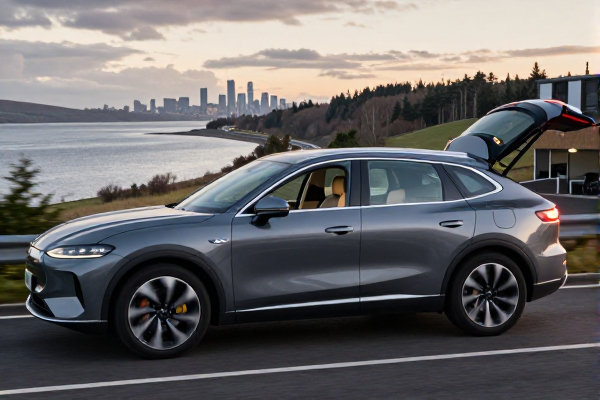
September 15, 2026 — European officials have reportedly told Prime Minister Andy Burnham that the UK must impose tougher tariffs on Chinese-built cars if it wants to avoid new “made in Europe” trade barriers. The warning, first reported by the Financial Times, puts Downing Street under fresh pressure to align its economic policy with Brussels or risk losing preferential access for British-made vehicles and components.
According to the FT, the EU’s clearest suggestion to London is that joining the bloc’s customs union would remove most of the friction caused by the incoming “made in Europe” rules. But that would mean aligning UK tariffs with EU policy — including the 45% duties Brussels has placed on Chinese-built cars since 2024. The UK chose not to copy those tariffs.
One EU official told the FT: “A customs union would solve most of the problems of ‘made in Europe’, and also the question of tariff differences, which leads to fears the Chinese could avoid our tariffs by routing through the UK.”
That concern is now central to EU-UK talks, even as Burnham insists Britain wants to be treated as a “trusted partner” rather than a peripheral market.
The term “made in Europe” is not just a label. It is the legal passport for incentives under the EU’s Industrial Accelerator Act. The rules are designed to protect European manufacturers and favour products built inside the bloc over Chinese imports. UK-made cars, including the Nissan Leaf, and many British components currently fall outside that definition. That means they would not qualify for the same incentives and could quickly lose competitiveness against EU-built rivals.
The timing adds urgency. From 2027, new post-Brexit rules of origin will apply a 10% tariff on UK electric vehicle exports to the EU, and a similar charge on EU EVs entering Britain. Industry leaders warn that this would push up showroom prices on both sides of the Channel and damage manufacturing on a much wider scale.
The Society of Motor Manufacturers and Traders (SMMT) estimates that the current trajectory puts €24 billion of economic activity at risk — the value generated by passenger car imports and exports between the EU and UK. That is not just a UK problem, says the SMMT. European manufacturers also rely on British supply chains, components and final assembly.
SMMT chief executive Mike Hawes said: “The EU is rightly focused on strengthening its industrial base, but the UK remains fundamental to Europe’s automotive ecosystem and is therefore essential to that ambition. Excluding the UK from ‘Made in Europe’ would be an own goal, weakening competitiveness, reducing scale and limiting consumer choice.”
His message is aimed at both Brussels and London: the UK wants a seat at the table, not a tariff wall between its plants and its largest export market.
The political math is complicated. Chinese brands have grown rapidly in Britain since the UK declined to follow the EU’s tariff route. In August 2026, they accounted for nearly 16% of new car registrations. That has made them increasingly popular with UK buyers, but Brussels sees this as a loophole.
EU officials fear Chinese manufacturers could use the UK as a backdoor into the single market. Lower UK tariffs would allow Chinese cars to land in Britain, potentially receive some local processing, and then cross into Europe under looser conditions. Anti-circumvention rules are already a major focus of the Industrial Accelerator Act, and the EU is determined to close that route.
Trade policy analysts say the real issue is not the headline 10% tariff scheduled for 2027, but the EU’s broader definition of origin. If UK-assembled cars contain Chinese batteries or key components, they may not qualify as sufficiently “European” — even under a future agreement. That could hit every British EV factory much harder than any single tariff.
Full customs union membership appears unlikely in the short term, as it would force the UK to surrender independent trade policy. But some trade lawyers following the dossier argue that a narrow automotive agreement could work. Under that model, the UK would adopt EU tariff rates for Chinese EVs only, without joining the wider customs union. In return, Brussels would recognise UK-built cars as “made in Europe” for incentive purposes.
Such a deal would be politically sensitive. It would mean raising tariffs on Chinese cars sold in Britain, which could slow the rapid growth of Chinese brands in the UK market. Yet the alternative may be worse: exclusion from EU incentives, a 10% tariff on EV exports from 2027, and steadily declining competitiveness for British plants.
No formal UK response has been published. Downing Street has repeated its line that Burnham wants a co-operative relationship with the EU, particularly on industrial policy. But the FT report suggests Brussels expects a concrete decision soon.
The stakes are clear. The UK automotive industry has one of Europe’s strongest assembly networks, from Nissan in Sunderland to Jaguar Land Rover and the wider supply chain. If the EU treats those factories as outsiders, production volume will fall, costs will rise, and consumers will pay more.
For now, the ball is in the UK’s court. The question is how far London is prepared to go to keep its cars inside Europe’s protective walls. The answer will shape the industry well beyond 2027.