Browse

Log in / Register
 Share

October 17, 2025 – Beijing has unveiled a sweeping industrial roadmap that positions 6G communications, quantum computing, advanced robotics, brain-computer interfaces, and even nuclear fusion as the country's next economic pillars by the end of the decade. The announcement, made by Vice-Minister of Industry and Information Technology Xin Guobin, also signals a renewed push to rein in price wars and overcapacity in the domestic electric vehicle market.
Speaking at a State Council Information Office press conference on Wednesday, Xin emphasized that China will accelerate the development of "new quality productive forces" by integrating technological breakthroughs with industrial innovation. The goal is to transition from a manufacturing-driven economy to one powered by cutting-edge technologies, amid mounting headwinds from a sluggish property sector, weak consumer demand, and global trade tensions.
The Ministry of Industry and Information Technology (MIIT) outlined six priority sectors: next-generation 6G networks, quantum information technologies, brain-computer interfaces, embodied AI for robotics, advanced manufacturing materials, and controlled nuclear fusion. "These are not just research projects — they are the future engines of China's growth," Xin said.
Liu Yulin, head of the ministry's information and communications development department, described 6G as a "top priority" and said China will fast-track core technology R&D, run field trials, and set industry standards ahead of commercial deployment. The move comes as countries including the United States, Japan, and South Korea also race to define 6G specifications, potentially creating a new battleground for global telecom leadership.
In the robotics industry, the ministry highlighted "embodied AI" — systems that enable robots to perceive, learn, and physically interact with their environment — as a key area of focus. China already dominates in industrial robot installations, but the next phase aims to inject advanced AI capabilities into manufacturing, logistics, and service sectors. Analysts note that this aligns with Beijing's broader push to build a fully autonomous supply chain for AI hardware and software.
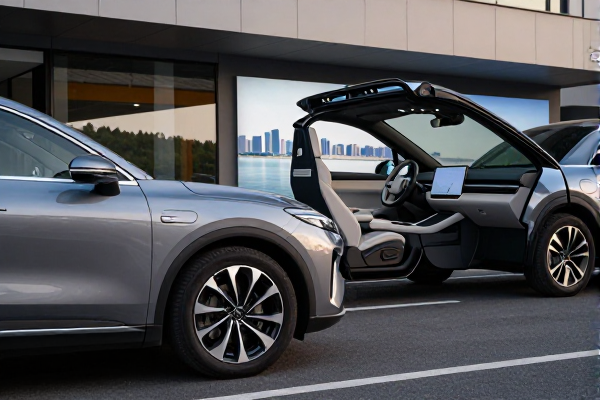
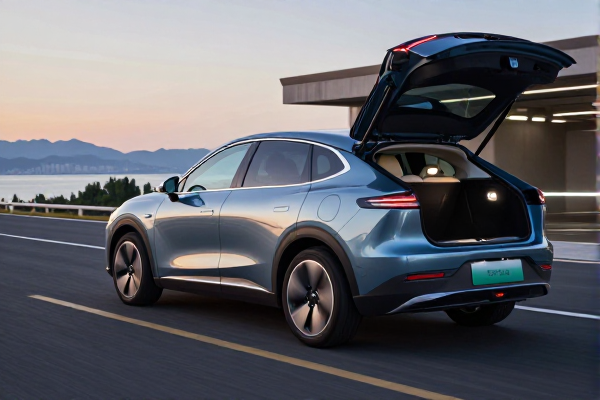
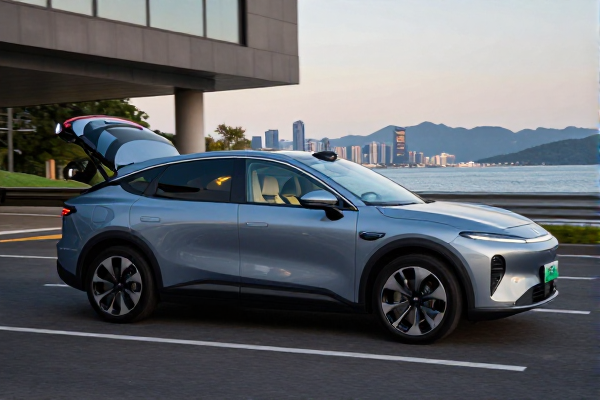
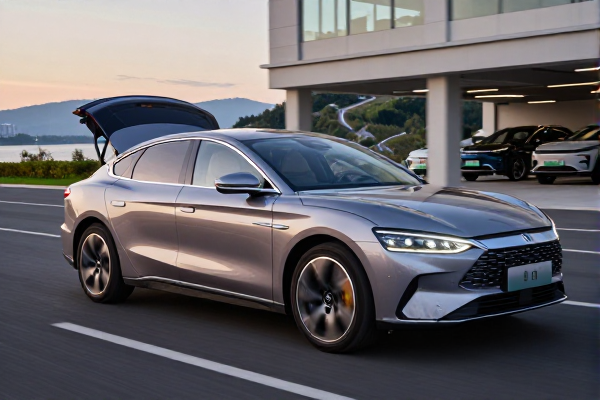
The plan also calls for a crackdown on "cutthroat competition" in the automotive sector, particularly in electric vehicles. Chinese automakers have been locked in a brutal price war, with many selling cars below cost to grab market share. The MIIT indicated it will tighten oversight of production capacity expansion and encourage mergers and acquisitions to consolidate the fragmented industry. The move is seen as an attempt to stabilize margins and redirect resources toward higher-value segments like autonomous driving and battery technology.
Value-add: Recent developments and expert perspective
The announcement comes less than a week after Huawei Technologies unveiled its first prototype of a 6G base station capable of terahertz-frequency transmission, a milestone that could accelerate China's standardization efforts. Meanwhile, the U.S. Department of Commerce recently expanded export controls on quantum computing components, intensifying the Sino-American tech rivalry. Experts say China's 2030 target is ambitious but achievable given the country's record of state-directed industrial leaps, though the ability to commercialize technologies like nuclear fusion remains uncertain. "China is playing a long game," said Dr. Emily Zhang, a tech policy analyst at the Center for Strategic and International Studies. "The 6G and quantum bets are meant to leapfrog rather than catch up."
Domestically, the economy grew at 4.8% in the third quarter of 2025, below the official target of 5%, underscoring the urgency of new growth drivers. The property sector continues to weigh on investment, while export growth has slowed amid tariff hikes on Chinese EVs by the European Union and the United States.
The MIIT's roadmap also emphasizes the integration of AI into traditional manufacturing. By 2030, Beijing aims to have 80% of large industrial enterprises using AI-driven quality control and predictive maintenance systems. Embodied AI, in particular, is expected to create a new market for collaborative robots capable of working alongside humans in complex environments.
While the plan is broad in scope, officials stressed that private enterprises will play a central role. "We will create a policy environment that encourages innovation across all ownership types," Xin said, hinting at possible tax incentives and R&D grants for startups in quantum and brain-computer interface fields.
The global response has been mixed. Some analysts warn that China's state-led model could lead to overcapacity in these new sectors, repeating the mistakes seen in solar panels and EVs. Others argue that the sheer scale of government investment — combined with a massive domestic market — gives China a unique advantage in scaling emerging technologies before competitors.
As the U.S. and Europe ramp up their own industrial policies through the CHIPS Act and the European Chips Act, the race for next-generation technologies is entering a new, more aggressive phase. China's 2030 plan is the latest signal that Beijing is betting heavily on tech self-reliance to drive long-term growth, even as near-term economic headwinds persist.