Browse

Log in / Register
 Share


July 17, 2024— At a recent global development forum, a prominent Chinese economic expert laid out a distinctly pragmatic vision for the nation’s green transition. Zhang Yansheng framed China’s approach as a necessary “realist” model, one that prioritizes building a robust clean energy foundation before aggressively dismantling existing fossil fuel infrastructure, a stance offered as a counterpoint to what he termed more “romantic” Western strategies.
The core of China’s strategy lies in a principle Zhang defines as “first build, then break.” This methodology directly challenges what he calls “romanticism” in energy policy, which advocates for an immediate and aggressive shutdown of coal and oil-based systems. “The romantic approach is to break first, then figure out how to build the new system,” Zhang stated during the session on China’s high-quality development. “Our realism says you must build the new energy capacity first. Without a reliable alternative, shutting down the old system is not just impractical; it’s a direct threat to economic stability and daily life.”
This philosophy is fundamentally tied to energy security, a paramount concern for the world’s largest manufacturing economy. Zhang posed a pointed question: “If the world runs out of oil or faces severe geopolitical disruption, where does the power come from?” His argument underscores a national priority: avoiding energy shortages that could cripple industry and households. The strategy is designed to ensure that economic growth and social stability are not sacrificed on the altar of rapid decarbonization, positioning energy reliability as a non-negotiable prerequisite for a successful transition.
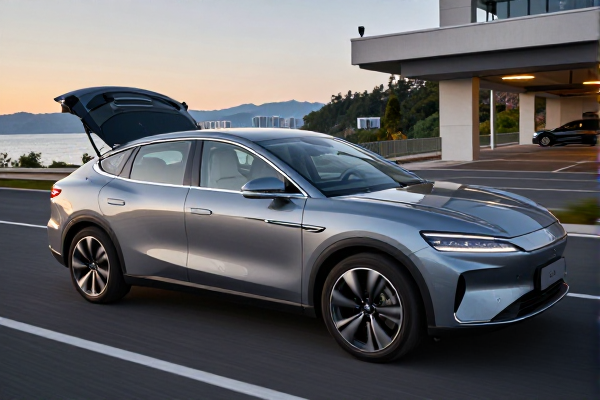
China’s commitment to the “build” phase is evident in its industrial dominance of the new energy sector. Presentation data highlighted a fully integrated supply chain, from mining critical minerals to manufacturing batteries, electric motors, and the final electric vehicles (EVs). Projections indicate that China’s production and sales of new energy vehicles alone are set to surpass 16 million units by 2025. This massive scale of investment creates a self-reinforcing cycle where increased production lowers costs and accelerates adoption, making the future “break” from fossil fuels more feasible.
Beyond industry, the environmental outcomes of this dual-track approach are now quantifiable. Officials presented data showing that from 2015 to 2024, average PM2.5 concentrations in major Chinese cities dropped by over a third. Nationwide, forest coverage has exceeded a quarter of the country’s land area, and for the first time, more than 90% of surface water has met good quality standards. These metrics are presented as evidence that China is not following the “pollute first, clean up later” model, but is managing a concurrent path of development and ecological restoration.
A significant portion of the presentation focused on the transformation of China’s major river basins, pointing to them as test cases for the green development agenda. The Yangtze River Economic Belt, a crucial economic corridor, has reportedly maintained Class II water quality (suitable for drinking after treatment) for five consecutive years. Similarly, the Yellow River basin has seen three years of Class II water quality. The narrative here has shifted from “large-scale development” to “large-scale protection,” with ecological conservation driving industrial upgrades and improved navigation capabilities along these vital waterways.
Zhang explicitly linked this environmental progress to long-term economic prosperity. “Green development is not a barrier to the economy; it is the very foundation for it,” he argued. This perspective integrates ecological health into the core definition of economic growth, suggesting that investments in clean air, water, and ecosystems are investments in human capital and sustainable productivity, forming the bedrock of what China calls “high-quality development.”
Despite rising geopolitical tensions, Zhang reaffirmed China’s commitment to global economic integration. “Openness is a fundamental reason for China’s development. No matter the changes in the world, China’s door remains open,” he stated. This declaration positions China’s green transition not as an inward-looking project, but as one that continues to engage with global supply chains, technology exchange, and international climate frameworks, even as it pursues a distinct national strategy.
Exclusive Perspective: The “Grid Stability” Calculus An often-overlooked dimension of China’s “build first” policy is its focus on grid modernization and storage. While not detailed in Zhang’s speech, industry analyses suggest that China’s massive investments in wind and solar are paralleled by a world-leading push in grid-scale battery storage and ultra-high-voltage transmission lines. This infrastructure is the silent enabler of the pragmatic model. It allows intermittent renewable power to be stored and distributed across regions, mitigating the risk of blackouts as coal plants are eventually phased down. This technical groundwork is the critical buffer that makes the eventual “break” from fossil fuels a calculated engineering challenge rather than a leap of faith, a nuance that fully explains the caution behind China’s public rhetoric on coal retirement timelines.