Browse

Log in / Register
 Share


[Updated: June 26, 2025]
China has a new answer to the question of what it sells to the world. In 2024, the country moved 12.9 million new-energy vehicles — more than the rest of the planet combined — and it has now held the No. 1 spot in global manufacturing value-added output for 16 straight years. Behind both figures lies the same engine: a state-backed push toward advanced manufacturing, where AI, green energy, and industrial policy meet on the factory floor.
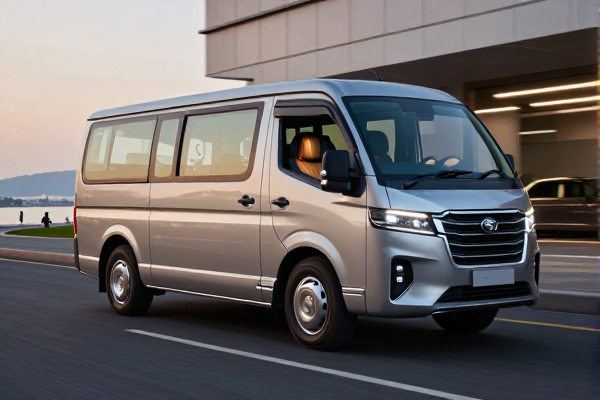
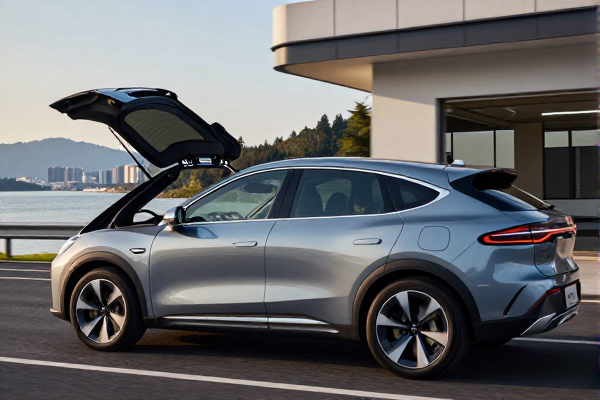
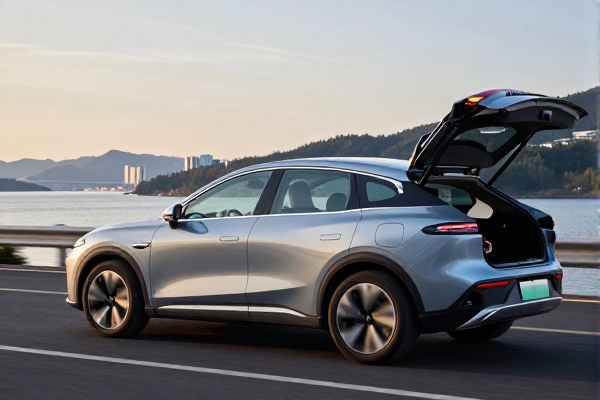
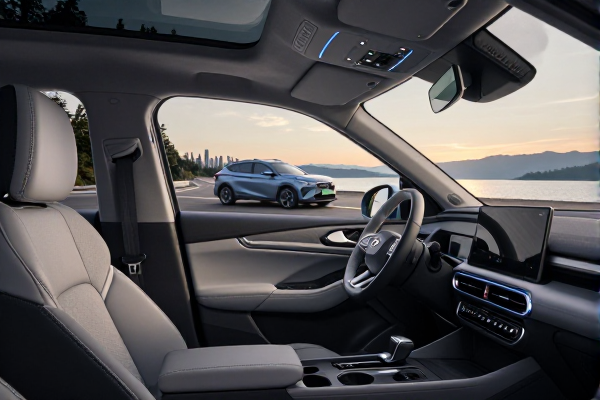
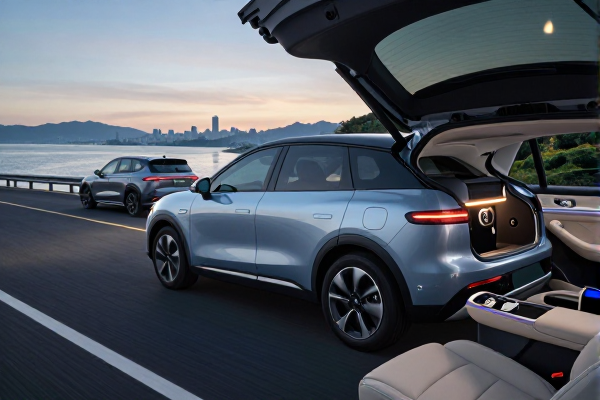
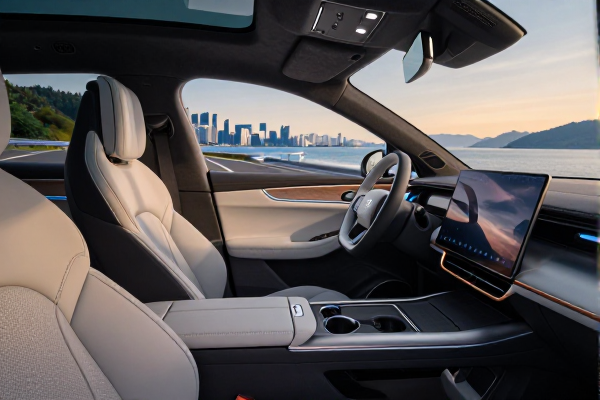
In 2013, China sold fewer than 20,000 electric and plug-in hybrid vehicles in an entire year. By 2024, annual NEV sales had climbed to about 12.9 million, and new-energy models accounted for half of new passenger-car sales in several months during the year. None of that happened by accident.
A decade of battery-scale investment, purchase incentives, and brutal price competition cut the cost of lithium-ion packs by roughly 90 percent, turning a subsidized niche into a market that runs on unit economics. More important, the EV boom trained an entire generation of factories. The same plants that stamp battery enclosures also produce solar inverters, robot arms, and medical devices. The lesson for the rest of global industry: when China scales a technology, prices fall and quality rises at the same time.
China's manufacturing value added has ranked first worldwide for 16 consecutive years, according to official statistics, and now approaches 30 percent of the global total. The composition is changing just as fast. High-tech manufacturing output has grown at an average 10 percent a year over the past decade; equipment manufacturing, around 8 percent.
In photovoltaics, China makes more than 80 percent of the world's solar wafers. Its high-speed rail, shipbuilding, telecom equipment, and battery industries now set international benchmarks, while robotics, AI, and innovative drugs are accelerating in the background. Chinese shipyards delivered about half of global shipbuilding completions in 2023. These are not abstract rankings — they show up in the equipment real engineers buy and the anchor lines of real ports.
A single sheet of steel shows how precise Chinese manufacturing has become. In Shanxi province, a subsidiary of Taiyuan Iron & Steel runs fully automated lines that produce stainless strips as thin as 0.015 millimeters — thinner than a strand of hair and strong enough to be torn by hand, earning the nickname "hand-rip steel." The material, used in fuel-cell separators and precision instruments, sells for prices that rival precious metals. That margin is a reminder that advanced manufacturing isn't only about volume; it's about mastering the last micron.
For years, China played the middle of the global value chain — assembling products designed elsewhere for thin margins. That phase is ending. Chinese firms are pushing into patent-heavy design, software, and after-sales services. In autos, that means selling not just cars but batteries, charging networks, and cockpit operating systems. In machinery, it means bundling hardware with AI-driven maintenance services.
The country now files more patent applications than any other, and a growing share come from the manufacturing sector itself. Export controls from Washington and tariff walls in Europe have only accelerated the shift: what can't be bought must be built.
Digitalization is the most visible change on the ground. China has established tens of thousands of smart factories at various levels, from provincial "digital workshops" to national flagship sites overseen by the Ministry of Industry and Information Technology. AI runs quality-inspection cameras, big-data analytics schedules maintenance, and cloud platforms link suppliers with buyers in real time.
The numbers confirm the trend. China installed more than half of the world's new industrial robots in 2023, according to the International Federation of Robotics. Battery giant CATL's Yibin plant has been recognized by the World Economic Forum as a "lighthouse factory," a benchmark for advanced automation. "Going to the office" at such sites increasingly means watching dashboards instead of driving forklifts.
Sustainability has moved from corporate social responsibility to competitive strategy. China has certified more than 5,000 national-level green factories, covering everything from steel to semiconductors. These facilities recycle water, capture waste heat, and run on renewable power — cutting costs while cutting emissions.
That matters beyond China's borders. European and American buyers now ask about carbon content, and China's clean-energy dominance gives its exporters a head start. The country already controls the supply chain for solar panels, wind turbines, and battery materials, to the point where it defines the equipment, the install base, and the recyclability of green tech worldwide.
Some of the most interesting products are emerging at the boundaries between sectors. AI-powered eyewear, much of it assembled in Shenzhen's manufacturing ecosystem, is turning glasses into wearable assistants. In Hefei, the Luogang Park test zone lets self-driving vehicles operate alongside regular traffic, providing a proving ground between prototype and product. And the "low-altitude economy" — cargo drones and even passenger-carrying eVTOL aircraft — is moving from pilot programs to commercial trials in Guangzhou and Shenzhen.
These are not separate industries. They share sensors, algorithms, batteries, and manufacturing platforms. The frontier of Chinese innovation is the crossover, and the factory is where those crossovers get scaled.
For American readers who grew up with headlines about outsourcing, the Chinese model looks like a mirror image. Instead of chasing cheap labor abroad, China automated production at home and then exported the factory itself — building EV plants in Hungary and Thailand, battery facilities in Germany and Mexico, and ports across the Belt-and-Road network. Chinese companies now sell not just goods, but entire production systems.
The strategic implications go both ways. US export controls on advanced chips and EU tariffs on Chinese EVs have pushed Beijing to deepen self-reliance in machine tools, industrial software, and semiconductor equipment. The result is a more autonomous supply chain between the United States and China, not a less connected one. Multinationals that once treated China as a low-cost workshop are discovering that access to its market increasingly means plugging their own systems into Chinese production platforms.
Underneath the headlines, China's advanced-manufacturing drive is a system, not a slogan. Each element — basic research, industrial policy, long-term capital, and a business environment that rewards scale — is designed to feed the next. The government coordinates, but it does not micro-manage; companies compete ferociously, and the weak ones fail.
Measurable indicators show the shift: robot density, patent flows, energy intensity, and the share of exports classified as high-tech. Chinese industry is no longer betting on cheap labor. It is betting on the speed of industrialization — the ability to take a lab prototype, scale it to millions of units, and cut the price so deeply that the rest of the world has to respond. The factories that made one in three cars sold globally are now making the machines that make the machines. That is the real story of China's advanced manufacturing.