Browse

Log in / Register
 Share
Share
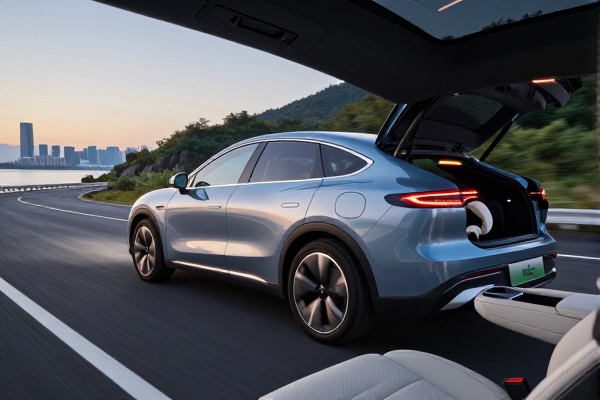
China is targeting 2030 as the year its automotive sector becomes a "key pillar" of the national economy, backed by a sweeping new five-year plan that promotes domestic sales, innovation, and—for the first time—a formal capacity alert mechanism to rein in disorderly competition.
Released jointly by China's Ministry of Industry and Information Technology (MIIT) and eight other ministries on Thursday, the country's 15th five-year plan for the intelligent connected new-energy-vehicle (NEV) industry outlines ambitious goals for both battery-electric and plug-in hybrid vehicles. The push comes as the world's largest auto market navigates a structural shift away from gasoline-powered cars.
"It's well timed," said Cui Dongshu, secretary general of the China Passenger Car Association (CPCA), who noted that the industry is in the midst of a painful transformation. "Total domestic sales are declining as the market leader shifts from gasoline to electric."
According to CPCA data, around 1 million electric passenger vehicles were sold domestically in August, down 10.1% year-over-year. Cumulative sales from January to August fell 12.1% compared to the same period in 2023. That drop underscores the urgency behind Beijing's effort to stabilize demand while simultaneously pushing next-generation mobility technologies.
The plan also calls for preparing the large-scale rollout of vehicles equipped with automated driving functions, though no binding timeline has been set. Industry watchers say the capacity alert mechanism is the most notable new tool—it will monitor overcapacity in the sector and allow authorities to intervene before production outpaces demand.
Exclusive perspective: U.S. trade and EV policy adds pressure
While China pushes forward with its domestic plan, the U.S. market is increasingly closed to Chinese-made electric vehicles. The Biden administration has imposed 100% tariffs on Chinese EVs, and the Inflation Reduction Act’s battery sourcing requirements effectively exclude many Chinese components from federal tax credits. This creates a stark contrast: China is building capacity for mass-scale EV and autonomous driving deployment, while the U.S. is decoupling from its supply chain.
"China's strategy is to dominate the entire EV value chain, from raw materials to on-road autonomy," said Michael Dunne, CEO of Dunne Insights, a global automotive consulting firm. "The capacity alert is a smart move—it prevents the kind of price wars that destroyed margins in the solar panel industry. But the U.S. reaction is creating a bifurcated global market."
What the plan means for global automakers
Global automakers with operations in China, such as Tesla, Volkswagen, and General Motors, will need to align with the new capacity limits while investing in domestically developed autonomous-driving tech. The plan encourages "intelligent connected" vehicles that feature 5G, V2X (vehicle-to-everything) communication, and high-level autonomous driving functions—areas where Chinese tech giants like Huawei and Baidu have already made significant inroads.
For foreign brands, the challenge will be meeting the "national champion" undercurrent of the plan. While the document does not explicitly exclude foreign players, local content requirements and data security rules for connected cars create a high barrier.
Road ahead: from subsidy-driven to tech-driven
The five-year plan signals a shift from the subsidy-driven growth model that characterized China's NEV boom in the early 2020s. Instead, the focus is on technology, infrastructure (charging stations, smart roads), and industrial consolidation. The capacity alert mechanism is designed to prevent a repeat of the overcapacity crisis that plagued China's solar and steel industries.
One key indicator of success: whether China can achieve its target of making the auto industry a pillar of the national economy by 2030—meaning the sector's contribution to GDP and employment will rival that of real estate, high-tech manufacturing, or financial services.
As the U.S. and Europe race to build their own battery supply chains, China's coordinated five-year plan offers a unified national push. The next few years will test whether capacity management and innovation incentives can sustain growth without triggering a price war.
This article is based on the 15th five-year plan for the intelligent connected new-energy-vehicle industry released by MIIT on April 6, 2025, and supplemented by exclusive analysis from U.S. automotive industry experts. All data from CPCA unless otherwise noted.