Browse

Log in / Register
 Share
Share
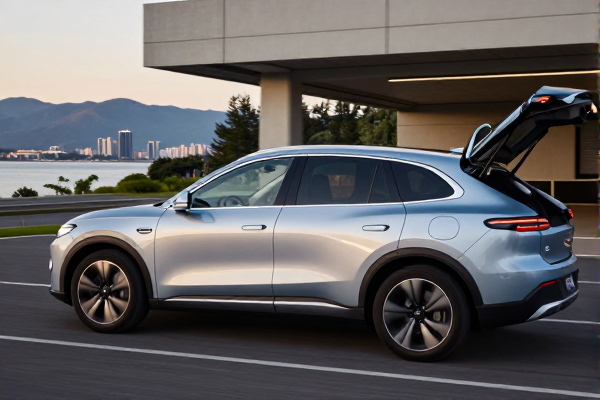
China's transport-research establishment is preparing a new layer of vehicle evaluation that would treat motion sickness and other passenger-health effects as formal testing criteria for new energy vehicles (NEVs), according to a report published on May 9, 2026. The work, led by the Research Institute of Highway under the Ministry of Transport, argues that battery-electric cars can make passengers queasier than gasoline models in everyday driving, and that cabin lighting deserves regulatory attention as well.
Liu Lu, a researcher at the institute, said NEVs are more prone to motion sickness than conventional vehicles because their acceleration delivery and energy recovery systems behave differently from an internal-combustion drivetrain. The observation carries particular weight for taxis and ride-hailing fleets, where drivers spend long hours in stop-and-go traffic and passengers rarely see the road ahead.
The discomfort is not imagined. Electric motors produce full torque almost from zero rpm, so a slight press on the accelerator translates into a sharper lunge than a driver would feel in a gasoline car. Lifting off the pedal triggers regenerative braking, which tugs at the vehicle's forward motion and creates a constant micro-pitch-and-roll rhythm. Together, the two forces bombard the vestibular system with mixed signals: the eyes see forward movement, but the inner ear registers rapid speed changes that do not match visual expectations.
The problem is amplified by the way electric cars carry their weight. Batteries sit low and heavy, changing the vehicle's pitch dynamics. Suspension engineers face a trade-off: stiffer damping prevents the body from wallowing but transmits harsher jerk to passengers; softer damping masks bumps but lets the vehicle dive and recover during every regen event. Many automakers have refined their brake-blending logic to smooth out deceleration, but those parameters differ from model to model—and from one software update to the next.
The same phenomenon is familiar to American drivers of one-pedal EVs, where the deceleration profile is fixed by software and can feel aggressive to anyone not used to it. What is new is that a government is now proposing to measure it.
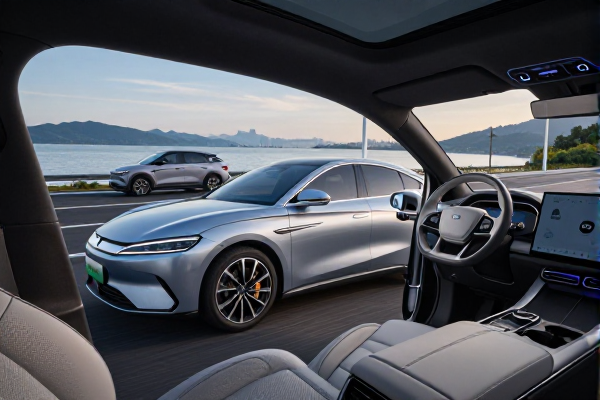
Alongside motion sickness, the Chinese research team is studying illumination inside the cabin, particularly light from large infotainment displays and the infrared cameras used for driver monitoring. Long rides at night, a passenger seated near a glowing screen, and an infrared emitter pulsing toward the driver's face in a darkened cabin can contribute to eye fatigue and headaches.
Specialists involved in the project have been using animal studies, eye examinations and light-intensity measurements to establish safe exposure limits. Their goal is to convert those limits into measurable thresholds that a future NEV standard could enforce. If finalized, the thresholds would affect dashboard design, screen brightness mapping and the placement of driver-facing cameras, pushing suppliers to develop new dimming, color-tuning and anti-glare solutions.
What makes this effort unusual is its scope. Existing NEV regulations in China—and in most markets—concentrate on battery safety, crashworthiness, range verification and charging compatibility. Passenger comfort is usually left to subjective test drives or voluntary consumer ratings rather than to a national standard. Motion sickness, in particular, is repeatedly cited as a barrier to EV adoption, yet it has rarely been treated as a compliance issue.
The move has led some industry analysts to predict that motion discomfort will eventually be added to China's public "vehicle health" scorecards, which currently cover cabin air quality, electromagnetic radiation and acoustic comfort. Because China's national standards often influence regional regulations and export-market requirements, the approach could become a reference point for other governments defining how EVs should feel to passengers, not just how they should perform.
No major regulator, including the U.S. National Highway Traffic Safety Administration, currently requires a standardized motion-sickness assessment for passenger vehicles. Voluntary guidelines exist, and automakers test nausea potential during prototype development, but results are rarely published and there is no consistent protocol across brands. A binding national requirement in China would put that country ahead of other jurisdictions on a metric that consumer surveys consistently rank high among EV complaints.
For American buyers, the standard is worth watching because Chinese-made vehicles intended for the domestic market may eventually reach other regions with the same comfort calibrations. For U.S. and European brands selling in China, the commercial stakes are more immediate: a vehicle that scores well in the new test would gain leverage in ride-hailing tenders and fleet sales, while a poor result could hurt access to segments where passenger comfort is a buying condition.
Several manufacturers have started adjusting their vehicle-control software in anticipation of the trend. Some have introduced regenerative-braking calibrations that mimic the deceleration feel of an engine-braking gasoline car; others have added comfort-oriented suspension modes that soften the sharpness of one-pedal driving. At the high end, adaptive dampers now react to road texture in milliseconds, reducing vertical acceleration before it reaches the seat.
A formal standard would give these efforts a measurable benchmark. Engineers would have to keep vehicles within defined exposure thresholds for vertical acceleration, pitch rate and luminous intensity of cabin screens, rather than relying on a company's own calibration philosophy. That is likely to accelerate investment in smoother drivetrain mapping and smarter cabin interfaces that dim or shift color when passengers are trying to rest.
The Research Institute of Highway has not yet announced when the draft assessment will be opened for public comment. Past technical guidelines for vehicle testing in China have typically moved from research reports to consultation documents within a year or two, with input from automakers, universities and testing agencies. For the ride-hailing industry, the timeline matters: fleets across China are switching to electric models under policy pressure, and a standardized motion-sickness score would give operators a practical way to choose vehicles that keep drivers and passengers comfortable over long shifts.
For now, the message to the industry is straightforward. Motion sickness is no longer just a complaint in online forums or a footnote in test drives; it is becoming a regulated field of vehicle engineering. And as China builds out the test protocols, those protocols may one day shape how the rest of the world evaluates the ride quality of electric cars.