Browse

Log in / Register
 Share


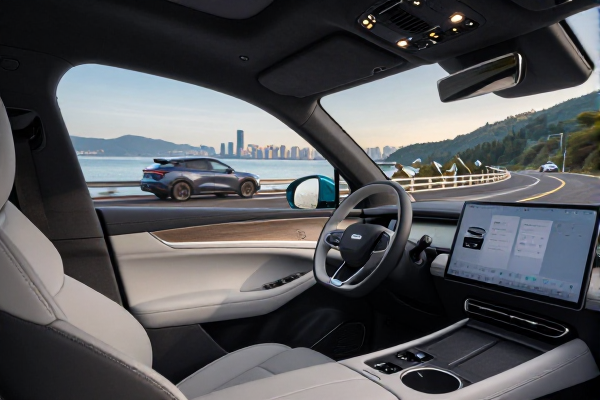
September 15, 2025 — Nearly two out of every three passenger cars sold in China are now new energy vehicles, a milestone that underscores both the vibrancy of the world’s largest auto market and the industry’s ability to turn advanced technology into affordable, mass-produced products.
According to data from the China Passenger Car Association, NEVs accounted for 65.1% of passenger-car retail sales in July 2025, up 11.6 percentage points from a year earlier. That’s the fourth consecutive month the penetration rate has stayed above 60%. Preliminary August figures show retail sales of passenger cars hitting about 1.58 million units, with roughly 1.04 million of those being NEVs. That would push the August penetration rate to 65.8%, a rise of 10.6 percentage points year-over-year.
The rapid climb is driven by a perfect storm of falling costs, improved quality, and shifting consumer preferences. Industry insiders point to the normalization of battery material prices and the widespread adoption of new manufacturing processes like integrated die-casting and battery-chassis integration as key factors that have slashed production expenses. As a result, many NEV models now match or undercut the sticker prices of their gasoline-powered rivals.
“The cost gap has essentially closed,” said Jiang Tianci, head of an automobile dealers association in Anhui province. “Consumers no longer have to pay a premium to go electric, and that’s a game-changer for mass adoption.”
In addition to cost parity, the quality of Chinese NEVs has improved dramatically. Range anxiety is fading as battery densities increase and charging infrastructure expands. The country now has over 8 million public charging points, and major automakers are rolling out models with 500-mile-plus ranges that cost roughly the same as a mid-range sedan.
Competition Heats Up
The surge in NEV sales is also a reflection of cutthroat competition among dozens of domestic brands, from established players like BYD and Geely to newer entrants such as NIO, XPeng, and Li Auto. Price wars have erupted multiple times in 2025, with some models seeing discounts of 20% or more. In response, even traditional joint-venture brands like Volkswagen, Toyota, and General Motors have accelerated their electric launches, though they still trail local rivals in market share.
BYD, the country’s top NEV maker, alone accounted for nearly 35% of all NEV sales in August. The company’s vertically integrated supply chain — from battery cells to semiconductors — gives it a cost advantage that competitors find hard to match. Other Chinese brands are also scaling rapidly, with a wave of new models hitting showrooms every month.
“The speed of product iteration here is unlike anything we’ve seen globally,” said industry analyst Li Wei at consultancy Roland Berger. “Chinese automakers can launch a new model in 18 to 24 months, compared to 36 to 48 months for most Western automakers, and that cycle is shrinking.”
U.S. Implications
For American automakers and policymakers, China’s NEV trajectory offers both a warning and a roadmap. The U.S. electric vehicle market, while growing, still hovers around 8% to 10% penetration. The Biden administration’s Inflation Reduction Act has spurred domestic battery production and EV adoption, but the scale gap remains vast.
Chinese brands are now actively looking beyond their home market. BYD has announced plans to build a factory in Mexico, targeting the U.S. market indirectly. NIO and XPeng are expanding into Europe and Southeast Asia. Even as tariffs and trade restrictions persist, the global supply chain for batteries, motors, and electronics is increasingly dominated by Chinese firms.
“The U.S. can’t ignore what’s happening in China,” said Michael Dunne, CEO of consulting firm ZoZo Go. “If Chinese brands can achieve 65% penetration at home, they have the cost structure and scale to disrupt markets everywhere — including here, once they find a way around tariff barriers.”
What’s Next?
Industry forecasts suggest China’s NEV penetration could reach 80% by 2027, driven by further declines in battery costs and the phase-out of subsidies for traditional gasoline cars in major cities. Meanwhile, the government’s push for “smart” connected vehicles — with Level 3 autonomous driving becoming standard on new models — is adding another layer of appeal.
For consumers, the result is a steady stream of new, affordable, and increasingly capable electric cars. The competition that produced this boom shows no signs of slowing down, and the ripple effects are being felt from Detroit to Stuttgart.
As Chinese automakers double down on R&D and global expansion, the rest of the industry is watching closely — and racing to catch up.