Browse

Log in / Register
 Share

China’s week-long National Day holiday has given the fourth quarter a brighter-than-expected start. Data released Monday, Oct. 6, by the Ministry of Commerce showed that sales at 78 monitored pedestrian shopping streets and commercial districts rose 5.3% year-on-year during the first three days of the holiday, from Oct. 1 to Oct. 3. Visitor numbers climbed 3.4% over the same stretch, meaning consumers were not just crowding the streets quiet. They were spending more too.
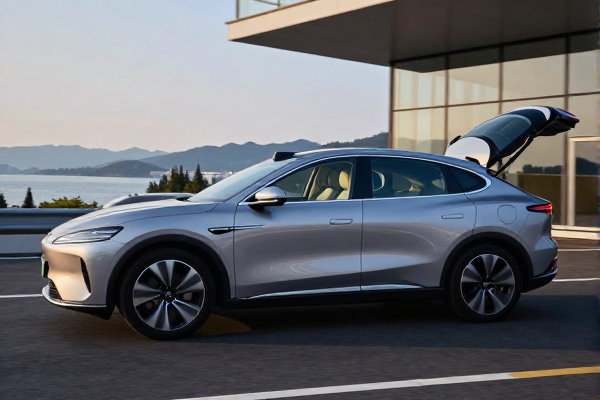
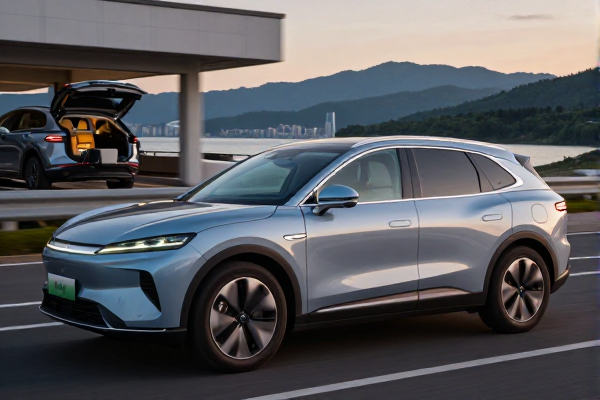
The fresh numbers arrive at a cautious moment for China’s economy. For much of the year, weak property prices and lingering uncertainty around household income have kept big-ticket purchases under pressure. The government has responded with incentives, and the holiday data suggest those policies are finding traction. Consumer goods trade-ins, the flagship subsidy program, supported sales worth 19.63 billion yuan ($2.93 billion) in the opening three days. Automobile trade-ins accounted for 46,000 vehicles and generated 7.45 billion yuan in new-car sales. Home appliance trade-ins came to 1.51 million units, contributing 6.5 billion yuan, while digital and smart product purchases hit 1.709 million units, adding another 4.9 billion yuan.
The spending pulse was just as clear in Hainan, China’s offshore duty-free shopping hub. Haikou Customs reported 358 million yuan in duty-free sales over the same three-day window, with 55,100 visitors making 277,000 purchases. The three metrics rose 8.85%, 12.9% and 8%, respectively, from a year earlier. For a region so closely tied to travel and premium goods, those figures are more than a footnote when assessing China’s consumption health.
Economists see a structural message behind the numbers, not just a holiday bump. Zhou Mi, a senior researcher at the Chinese Academy of International Trade and Economic Cooperation, said the performance reflects growing demand for innovative products and a maturing consumption market. He noted that services consumption – dining, entertainment, travel-related experiences – is playing a bigger role, a sign that Chinese buyers are moving beyond basic goods and spending on quality-of-life upgrades.
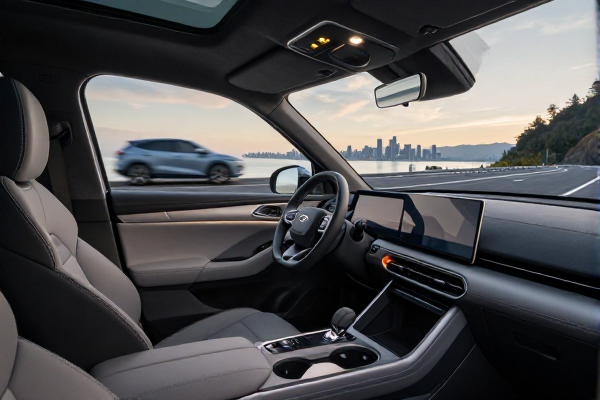
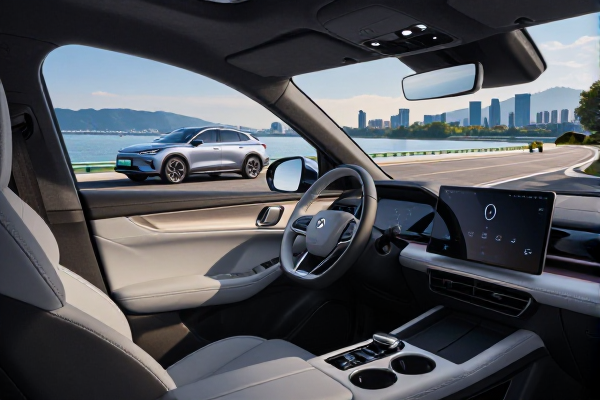
A live example came at the Lanzhou International Auto Show in Gansu province. New energy vehicles with built-in artificial intelligence drew the most attention. Visitors were heard asking in-car AI systems to turn on seat massagers or check the local altitude. The event covered more than 40,000 square meters and brought together over 70 brands and around 120 dealerships, according to organizing committee head Zhang Shuwei. On-site discounts from dealers and manufacturers gave buyers plenty of reasons to compare models and place orders before leaving.
Still, analysts caution against reading too much seasonal strength into the broader trend. Liu Ying, a researcher at Renmin University of China’s Chongyang Institute for Financial Studies, said the data “demonstrate China’s economic vitality and domestic demand potential.” Her bigger concern is whether a concentrated burst of holiday consumption can turn into steady household spending. “A more durable consumption expansion will depend on improvements in employment and income expectations, alongside businesses’ ability to meet changing consumer needs,” she said.
The policy response is already intensifying. On Sept. 30, the National Development and Reform Commission allocated a fourth batch of 62.5 billion yuan in ultra-long special treasury bond funds to local governments. That brings total funding for consumer goods trade-ins this year to 250 billion yuan. The money gives local authorities enough to keep subsidy programs running through the year-end shopping season, including the “Double 11” sales event that has become a major test of Chinese consumer appetite.
Timing also matters for global investors. China’s mainland stock exchanges were closed for the holiday, so markets have not yet priced in these numbers. When trading resumes later this week, the trade-in data, auto show activity and duty-free spending will all be part of the backdrop for retail, electronics, automobile and travel-related shares. Signs that Beijing’s support measures are reaching households tend to sway sentiment well beyond China’s borders.
The policy support will be tested in the weeks ahead. Before the holiday, the latest available data from the National Bureau of Statistics showed retail sales rising just 1.1% year-on-year in the first eight months, with growth of only 0.4% in August. Those figures make the National Day lift all the more notable. Third-quarter GDP data, due later this month, will offer a fuller picture of whether consumer strength is feeding into overall economic activity.
For outside observers, the holiday reports are another reminder that China is leaning more heavily on household demand and government incentives to cushion external pressures. The final stretch of the quarter will show whether that support can keep spending moving in the right direction – and whether households retain enough confidence to keep opening their wallets.