Browse

Log in / Register
 Share


March 18, 2025 — China's exports of clean energy technology reached a record high last year, and the climate payoff is showing up in global emissions accounting. A new report tracking shipments of solar modules, electric vehicles, and lithium-ion batteries finds that the clean tech China sold abroad is displacing enough fossil-fuel use to make a measurable dent in worldwide carbon emissions — even as Washington and Brussels try to slow the flow with tariffs.
The export boom spans three main product lines. Solar photovoltaic modules lead the pack, with Chinese factories supplying the majority of panels installed worldwide. Electric vehicles, led by automakers such as BYD, are surging into markets from Southeast Asia and Latin America to Europe. Lithium-ion batteries, the third leg, are feeding overseas EV production lines and grid-scale energy storage projects from Chile to South Africa.
For years, China's clean tech dominance was debated mainly as a trade-policy story. The new analysis reframes it as a climate story: every Chinese-made solar panel installed in another country is a parcel of zero-carbon generation capacity replacing coal or gas that would otherwise serve that load.
The report's core method is straightforward. It takes the volume of clean energy equipment China exported over the last full year, estimates how much power or how many vehicle miles each unit enables over its service life, and compares that against the fossil-fuel alternatives it displaces in the destination market. The result is avoided emissions measured in tens of millions of tons of carbon dioxide annually — a scale roughly comparable to retiring dozens of coal plants.
The calculation is deliberately conservative, analysts familiar with it note. It includes the carbon footprint of manufacturing in China and accounts for how dirty the local grid remains where the equipment lands. Even with those deductions, the net climate benefit is substantial.
Solar dominates the export basket by emissions impact. China holds about 80 percent of global solar manufacturing capacity, and module exports have grown even as prices collapsed to historic lows. In markets across the Global South — Pakistan, the Philippines, Brazil, Nigeria, Egypt — Chinese modules are driving utility-scale solar projects at a pace that would be impossible for domestic supply chains in Europe, the US, or most developing countries to match.
The developing-country channel matters more than most people realize. Many emerging economies are still ramping up electricity demand; every gigawatt of solar built now is a gigawatt of coal or gas that never gets built. Avoiding that "lock-in" is exactly what global climate models prescribe, and China's exports have become the largest single accelerant.
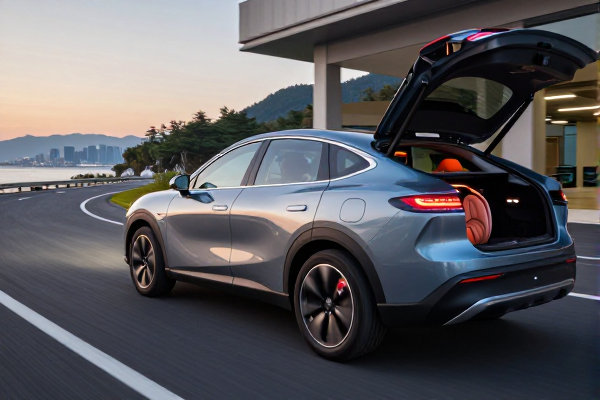
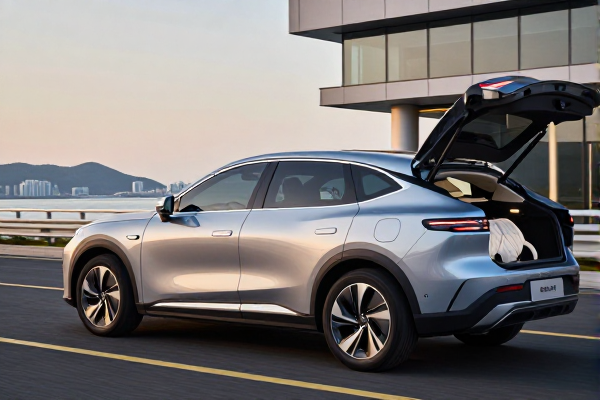
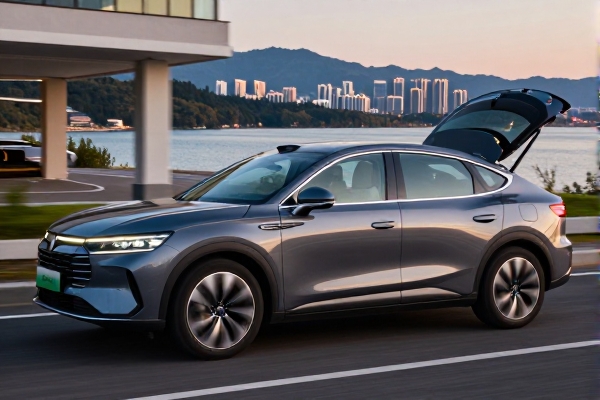
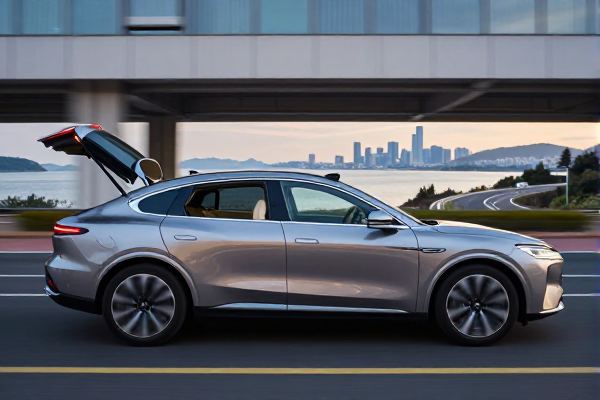
Electric vehicles are the second pillar. Chinese automakers exported well over a million EVs last year, a sharp jump from the year before. Their destinations are increasingly non-Western: Thailand, Indonesia, Mexico, Saudi Arabia, and the UAE. In those markets, Chinese EVs are often the first affordable long-range electric cars available — priced like a mid-range combustion sedan but with far lower running costs.
Batteries extend the impact beyond transportation. Chinese cell makers ship the packs powering electric buses in Latin America, two-wheelers in Africa, and grid storage in Australia and the Gulf. Storage is the hidden accelerant of the energy transition: it lets midday solar meet evening peak demand, switching off gas plants that would otherwise run at dusk.
The report lands at a delicate moment for clean tech trade policy. The United States has imposed tariffs of 100 percent on Chinese EVs and tightened rules blocking Chinese solar and battery supply chains from Inflation Reduction Act subsidies. The European Union, after its anti-subsidy probe, applies duties of roughly 17 to 36 percent on Chinese-built EVs, on top of the standard 10 percent car duty. Retaliation has thickened the mix: Beijing curbed exports of critical minerals to the US in late 2024, and Washington added fresh tariff pressure in early 2025.
The report is blunt about the climate cost of these barriers. Tariffs raise the price of clean tech, flipping marginal projects from solar to gas and from EVs to combustion cars. Protecting domestic manufacturing jobs is legitimate industrial policy — but the report says it does not cut emissions. In fact, it can push the global energy transition further into the future.
Policymakers face a genuine dilemma. The cheapest clean tech on the market is Chinese, and shutting it out slows global decarbonization. But the US, Europe, India, and others want supply chain resilience and critical mineral independence. They also want the jobs that come with building the energy transition.
The report proposes a middle path: compete with Chinese clean tech through subsidies and innovation, not exclusion; protect only the narrow set of products where genuine national-security concerns exist. For solar panels and grid batteries broadly, the climate stakes, it concludes, outweigh the protectionist benefits. The fastest way to lower emissions in 2025 is to deploy more clean tech faster — and much of it, at the moment, comes from China.
Critics will note that China is the world's largest emitter and burns more coal than every other country combined. That is true and should not be brushed aside. China's own energy demand has grown enormously, and coal remains the reliability backstop of its power system.
But the report insists on arithmetic over praise. China's domestic clean energy build-out has also been record-setting — no country adds wind and solar faster. Its climate footprint is therefore two-sided: enormous domestic emissions, and enormous export-driven emission reductions elsewhere. Both facts belong in the assessment.
The report's authors expect the emissions-reduction potential of Chinese clean tech exports to keep growing — provided trade policy does not strangle them. At current rates, cumulative avoided emissions over the next decade would rival the annual emissions of major industrial economies.
Demand factors are turning favorable. Grids worldwide are becoming more adaptable to solar and storage, making integration easier. Charging infrastructure is expanding in emerging markets, giving the EV export pipeline room to grow. And Chinese manufacturers still enjoy scale advantages that keep costs falling.
The risks are equally visible: an escalating trade war, forced supply chain decoupling, and stagnant demand in developing countries all could suppress the numbers. But the underlying trend is clear — Chinese clean tech has become a global public good, and the battle over its flow is now as much a climate issue as a trade one.
The core message: climate action no longer happens only inside national borders. Trade flows are emissions decisions. A Chinese solar panel installed in Lagos, a Chinese EV sold in Bangkok, a Chinese battery cycling in Melbourne — each displaces fossil-fuel consumption that would otherwise have occurred, regardless of what leaders say in Washington, Beijing, or Brussels.
The political fight over who manufactures the energy transition will continue. But while the rhetoric erupts, record exports are quietly doing what every climate body demands: swapping fossil fuel for clean electrons and clean miles. And that is the story the report puts on the table.