Browse

Log in / Register
 Share

Beijing is putting automakers on notice: novel features must be tested like every other safety-critical part, and a few signature EV touches could disappear from future approvals.
As of May 9, 2026, China's auto regulator is tightening its stance on untested vehicle designs. In a draft developed with three other agencies, the Ministry of Industry and Information Technology (MIIT) said some automakers have rushed new models into showrooms without enough validation, creating avoidable safety and environmental risks. The same proposal would ban fully hidden door handles, block moving seats while driving, and require physical controls for lights and wipers. The comment period has ended, but no final rule has been published yet.
The draft is not a recall notice. It is a rulebook for the next generation of car design.
At the center of the proposal is a change to how "innovative designs" are evaluated. MIIT's argument is that a normal type-approval review is not built for claims about unusual hardware, and that companies have used gaps in the process to get features approved on paper rather than through testing. From Jan. 1, 2027, any application for a new model would need to describe innovative design choices in technical detail and prove they were tested under realistic conditions. The rules apply to more than the novel system itself; interactions with the rest of the vehicle also have to be checked.
Automakers will not be able to turn a loose test into a pass. Under the draft, applications supported by weak verification or false data would be rejected. The wording places both categories on similar footing, meaning a truthful but incomplete test can fail just as easily as a fabricated one.
For vehicles already in the approval system, the deadline comes sooner than some expected. By July 1, 2027, manufacturers must file the same depth of technical information about clever design features that were approved under the older process. If the filing is not made and an unresolved safety hazard emerges, the company would have to stop production and recall affected cars. That is a notable departure from the usual pattern of allowing older designs to be grandfathered.
What makes the draft stand out is a list of designs it would prohibit outright. The agency did not try to set performance limits or ask for more crash testing; it simply said no to several features that have become marketing points.
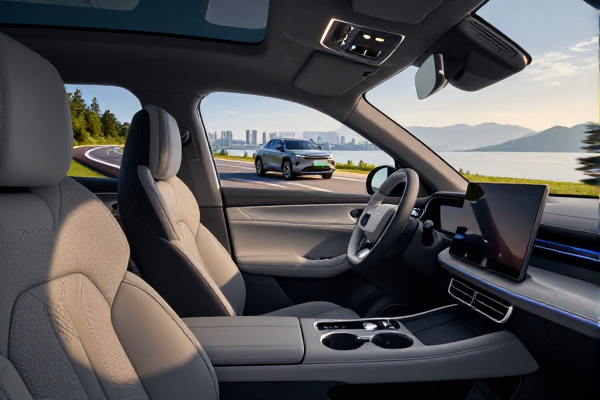
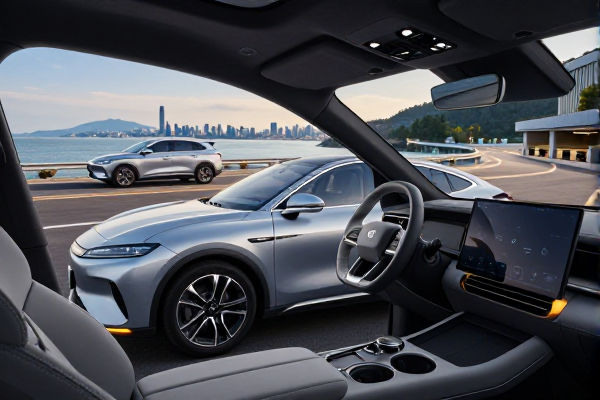
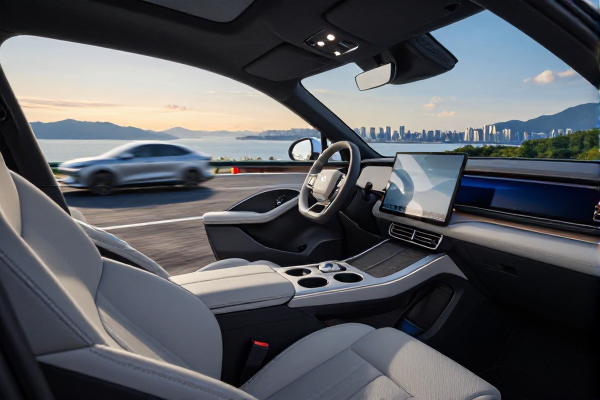
Regulators also want to stop the trend of burying basic functions inside software. Headlights and wiper controls, the two examples named, would have to remain physical. That does not mean automakers cannot combine them with smart features, but there has to be a tactile switch the driver can operate without looking. This is a direct constraint on the minimalist dashboards that many EVs now use.
Reaction inside the Chinese auto industry has been mixed. EV brands that have built a design identity on flush handles and lounge seats will have to rework exterior and interior plans for 2027-model-year vehicles. Suppliers that make electrically deployed handles are likely to see domestic orders shrink. Semi-recessed handles, which protrude slightly even when locked, are already being discussed as a compromise.
Because the rules sit inside China's vehicle type-approval process, they apply to every carmaker selling new models in the country. Local brands such as Nio, Xpeng, Zeekr and Xiaomi are among the most visible users of hidden handles, but imported models with flush handles will also be affected. For global brands, the bigger task is the testing requirement. Companies that have relied on shorter local validation windows may need to bring complete engineering data to support design choices.
Environmental risk is the second reason given by MIIT. A car's energy-consumption label depends on certification tests, and unvalidated changes to aerodynamics, weight or software can make the label wrong. Under the proposal, a model approved with false or insufficient data could be rejected, and existing models found in the same situation would face recall. That gives the new rule an emissions and fuel-economy dimension, not just a safety dimension.
The draft was prepared by MIIT and three other regulatory bodies, a sign that enforcement will extend beyond vehicle certification. The consultation window closed Nov. 10, 2025. The final text has not been released through MIIT's public website in the months since. Automakers generally plan around the dates stated in a draft, so most product planners are assuming the Jan. 1, 2027 timeline will hold. If the final version changes significantly, those dates could shift.
What remains unclear is how much of the ban will survive final drafting and how strictly the physical-control clause will be measured. Chinese rulemaking often keeps controversial wording when the target is a design that regulators see as a marketing gimmick rather than core engineering. Until the final rule appears, the safest assumption for automakers is that fully hidden handles, flexible screens and moving seats are not in China's future model lineup.
In the end, the direction is clear. China wants carmakers to treat novel hardware the same way they treat brakes or airbags: prove it works before it reaches the road. For buyers, the short-term effect may be fewer avant-garde door handles and rotating seats. For automakers, the rules mark another step toward an approval system that checks not just emissions and crash safety but also the everyday usability of new technology.