Browse

Log in / Register
 Share


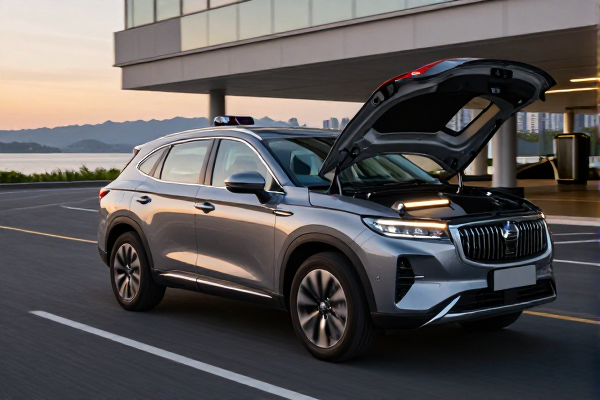
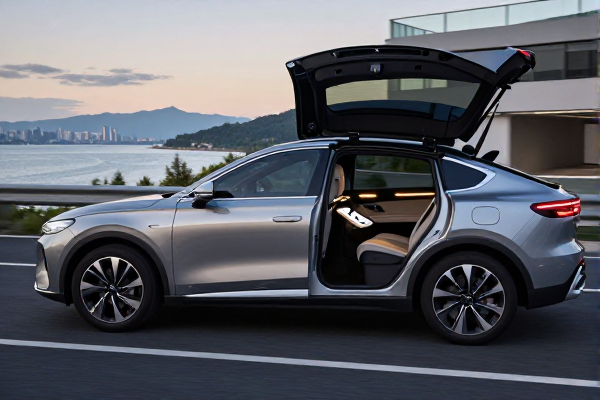
Ford has officially confirmed that the Bronco is coming to Australia and New Zealand in the second half of 2027—but not the rugged, removable-door icon Americans know. Instead, Down Under will get a Chinese-built, unibody, range-extender electric vehicle (EREV) called the Bronco Basecamp, produced through Ford’s joint venture with Jiangling Motors Corporation (JMC). For U.S. enthusiasts, the Basecamp represents a fascinating alternate reality: a Bronco that trades body-on-frame toughness for highway touring efficiency, pop-up roofs, and a 310kW super-hybrid powertrain. As of today, March 20, 2025, Ford has no plans to sell the Basecamp in North America, but the model raises questions about how global emissions regulations are reshaping the off-road SUV landscape.
The Basecamp’s existence is a direct response to Australia’s New Vehicle Efficiency Standard (NVES), which penalizes automakers for high fleet CO₂ emissions. Ford Australia needed a low-emission vehicle to offset sales of heavy trucks and SUVs, and the Mustang Mach-E and Ranger PHEV weren’t selling fast enough. The solution: a dedicated EREV platform built in China, where JMC already produces electric vehicles. This allows Ford to generate emission credits without investing in a new Australian factory. The Basecamp shares nothing structurally with the U.S. Bronco, ditching the ladder-frame for a sealed monocoque that integrates the roof and pillars. The result is a vehicle designed for long-distance touring, not rock crawling.
The numbers tell the story. The Basecamp measures 5,025mm (197.8 inches) long, 1,960mm (77.2 inches) wide, and 1,825mm (71.9 inches) tall on a 2,950mm (116.1-inch) wheelbase. That’s significantly larger than the four-door U.S. Bronco (4,811mm/189.4 in) and even the Ford Everest (4,914mm/193.5 in). Its wheelbase is 100mm longer than the GWM Tank 500, maximizing interior space. However, the Basecamp’s curb weight exceeds 2,500kg (5,511 lbs) due to the 49kWh battery and dual electric motors, making it heavier than a diesel Everest. Ground clearance is 220mm (8.7 inches) with a 600mm (23.6-inch) wading depth, and the breakover angle is just 19 degrees—limiting its off-road capability compared to the U.S. Bronco’s 29.5 degrees. Ford explicitly states the Basecamp is a “capable touring wagon,” not a hardcore off-roader.
Where the U.S. Bronco offers twin-turbo V6s and four-cylinder EcoBoost engines with mechanical four-wheel drive, the Basecamp uses a range-extender super-hybrid. It pairs a 130kW front motor and a 190kW rear motor for a combined 310kW, fed by a 1.5-liter turbocharged petrol generator. The combustion engine never drives the wheels; it only charges the 49kWh battery. The Basecamp can travel about 180km (112 miles) on battery alone, with a total estimated range of 800–900km (497–559 miles) on the WLTP cycle. This is similar to the BYD Shark 6 plug-in hybrid. For context, the U.S. Bronco with the 2.7L V6 gets about 650km (404 miles) of range. The Basecamp also features Ford’s Pro Power Onboard system, delivering 6.6kW of continuous output—enough to run a campsite kitchen, lights, and electronics.
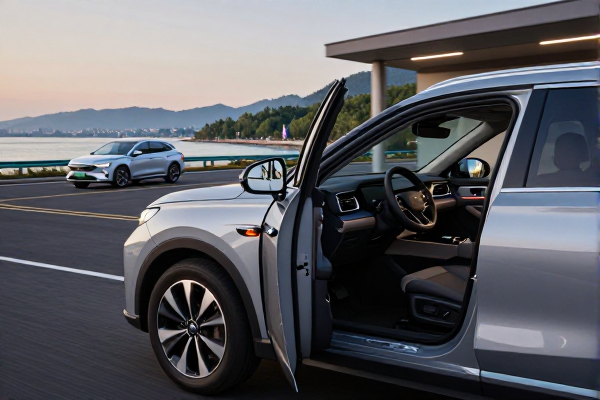
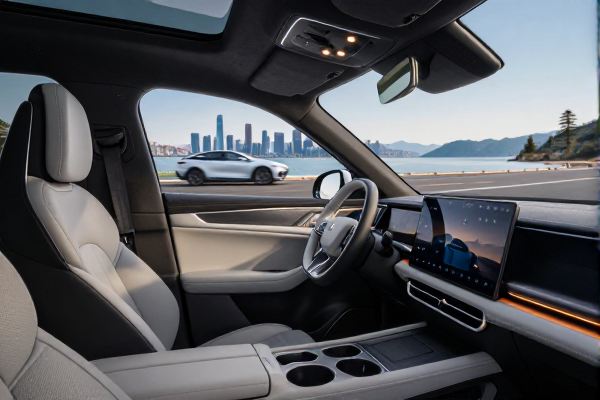
The Basecamp’s monocoque allows for factory-integrated camping hardware that the U.S. Bronco (with its removable hardtop and doors) cannot easily accommodate. The Outer Banks trim includes an electric pop-up lift roof that expands headroom and ventilation. The rear swing gate houses a “Wild Kitchen” with a fold-down prep table and a 6.6kW exterior power port. Inside, the center console has a 7.5-liter thermal storage unit for heating or cooling food and drinks. The five-seat cabin can be converted into a sleeping area using an official inflatable mattress, allowing two adults to sleep inside with climate control. These features are clearly aimed at the Australian caravan and camping market, where long-distance highway travel is common.
Ford USA has not announced any plans to bring the Basecamp stateside, and the model’s Chinese origin and unibody construction would likely struggle to find buyers in a market that worships the body-on-frame Bronco. However, the EREV powertrain could theoretically help Ford meet Corporate Average Fuel Economy (CAFE) standards in the U.S., where the company is under pressure to sell more electrified vehicles. Industry analyst Sam Fiorani of AutoForecast Solutions notes: “The Basecamp is a clever way for Ford to leverage its Chinese JV for global markets with strict emissions rules. But in the U.S., the Bronco brand is synonymous with off-road capability, and a unibody EREV would dilute that image unless priced aggressively.” Given the current trade tensions and tariffs on Chinese-built vehicles, a U.S. launch seems unlikely before 2030.
The Basecamp is expected to start around AUD$60,000 (about USD$39,000) in Australia,