Browse

Log in / Register
 Share
Share

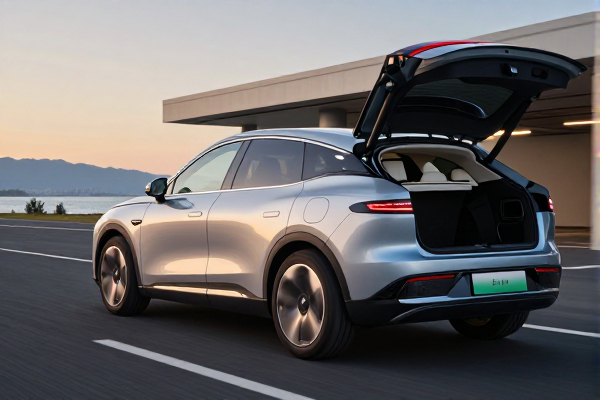
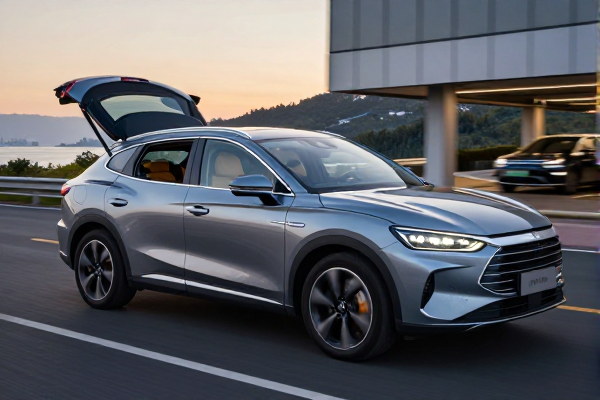
August 20, 2025 – China's automobile exports continue to accelerate, reaching 6.14 million vehicles in the first half of 2025, a 66.8% year-on-year increase. New-energy vehicle (NEV) exports alone surged 120% to 2.909 million units. Yet a familiar narrative resurfaces in Western media: that China's export growth is driven by "overcapacity." This claim misreads the fundamental transformation underway in the global auto industry, where the shift from internal combustion engines to electrification and intelligence is reshaping supply and demand.
Industry analysts point out that the current export boom is not a sign of excess production but a direct reflection of a structural transition. The conventional car market is shrinking, while NEVs—the new growth driver—are exploding. China's auto industry, with the world's most complete NEV supply chain and power battery market share exceeding 65%, has filled a global supply gap created by slow transformation in many legacy automakers. In the U.S., for example, the Biden administration's 100% tariff on Chinese EVs, announced in May 2024, has not dampened consumer interest. Instead, American buyers are increasingly seeking affordable, feature-rich electric models that Chinese manufacturers offer—vehicles that U.S. automakers struggle to produce profitably.
Exclusive perspective: The "overcapacity" label echoes the 1970s, when Japanese automakers faced similar accusations as fuel-efficient cars flooded the U.S. market. At that time, Detroit called it "dumping excess capacity," but the shift to economical models was inevitable. Today, the protagonists have changed: China leads in electrification and intelligent driving, while legacy automakers like Ford and GM continue to post heavy losses in their EV divisions. The real question is not whether China has too much capacity, but whether the global market can absorb the products it needs. According to the International Energy Agency, global NEV sales are projected to reach 20 million units in 2025, with penetration still far below 30% in most regions. The capacity gap remains significant.
The transition from old to new growth drivers is a painful but necessary process. Outdated combustion engine capacity is being phased out, while advanced NEV capacity expands. This is not "overcapacity" in the aggregate, but a reallocation of resources toward higher efficiency. Nobel laureate George Stigler's "survivor method" shows that market share shifts to more efficient producers over time. China's NEV penetration rose from 5.34% in 2020 to 51.2% in the first seven months of 2025, while Level 2 advanced driver-assistance systems penetration exceeded 70%—the highest globally. These figures demonstrate that the industry is evolving, not overproducing.
Nor does the "overcapacity" narrative hold up under market logic. In 2025, Chinese automakers' combined global sales approached 27 million vehicles, ranking first worldwide. If capacity were truly excessive, global consumers would not be voting with their wallets. The real issue is that some Western countries, rather than adapting to the shift, are erecting trade barriers. The U.S. tariff on Chinese EVs, for instance, may protect domestic manufacturers in the short term but risks slowing the adoption of affordable electric vehicles that American consumers increasingly demand. A 2025 survey by the American Automobile Association found that 42% of U.S. car buyers consider an EV for their next purchase, but price remains the top barrier. Chinese models, priced 30–50% lower than comparable U.S. brands, could fill that need.
Ultimately, the global auto industry's transition from "fuel tanks" to "batteries" and from "mechanics" to "intelligence" is a systemic upgrade. Instead of building walls, the focus should be on optimizing the international division of labor through open cooperation. The only true measure of success is whether people around the world can afford better, smarter cars. That is the consensus the industry should work toward, not the tired accusation of "overcapacity."