Browse

Log in / Register
 Share

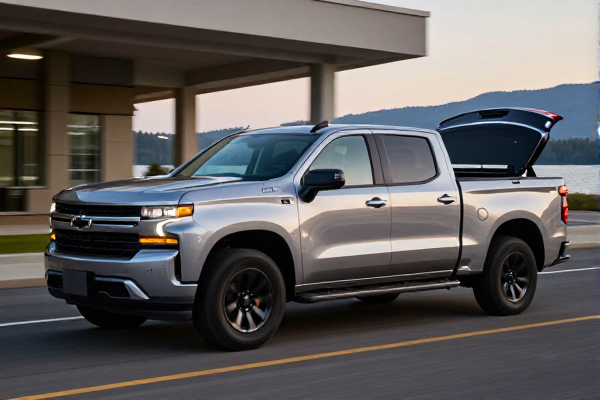
In a strategic engineering update, General Motors has significantly increased the payload capacity of its Chevrolet Silverado 1500 pickup, a move that effectively reclassifies the vehicle and grants it a temporary pass from upcoming stringent federal regulations. The update, confirmed for August 1st, underscores the intense pressure automakers face to balance product capability with evolving environmental and safety mandates. October 26, 2023.
The 2027 model year Chevrolet Silverado 1500 LTZ Premium will now offer a payload capacity of 942kg, an increase of 194kg over the previous model. Similarly, the off-road-focused ZR2 variant sees a 209kg boost to 922kg. This substantial increase directly elevates the truck's Gross Vehicle Mass (GVM) from 3300kg to 3505kg, shifting its official classification out of the "light goods vehicle" (NA) category and into the "medium goods vehicle" (NB1) bracket.
This technical reclassification carries significant regulatory weight. Under current U.S. frameworks, including the New Vehicle Efficiency Standard (NVES), vehicles with a GVM rating between 3500kg and 3855kg are granted a temporary exemption from the standard's strict CO2 emissions targets until at least June 30, 2027. For GM, which faced substantial financial penalties last year for missing fleet emissions targets, this recalibration of the Silverado 1500 provides crucial breathing room in its compliance strategy.
Beyond emissions, the shift to an NB1 classification also allows the Silverado 1500 to sidestep a separate, newly proposed federal safety rule that would mandate advanced autonomous emergency braking (AEB) with pedestrian detection for all new light vehicles by 2026. It is worth noting, however, that GM states the updated Silverado 1500 is already equipped with this specific safety technology as standard, suggesting the exemption is a secondary benefit rather than the primary motive for the payload change.
The update includes other subtle refinements. Exterior black badging and lettering provide a distinct visual cue, while the LTZ Premium model's Z71 off-road suspension with Rancho shocks has been replaced by a system featuring twin-tube dampers. Powertrain specifications remain unchanged, centered on a formidable 6.2-liter naturally aspirated V8 engine producing 313kW and 624Nm, paired with a 10-speed automatic transmission and a full-time four-wheel-drive system.
This tactical maneuver by GM reflects a broader industry trend of engineering vehicles to fit within specific regulatory niches. As the Environmental Protection Agency (EPA) and the National Highway Traffic Safety Administration (NHTSA) continue to tighten rules for light-duty vehicles, manufacturers are exploring design parameters that place popular models like half-ton pickups into heavier regulatory categories with different timelines and requirements. This creates a complex landscape where physical capability and compliance strategy are increasingly intertwined.
The financial context is critical. GM, encompassing brands like Cadillac, Chevrolet, and GMC, incurred millions in penalties for exceeding CO2 targets and remains at risk for further fines unless it can improve its sales mix of efficient vehicles or purchase credits from competitors. The reclassified Silverado 1500, while potentially more profitable per unit, represents a tool to manage this portfolio-wide compliance challenge, even as the company invests in its long-term electric vehicle transition.
Pricing for the updated 2027 lineup reflects these changes and broader market inflation. The Silverado 1500 LTZ Premium now starts at $135,990, and the ZR2 at $147,490 (excluding on-road costs), representing a $1,000 increase over the pre-update models. Production continues in Mexico, with final right-hand-drive conversion for relevant markets handled by Walkinshaw in Melbourne, Australia—a reminder of the globalized nature of modern vehicle manufacturing and modification.
Industry analysts note that while such reclassification provides short-term regulatory relief, it may attract scrutiny from policymakers aiming to close perceived loopholes. The exemption window until mid-2027 sets a clear timeline, after which these medium-classified pickups will likely need to meet the stricter standards applied to lighter vehicles, potentially necessitating more fundamental powertrain changes or advanced hybrid systems.
For consumers, the update presents a mixed value proposition. The increased payload is a tangible, work-oriented benefit for commercial and heavy-duty users. However, the associated price increase and the strategic regulatory context may give some retail buyers pause, highlighting the tension between vehicle attributes designed for the market and those influenced by the regulatory ledger. The coming years will reveal whether this strategy is a stopgap measure or a lasting feature of the pickup truck segment.