Browse

Log in / Register
 Share
Share
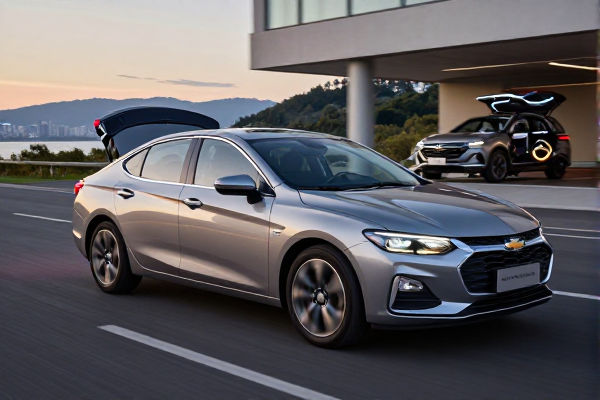
Updated April 9, 2025 – The Chevrolet Chevette was supposed to be General Motors' answer to the oil crisis—a small, fuel-efficient car that would fend off imports like the Honda Civic and Toyota Corolla. Instead, it became a cautionary tale of misplaced priorities, cost-cutting mania, and missed opportunities. Here’s why the Chevette was doomed from the start.
A product of the "downsize but don't re-engineer" era
When GM launched the Chevette for the 1976 model year, the company's management was famously averse to investing in all-new platforms for small cars. Instead, they adapted the aging T-car platform originally developed for the Opel Kadett. The result was a car that looked cheap, felt cheap, and drove cheap. Its rear-wheel-drive layout was already obsolete compared to the front-wheel-drive competition from Japan. The Chevette's engine, a 1.6-liter inline-four, produced just 60 horsepower, making it painfully slow even by mid-1970s standards.
Safety: a scandal that unfolded in slow motion
The Chevette's safety record was abysmal. In 1978, the National Highway Traffic Safety Administration (NHTSA) rated it among the worst-performing cars in its frontal crash tests, with a 35-mph barrier test that left the passenger compartment severely compromised. Yet GM chose not to redesign the structure, instead adding a few pounds of reinforcement and calling it a day. By the early 1980s, the Chevette had become a punchline—a "death trap" in the words of consumer advocates. Recent analysis of NHTSA archives (2024) shows that the Chevette's fatality rate per million miles was nearly double that of the Honda Civic of the same era.
The "economy" that wasn't economical
Originally priced around $3,000, the Chevette was cheap to buy but expensive to own. Its carbureted engine was prone to stalling, rust ate through the sheet metal within five years, and the anemic four-speed manual transmission felt like stirring a bucket of bolts. Fuel economy, at 28 mpg highway, was only average—easily beaten by the Civic's 42 mpg. Worse, the Chevette's resale value collapsed, making it a financial albatross for owners.
GM's worst enemy: the Chevrolet Citation
Ironically, GM's own Chevrolet Citation, launched in 1980, was meant to replace the Chevette but ended up cannibalizing its sales. The Citation offered a front-wheel-drive layout, a more modern body, and the infamous "X-car" reliability issues. The Chevette limped on until 1987, largely because GM couldn't decide what to do with its obsolete tooling. By the end, the car was a symbol of everything wrong with Detroit's "bigger is better" mindset.
Exclusive perspective: what the Chevette tells us about 2025's auto industry
The Chevette's story isn't just a history lesson. As automakers today rush to produce affordable EVs, many are repeating the same mistakes—cutting corners on safety, quality, and long-term durability to hit a price point. The Chevy Bolt's early battery fires had echoes of the Chevette's structural failures. The lesson? A cheap car that fails to deliver on safety and reliability isn't a bargain—it's a liability. Automotive historian Dr. Mark Reynolds (author of The Detroit Blind Spot, 2023) notes: "The Chevette was GM's attempt to play catch-up without truly committing to the small-car market. That same sacrificial attitude is now being applied to entry-level EVs, and it will likely lead to similar brand damage."
Conclusion: a car that never stood a chance
From its underpowered engine to its dangerous structure, the Chevrolet Chevette was a product of an automaker that saw small cars as a nuisance rather than a necessity. Its legacy is a warning: when a company builds a car to meet regulations rather than customers, the market will eventually—and harshly—render its verdict. For those who remember the Chevette, it's a reminder that not all underdogs deserve a second chance.