Browse

Log in / Register
 Share


June 12, 2026 — Chery and its iCaur sub-brand are reworking towing and payload specifications on two Australia-bound models, acknowledging current figures fall short of local expectations. During a media briefing in China, executives pledged to lift the iCaur V27's 1.6-tonne tow rating and press on toward a one-tonne payload for the Chery Stockman ute ahead of 2027 launches.
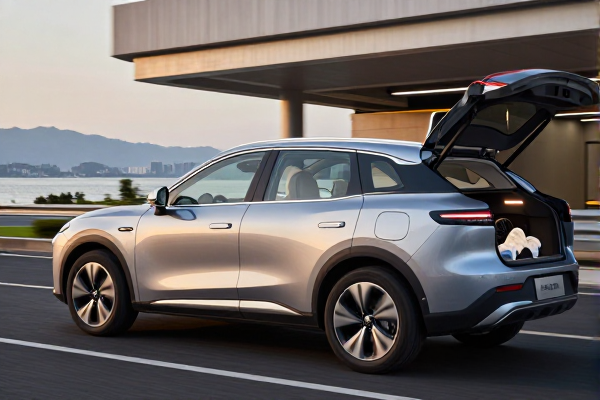
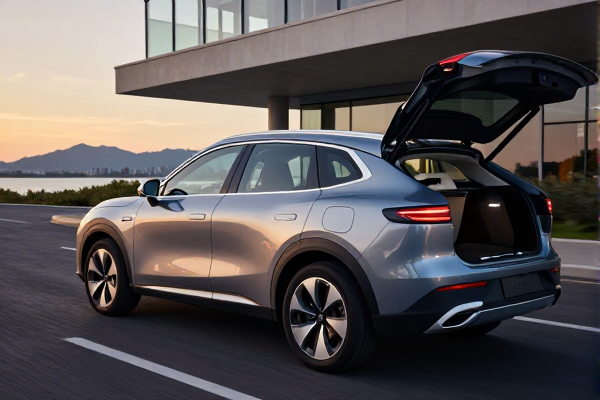
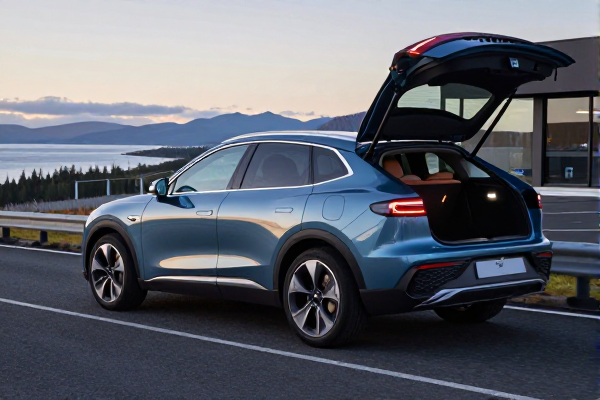
The V27, the larger of two iCaur SUVs confirmed for Australia, is currently rated at roughly 1.6 tonnes. An iCaur Australia product manager did not sugarcoat the shortfall. "Currently, the V27's towing capacity is about 1.6 tonnes. It is not enough, but we will improve it in the future," they said.
That limitation stands out in a market where large SUVs are routinely expected to pull a 3.5-tonne caravan. The Ford Everest, fitted with its genuine tow pack, offers 3500kg; anything below 2 tonnes typically disappears from the shopping list of buyers with serious trailers or boats.
The unusual twist is that iCaur's smaller V25 SUV tows more. Both the battery-electric and range-extender versions quote 1800kg — 200kg more than the larger V27. The product manager's explanation was direct: "Yes, because the V27 was developed earlier than the V25."
In short, the newer platform wins on capability, and the older architecture is now playing catch-up. No revised V27 figure has been published, and the brand has not attached a timeline to the improvement. Final Australian specifications remain open, meaning the upgraded rating could be locked in before orders begin.
The V25 is set to lead iCaur's Australian launch early in 2027, followed by an EREV version and then the bigger V27 later in the year. That sequence means the brand's first showroom model benefits from the newer engineering, while the V27's towing fix may land just in time for its own debut.
At Chery itself, the Stockman ute program is working through the other half of the capability equation: payload. The diesel plug-in hybrid is chasing the one-tonne payload originally proposed for Australia, but preliminary figures show 765kg — 25kg under the BYD Shark 6 Premium's 790kg.
Stockman chief product manager Mark Qi points squarely at the hybrid hardware. "We know about that. Think about the diesel PHEV, the battery and the weight. The payload now isn't as good; it is not one tonne. We are still doing work on the payload."
Asked whether the one-tonne target is realistic with the plug-in hybrid, Qi answered: "Yes. We are still working with the Australian team on it." He also noted that payload matters less in China, where the vehicle is positioned toward lifestyle buyers rather than commercial operators.
In Australia, however, payload is a headline specification that buyers read before they open the doors. The 765kg figure comes from a 3500kg gross vehicle mass minus a 2735kg kerb weight. And it is not simply about what fits in the tub: payload covers occupants, cargo, accessories and the tongue weight of a trailer. Maximum payload and maximum towing capacity also cannot necessarily be used at the same time — gross combination mass and axle limits apply.
The one-tonne mark matters practically, not just psychologically. It allows a ute to carry a pallet of building materials, a quad bike in the tub, or two adults with a full load of gear without brushing against legal limits. That is why Chery is pushing for it in Australia even though it is barely a consideration in the home market.
The competitive backdrop makes the numbers hard to ignore. BYD sold 18,073 Shark 6 utes in Australia in 2025, including 15,564 to private buyers, ranking ahead of the Ford Ranger and Toyota HiLux in private sales. Those results came from the original Premium model, which pairs a 790kg payload with 2500kg braked towing. BYD's newer Performance variant lifts braked towing to 3500kg but drops payload to 725kg — the plug-in ute trade-off in a nutshell.
The Stockman's preliminary braked towing figure is 3495kg, just 5kg short of the 3500kg class benchmark:
| Model | Payload | Braked towing capacity |
|---|---|---|
| Chery Stockman Ultimate diesel PHEV* | 765kg | 3495kg |
| BYD Shark 6 Premium | 790kg | 2500kg |
| BYD Shark 6 Performance | 725kg | 3500kg |
*Stockman figures are preliminary. Maximum payload and maximum towing capacity may not be available simultaneously; gross combination mass and axle limits also apply.
Chery is pairing its specification work with local validation. The V25 has completed 30,000km of Australian testing to surface issues that China driving would not reveal. "We want to make sure that when the car goes on sale in Australia, it doesn't have these small issues," the iCaur product manager said. Chery has also engaged Australian engineering firm Premcar to test and validate the Stockman's ride and handling, while iCaur is working with an undisclosed Australian supplier.
Qi reaffirmed the Stockman's launch timing during the briefing: "We have discussed it with our Australian team. For now, the target is still February next year. In February, we will deliver the Stockman in Australia."
For US readers, this is a useful window into how Chinese brands approach capability-driven markets. Towing and payload ratings are make-or-break in both Australia and the US, and the decision to publicly acknowledge gaps — then back it with local engineering validation through firms like Premcar — signals a maturing strategy that could carry into other markets.
The next twelve months will determine whether Chery can close the gap. By the company's own admission, the current numbers are not good enough. The pressure is on to deliver before the Stockman and iCaur lineups reach Australian showrooms.