Browse

Log in / Register
 Share
Share
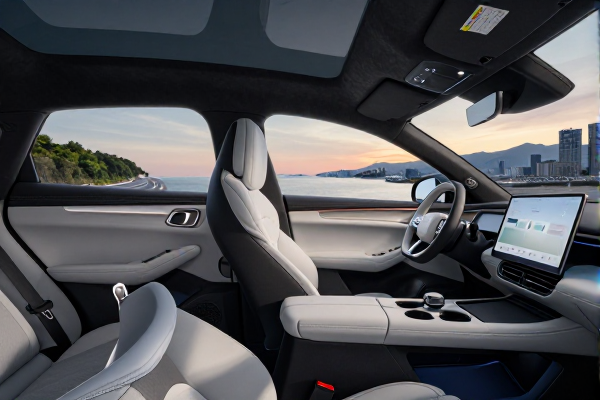
Digital Car Keys Move Closer to Widespread Reality as Industry Giants Collaborate on Testing
May 15, 2024 — The future of vehicle access took a significant step forward as the Car Connectivity Consortium (CCC) convened its 18th Plugfest testing event. Hosted at the DEKRA Automotive Test Center in Germany, the gathering united a global roster of automotive manufacturers, device makers, and technology providers with a common goal: to rigorously test and refine the next generation of digital key technology, moving it from a promising concept to a reliable, everyday convenience for drivers.
This collaborative effort underscores a pivotal shift in the automotive and tech industries. The focus is moving beyond simply replicating a physical key's function on a smartphone. Instead, the vision is for a seamless, secure, and interoperable ecosystem where your phone, watch, or other trusted device can universally unlock, start, and share access to vehicles—regardless of brand. The recent Plugfest represents a critical stress-test for this vision, ensuring different devices and cars from different companies can communicate flawlessly.
A Who's Who of Automotive and Tech Innovation The participant list for Plugfest #18 reads like a directory of industry leaders. Alongside automakers such as BMW Group, Hyundai Motor Company, and Jaguar Land Rover (JLR), the event featured pivotal technology firms like Apple and Google, whose operating systems are central to the mobile device experience. Other key contributors included testing and component specialists like Robert Bosch, Keysight Technologies, and Huf Group. This diverse participation is essential, as digital key success hinges on cooperation across the entire vehicle supply and technology chain, not just within a single car company's walled garden.
Sharpening the Focus on Digital Key Version 4 A central theme of the event was advancing Digital Key Release 4 (v4), the latest specification from the CCC. While previous versions established the foundation, v4 introduces enhanced capabilities designed to improve performance, security, and user experience. The Plugfest served as a live laboratory to validate these new features. Key activities included running new, more comprehensive test cases specifically for v4 implementations and conducting crucial interoperability tests between newer v4 devices and the currently deployed v3 devices. This backward compatibility testing is vital for a smooth transition, ensuring new technology doesn't leave existing users behind.
Introducing Enhanced Validation Tools Beyond testing the keys themselves, the event also debuted improved methods for validation. For the first time at a Plugfest, updated Near Field Communications (NFC) test cases were available, allowing for more precise evaluation of the short-range tap-to-unlock functionality. Additionally, enhanced Bluetooth Low Energy (LE) "sniffing" techniques were employed. These techniques allow engineers to meticulously monitor and analyze the wireless communication between a device and a vehicle, strengthening the validation of passive approaches—where the car unlocks as the authorized phone passively approaches. Support for remote keyless entry scenarios was also continued, covering a wide spectrum of real-world use cases.
Industry Leaders Highlight Collaborative Progress "The CCC Plugfests are where theory meets practice for our global ecosystem," stated Alysia Johnson, President of the Car Connectivity Consortium. "By bringing competitors together to test collaboratively, we accelerate interoperability and pave the way for a more seamless and frustration-free user experience. Our partnership with DEKRA for this event was instrumental in creating the environment needed to validate these complex new capabilities."
Johnson further emphasized the milestone nature of the event: "Plugfest #18 marks tangible progress for Digital Key v4. By expanding our testing matrix across diverse devices, vehicles, and underlying technologies, and by introducing these advanced validation tools, we enable our members to identify and resolve potential issues much earlier in the development cycle. This collaborative troubleshooting is what ultimately brings more robust, secure, and interoperable digital key solutions to consumers faster."
The Road Ahead: From Testing to Your Driveway The work done at Plugfest #18 is more than a technical exercise; it's a direct contributor to the timeline for broader consumer adoption. A key outcome was the identification of candidate devices for the Interoperability Device List (IDL) for v4. This list is a cornerstone of the CCC's certification program, providing a clear benchmark for manufacturers. Progress here signals that devices are maturing toward commercial readiness.
Exclusive Market Perspective: Analysts point to this coordinated, consortium-based approach as a primary accelerant for digital key adoption. Unlike proprietary systems locked to one brand, the CCC's open standard—fueled by events like Plugfest—creates a rising tide that lifts all boats. It reduces fragmentation, assures consumers of cross-brand compatibility, and gives accessory makers a larger, clearer market to target. The active involvement of smartphone platform leaders (Apple, Google) at this hardware testing level is a strong indicator that deep integration into mobile ecosystems remains a top priority, which is crucial for mainstream user acceptance.
The path from a physical key fob to a truly universal digital key is complex, requiring unprecedented collaboration between historically competitive sectors. The latest CCC Plugfest demonstrates that this collaboration is not only happening but is producing concrete technical progress. As these tested and validated specifications make their way into upcoming vehicle and device models, the promise of leaving your car key at home is rapidly becoming a practical reality.