Browse

Log in / Register
 Share

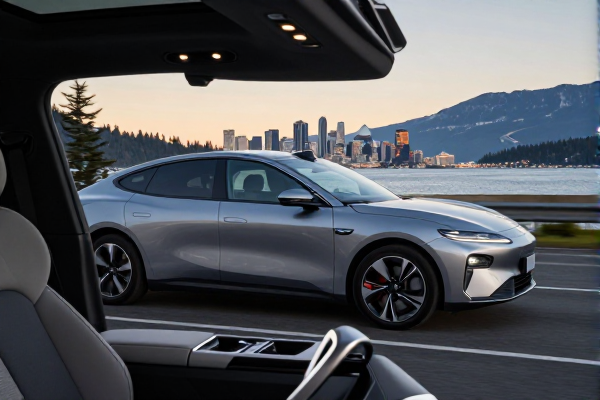
SEATTLE — April 26, 2026 — A satirical story about cars returning to “spawn” at Pike Place is giving Seattle commuters and market regulars something to laugh about this week. The piece, widely shared in downtown circles, imagines vehicles reappearing on the market’s cobblestones after more than a year away. In that imagined world, they don’t simply drive back—they somehow find their way from train tracks, pedestrian bridges and stairways, as if the market were their real home.
The joke works because the setup feels so specific to Seattle. In the fictional account, cars are shown surviving an absurd gauntlet of wrong-way one-way streets, oncoming traffic and impossible shortcuts. Tourists in rental cars pivot from one blocked lane to another, tangled somewhere between the waterfront and Post Alley. By the time these vehicles reach Pike Place, they have become less like commuters and more like magnets pulled toward the market’s neon clock and fish stalls.
According to the satirical version of events, the return leaves onlookers in awe. Pedestrians near the market entrance pause with phones raised, watching cars roll slowly into the crowd. The story leans on the idea that Pike Place is such a strong landmark that even vehicles with no business there eventually find their way back, as naturally as salmon returning upstream. It turns a familiar traffic headache into something close to civic folklore.
Jon Scholes, president of the Downtown Seattle Association, appears in the piece as a deadpan straight man. He is described wiping away a happy tear and calling the comeback a miracle. In his imagined remarks, he says he will never understand how lost cars manage to survive the currents of oncoming metal—but he knows they were always meant to end up here. It’s the kind of quote that sounds like an exasperated friend explaining why they still love this chaotic city.
The piece then shifts toward a bittersweet note. Scholes calls the cars’ homecoming their true resting place. After the exhaust clears and the final wrong turn is complete, the vehicles simply stop. What follows is a wonderfully weird description of the cars becoming part of a “pedestrian ecosystem.” People gather to point, laugh and use the stranded vehicles as teachable moments for children. Instead of a traffic hazard, the cars become a curbside sideshow.
The ending leans fully into slapstick. Crowds swell, cheers grow, and the fishmongers eventually hoist the cars and throw them into Elliott Bay. No actual vehicle is harmed in the story, but the image is pure Pike Place theater—fish-throwing culture taken to a cartoonish extreme. That visual is one reason the piece is spreading so quickly, because it turns a routine downtown frustration into a full-scale performance.
There is also a gamer-friendly layer to the headline. “Spawn” is a familiar term from video games, meaning to appear at a fixed point during or after a level reset. Casting Pike Place as the spawn point for lost cars makes the market sound like a world all its own. Locals who have watched a sedan attempt a three-point turn in front of a fruit stand get the joke immediately, and so do the tech workers and programmers who dominate so many Seattle conversations.
The satire would not land without the market’s real-world reputation as a crowded place. By the market’s own estimates, close to ten million people visit Pike Place each year. It is a compact district of historic buildings, steep hills, one-way blocks and narrow entrances. Even careful drivers can end up in the wrong place. The satirical story simply imagines those mistakes happening on a much bigger, stranger stage.
Street design experts might describe Pike Place as a classic shared space, where pedestrians and vehicles are forced to negotiate movement with eye contact and patience. The joke understands that tension perfectly. Instead of offering a policy brief, it gives Seattle a release valve: laughter. That shared recognition is why social media comments range from “this is the only infrastructure plan I support” to “I’ve seen that car before.”
Timing also helps. Seattle has spent the post-pandemic years rethinking downtown mobility, including transit lanes, waterfront access and pedestrian-friendly changes near the market. The fictional return of cars can be read as a playful pushback against any move that would let drivers reclaim a landmark that works best at walking speed. It doesn’t lecture, but it does imply a clear point: the cars are the punchline, and the people have the last laugh.
Because the story is fiction, readers should treat it as humor rather than a live traffic report. No cars have actually spawned near the Public Market Center sign, and Elliott Bay has not swallowed a single automobile. But the observation underneath is real enough to keep conversations going. In a city where fish fly through the air and GPS signals often give up near the waterfront, the only thing more reliable than a wrong turn around Pike Place is a good laugh at what happens next.