Browse

Log in / Register
 Share

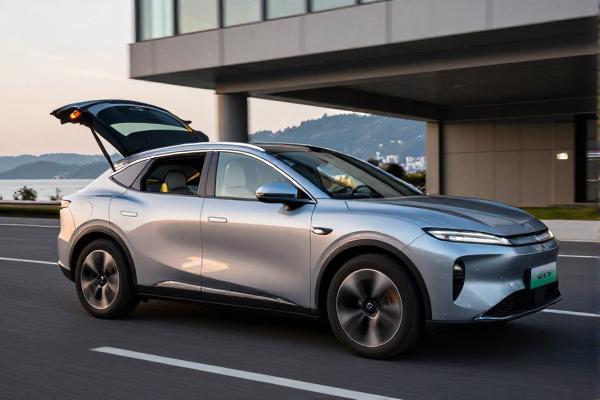
For decades, the car-buying ritual was built on iron and pistons: horsepower, gearboxes, the badge on the grille. That ritual is gone. Walk into a dealership today — or, more accurately, open a browser — and the conversation shifts to screens, chips and software.
The EV boom, and the arrival of smartphone giants like Xiaomi and Huawei in the car business, has pushed vehicles toward one inevitable destination: the rolling computer. (Updated June 10, 2025)
Now the industry faces a question it never prepared for: are younger buyers evaluating a car the exact same way they evaluate a phone?
A quick look at the market explains the shift. Xiaomi's SU7, the first EV from the phone maker, racked up tens of thousands of orders within hours of its launch. Huawei, meanwhile, has been selling HarmonyOS-equipped vehicles through partners like Aito — and they move on software reputation alone. Legacy brands have noticed. Many now talk less about acceleration and more about over-the-air updates and "software-defined vehicles."
And they have to. Young car shoppers are increasingly treating a vehicle as a computer on wheels. In China, where a sizable slice of EV buyers are under 35, automaker survey data shows software experience now ranks right up with charging access as a purchase driver — often beating raw power.
When a digitally native consumer looks at an EV, they don't see a motor wrapped in sheet metal. They see a hardware platform waiting for an operating system.
That changes what gets tested on a test drive. Instead of asking how fast it goes, the question is how well the interface works. Battery range replaces horsepower. Charging network coverage replaces fuel-economy bragging rights. Over-the-air update guarantees replace the warranty talk. It is exactly how a phone gets judged: system speed, battery life, software support.
This mindset also colors the final act of buying. A McKinsey consumer study on connected cars found that data-security worries are a significant barrier for many buyers, with consumers pressing brands to show exactly what vehicle data gets collected — and why.
The buying journey starts long before anyone sits in a seat. Millennials and Gen Z aren't flipping through brochures or wandering dealership lots. They're on TikTok, Instagram and Reddit, watching first-drive videos, comparing user-uploaded screen demos, and reading threads from frustrated owners.
Research on vehicle-shopping habits shows younger consumers lean heavily on social media, influencer reviews and peer opinions. Where their parents trusted a salesperson's handshake, they trust a stranger's YouTube review and a flood of real owner comments.
The brand loyalty once reserved for Apple and Google now extends to the vehicle. Apple CarPlay and Android Auto are no longer nice-to-haves; they're requirements. If a car's screen doesn't mirror a driver's iPhone in under a second, the showroom visit is over before it begins. Industry watchers still talk about GM's 2023 announcement that it would eventually phase out CarPlay from its EVs — and the furious backlash that followed.
The comparison runs deeper once inside. Touchscreen lag, buried submenus, and navigation bugs that freeze mid-route are the modern equivalent of a rough idle. Fail at those, and the entire vehicle takes the hit in a buyer's eyes.
What makes this painful for the auto industry is a strange disconnect. Consulting firm Accenture has repeatedly flagged the gap: roughly 80 percent of automotive executives believe they deliver an excellent digital customer experience, but only about 8 percent of customers agree. That is not a difference of opinion; it's a canyon.
Part of the problem is culture. A company that spent decades perfecting torque curves doesn't suddenly build interfaces like an app studio. Legacy automakers have hired software engineers by the thousands, but their testing protocols and quality metrics still lean toward mechanical engineering. They still think like mechanics, not app developers.
Treating a car like a phone, though, crashes headfirst into physics. Swiping through submenus to adjust climate controls or wipers means taking eyes off the road. AAA's traffic-safety research has shown that some touchscreen tasks can keep attention away from the road for over 40 seconds — reaction times that studies compare to driving under the influence.
Regulators are pushing back. Euro NCAP has said its 2026 safety ratings will reward vehicles that keep critical functions on physical controls instead of hiding them in touchscreens. Automakers have heard the message. Volkswagen has admitted it overcorrected with buttonless interiors and is walking parts of that back. Mazda is likewise returning to a hybrid approach that pairs screens with tactile controls for core functions.
None of this takes away from the broader shift. A connected car with a sharp screen, frequent software updates and seamless phone integration is a competitive advantage no automaker can ignore.
The real winners will be those who treat the car as both a clever piece of consumer tech and a machine that must keep people alive. The future belongs to manufacturers that blend a digital-native experience with the uncompromising, safety-first reality of vehicle design — not to those who simply bolt an iPad onto a chassis.