Browse

Log in / Register
 Share

May 10, 2026 — With less than six months until California’s next gubernatorial election, voters will pick a leader to manage the world’s fourth-biggest economy and decide whether the state remains a global template for climate action. The winner inherits a paradox: record clean-energy growth on one side, an affordability squeeze on the other, plus a fossil-fuel sector fighting for relevance and a federal government that is actively challenging California’s authority to enforce stricter vehicle rules. The choice, according to experts at the Union of Concerned Scientists (UCS), is whether the next governor treats cost-of-living and climate policy as competing priorities or as a single agenda.
This year’s election is the first open gubernatorial race in California in eight years. Gov. Gavin Newsom, whose second term ends in January 2027, is barred by term limits from another term. As of this writing, the campaign is still heavy on slogans and light on details, which makes the next six months critical: the candidates’ policy proposals will reveal whether they understand the scale of the transition ahead.
Transportation remains California’s largest source of climate pollution. It is also the source of the next governor’s most immediate challenge: the state’s refinery system is already shrinking, and the trend is likely to accelerate.
Falling gasoline demand and a national refinery shakeout have already forced facilities to close. More closures are not a question of if — they are a question of when. If the next administration tries to rescue every refinery, it will spend political capital defending an industry in retreat while preventing the cleaner transportation system that is already beginning to emerge.
The smarter path is to plan the phaseout. That means pairing clear timetables with policies that keep gasoline affordable during the transition, cushion communities that depend on refinery jobs, and accelerate zero-emission alternatives. The oil industry will almost certainly demand a rollback of California’s climate targets. The next governor needs the analytical tools — not to mention the political spine — to show why rolling back ambition would not save a single refinery or lower prices by a single cent.
On clean energy, California’s results are real. Grid battery capacity has expanded roughly 25-fold since 2019. Last year, demand on the state’s power grid was met entirely by clean energy for at least a portion of 279 days.
But those “clean hours” are not the same as a fully clean grid. The target is still 100% clean electricity by 2045, and the path there has become harder, not easier. The next governor will have to overcome transmission permitting delays, the sudden electricity appetite of data centers, wildfire insurance and liability costs, and the technical challenge of bringing wind and geothermal online so solar and batteries do not carry the load alone.
One underused tool is regional grid coordination. If California’s grid operator can share clean power with neighboring Western states and import renewables during lulls, reliability improves and costs fall. The next governor should make that happen despite inevitable objections from utilities and out-of-state interests.
The San Joaquin Valley is already living through a land transition that will define California’s inland communities for decades. Groundwater is rapidly depleting, and climate whiplash — extreme drought followed by devastating flood — makes the old model of large-scale irrigated agriculture impossible to sustain.
The next administration must decide how to retire irrigated cropland on a vast scale. That process, if mishandled, will be deeply unjust. Today, too much of the transition is happening through defaults: landowners fallow fields, farmworkers lose jobs, small towns suffer, and nobody coordinates the result.
A just transition would start with a broad planning table, one involving state agencies, local governments, labor unions, sustainable industries, and, above all, the communities themselves. The next governor should not wait for a crisis. The dry wells and fallowing are already here.
The legal landscape for California’s clean transportation rules has shifted dramatically. Before President Trump returned to office, the state had secured federal approval to require all new cars sold by 2035 to be zero-emission and to apply similar phaseout rules to trucks. Now, Washington is challenging those authorizations, and California cannot count on federal allies.
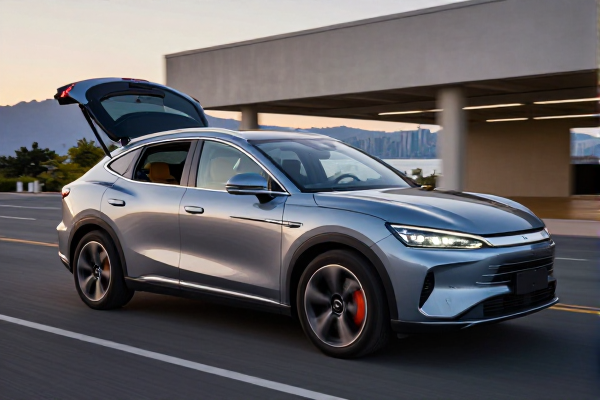
But the state has more leverage than it sometimes acknowledges. The next governor should expand purchase incentives and look for revenue-generating mechanisms that make EV ownership more accessible. Californians also need to see EVs as more than cleaner cars: a connected EV battery can send power back to a home or the grid during evening peaks. That functionality should be prioritized through rules and rate designs.
And as EV batteries age, the state needs to prepare for their next life. Reuse should come before recycling, and recycling should come before disposal. Strong end-of-life battery policies would keep California a leader in clean production and reduce the risk of environmental damage in communities that handle waste.
The common thread through all these priorities is cost. If the next governor presents climate action as a separate, expensive ambition, the program will fail politically. But if climate policies are designed to lower households’ combined costs — for electricity, transportation, and housing — they can build a durable majority.
That is a departure from past practice. Sacramento has many offices for housing, energy, and risk management, but too few for the way those systems collide in an average family’s budget. The next governor should create a clear, accountable structure for aligning climate and affordability goals, with milestones and public reporting.
Nothing about this transition is easy. The next governor will be forced to make decisions that industries dislike and courts may delay. But California’s economy is large enough, and its history of uncertainty is old enough, for the state to show that climate progress and public prosperity can advance together.
Voters should demand specifics in the months ahead: How will the state manage refinery closures? How will it fund electricity infrastructure? How will it protect valley towns? The governor who answers those questions clearly will not only deserve to win; they will be ready to lead.