Browse

Log in / Register
 Share

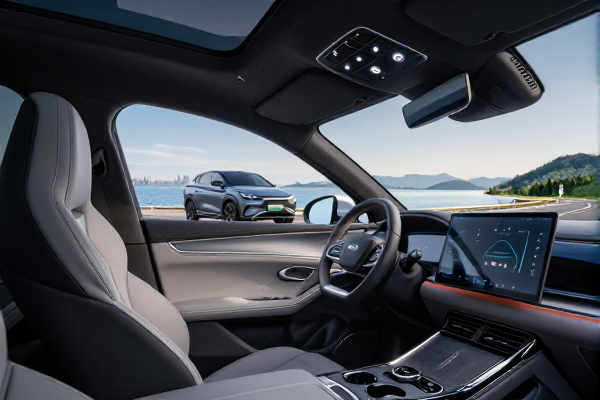
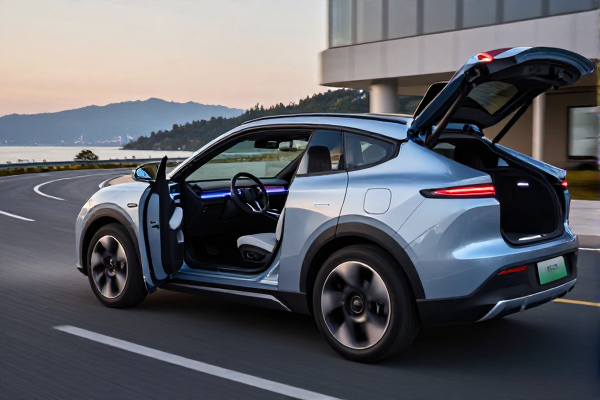
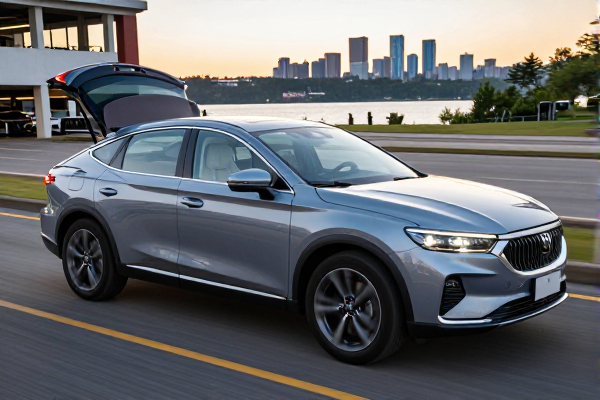
CANBERRA, Oct. 2, 2026 — BYD has become the clearest automotive expression of what two researchers call China's "architecture of dependency": a strategy that seeks control of the entire value chain, from lithium mine to battery chemistry to finished car. The concept, laid out in The Australian, Brazilian, and Chinese Dynamic, took center stage at a Sir Richard Williams Foundation seminar in Canberra on October 1. The timing is apt. Fresh data show BYD's overseas deliveries surging while its domestic profit collapses — a combination that makes its export push less an option than a necessity, and Toyota's solid-state battery program the most credible counter yet.
In April 2026 alone, BYD exported 135,098 vehicles worldwide, every one fully electric or plug-in hybrid. Some analysts put that figure ahead of Tesla's global deliveries for the same month. SNE Research counted around 497,000 BYD vehicles sold outside China in the first half of 2026, up 81 percent year on year — placing BYD third in overseas volume behind Volkswagen and Tesla. The company's own target is 1.6 million overseas sales this year, supported by new or expanding plants in Hungary, Brazil, Thailand, Indonesia, Pakistan and Turkey, with Spain under consideration.
The expansion is deliberately lopsided. Rather than storm the politically hardened U.S. market, where tariffs and political resistance leave it effectively locked out, BYD has saturated secondary markets where legacy automakers grew complacent: the Global South and parts of Europe. Thailand is the hub and template for ASEAN; Brazil, Hungary and Turkey double as tariff workarounds. In June 2026, Canada cut its tariff on Chinese EVs from 100 percent to 6.1 percent as part of a wider energy and climate partnership with Beijing, opening a side door into North America.
None of this would be possible — or profitable — without vertical integration. BYD builds its own battery cells, semiconductors and software, inheriting the capability from its pre-car life as a battery maker. That lets it capture margin at every step instead of paying it to third parties. Factories able to produce more than 200,000 vehicles a year have emerged in Indonesia, Thailand, Pakistan, Turkey, Hungary and Brazil, offering cars that run, on average, about 20 percent cheaper than Western equivalents before subsidies.
The export push also carries a sign of domestic weakness. BYD's first-quarter 2026 net profit tumbled 55 percent — the worst result in three years — as a brutal price war and thinner subsidies compressed sector-wide margins to an average of 3.2 percent. With higher average selling prices abroad, exports have shifted from growth option to financial necessity. That only strengthens the incentive to keep undercutting Western rivals wherever it can reach.
BYD began as a battery manufacturer, and that lineage explains the strategy. Its subsidiary FinDreams is the world's second-largest EV battery producer, behind only CATL. Together, both companies anchor a Chinese battery-cell industry that feeds the overwhelming majority of the world's electric and plug-in hybrid vehicles. The direct link to the Canberra seminar's core thesis: China controls 57 percent of global lithium refining and 85 percent of rare-earth processing, even though Australia alone produces 45 percent of the world's raw lithium. A country can dig the resource from its own soil and still function as what the book calls a "feeder economy" if it lacks midstream refining capacity.
The battery pack in a BYD Seal or Dolphin is that same architecture on four wheels. Raw lithium, cobalt and rare earths are processed in Chinese-controlled facilities, turned into cells by Chinese makers, and exported as finished cars whose chain — from mine to midstream to cell to vehicle — stays inside Beijing's sphere. The authors draw a pointed comparison: the difference between a port and a battery is one of visibility. A container port is a fixed physical chokepoint that a government can study and, in principle, refuse, as Australia refused Huawei's 5G equipment in 2018. A battery is a chokepoint inside a consumer product, bought one car at a time, with no equivalent moment of sovereign decision. Every BYD sold in Bangkok, Budapest or São Paulo extends the network another vehicle, locking in years of dependence on Chinese cells, Chinese diagnostic software, and Chinese-controlled minerals for the eventual replacement pack. No government-to-government agreement is needed. This is dependency built at the retail counter rather than the negotiating table, which is precisely what makes it durable: there is no single decision point to reverse.
Europe shows how tariffs change the play. The European Union imposed levies on Chinese battery-electric imports in October 2024. BYD's answer was to localize: build in Hungary, source non-core parts regionally, and keep the cell — the part that carries the strategic value — under Chinese control.
Brazil follows a parallel track. BYD has converted a repurposed Ford plant into an EV production site, reflecting the wider Brazilian-Chinese pattern the book documents: deep economic accommodation that captures short-term industrial investment and jobs while ceding higher-value processing and design to the foreign partner.
Southeast Asia completes the picture. Thailand has become BYD's regional hub, and the model is now spreading through Indonesia and other ASEAN markets. The formula is consistent — aggressive pricing plus rapid localization — embedding BYD in national industrial policy rather than treating it as a mere import.
Across all three, the host country gains assembly lines and headline investment numbers, while the architecture of the value chain stays anchored in China. It amounts to a kind of "reprimarization" applied to advanced manufacturing: the host takes the downstream role even while hosting the factory.
Toyota's solid-state battery program is best understood as a move against the dependency architecture, not simply against BYD's market share. Toyota holds more solid-state battery patents than any other company and has worked the technology since 2008. The historic obstacle was a sulfide electrolyte that cracked under repeated charge cycles, holding early prototypes to a few hundred cycles. The company now says a proprietary fix delivers thousands of cycles without fracture.
The numbers are substantial: a second-generation pack targeting roughly 745 miles of range and a 10-minute 10-to-80 percent charge, about double the energy density of today's lithium-ion cells. Toyota plans first-generation solid-state vehicles, flagship-first under Lexus, in 2027–2028, with mainstream availability unlikely before the late 2020s.
The supply chain is the strategic detail. Toyota is not building this inside China's sphere. Its partner Idemitsu Kosan, a Japanese refiner, broke ground in early 2026 on a pilot plant to manufacture solid electrolytes, with several hundred tons of annual capacity expected by 2027. A sulfide-based architecture produced with a Japanese oil-and-chemicals partner — rather than sourced from CATL or FinDreams — creates an alternative processing geography entirely outside the Chinese model. CATL, the world's largest battery maker, has publicly doubted that solid-state batteries could reach commercial price viability before 2030. Toyota's 2027 target, if it holds, lands well before that skepticism would be tested.
For American policymakers, the BYD playbook carries an uncomfortable implication: tariffs on finished vehicles do not reach the dependency embedded in the battery. A U.S. consumer buying a car that relies on Chinese cells participates in the same architecture. Washington's attention has focused heavily on chips; batteries require the same scrutiny. The obvious counter-architecture runs through allied processing capacity in Australia, Canada and Japan, plus incentive rules — the U.S. tax-credit framework already requires battery minerals and components to be sourced outside China. Extending the same logic to software, replacement parts and charging infrastructure would be a logical next step. But the deeper lesson from the Canberra seminar is that none of these tools can be reversed by a single decision. Dependence assembled through thousands of individual purchases is far harder to unwind than a state-owned port.
The automobile has become a fourth front in a campaign already traced through lithium refining, rare-earth processing and port infrastructure such as Chancay. Toyota's solid-state program is so far the only industrial answer that challenges the architecture at its own level. Whether it holds its 2027 schedule or slips, the strategic question is settled: the race is no longer only about market share, but about who controls the chemistry between the mine and the road.