Browse

Log in / Register
 Share


Date: April 26, 2026
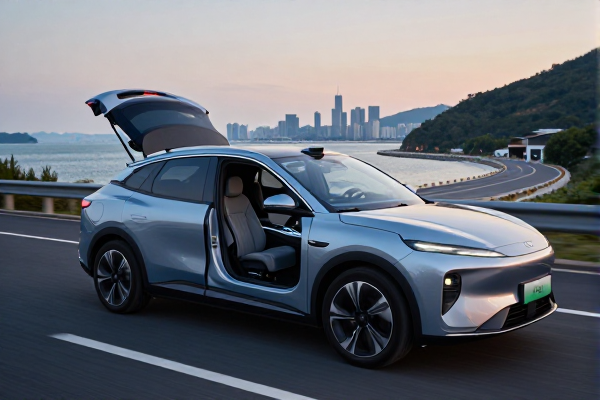
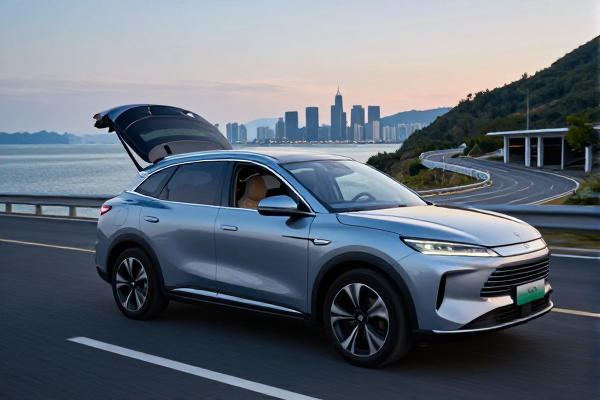
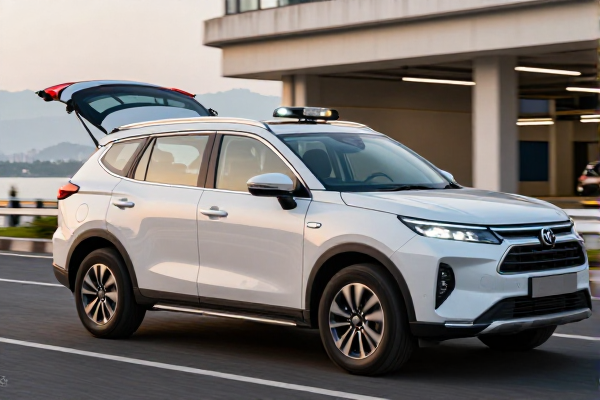
Starting Monday, April 27, Kadena Air Base on Okinawa will turn away every vehicle bearing a BYD badge. The directive applies to private cars, taxis, delivery vans, and contractor vehicles, according to a Yonhap report picked up by automotive outlet Carscoops.
Kadena is one of the largest U.S. Air Force installations in the Indo-Pacific, located on an island about 1,000 miles southwest of Tokyo. Base security personnel have reportedly been told not to allow any BYD-built vehicle past the checkpoint.
A base spokesperson, Lt. Col. Alli Stormer, told Reuters that the vehicles pose an “unacceptable and unmitigable risk to our personnel and our mission.” She did not explain what triggered the move or whether a new intelligence assessment had been issued in recent weeks.
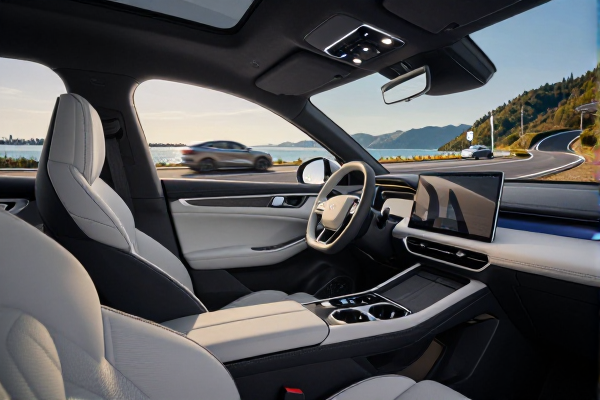
The surveillance angle is being inferred from the design of modern BYD vehicles rather than from any official statement. Like most new cars, BYD’s models feature cameras, radar, and other sensors mounted around the body. On a military base, those sensors could in principle record troop movements, aircraft activity, and other restricted information. The concern is not limited to the driver or occupants; a parked vehicle with active sensing and connectivity features could still collect data.
BYD is already named on a Pentagon list of companies believed to support China’s military-related efforts. The most recent version, published in June, also includes electric-car maker Nio, e-commerce group Alibaba, and technology company Baidu. That listing has fueled further scrutiny of Chinese brands across U.S. government-related supply chains.
Broader U.S. policy has also been moving in a stricter direction. Chinese automakers are currently prevented from selling connected vehicles in the United States by 100% tariffs and federal cybersecurity rules tied to data-sharing concerns. MotorBiscuit noted that those restrictions have made it difficult for Chinese brands to enter the American consumer market at all.
On Capitol Hill, senators are pushing to fast-track a proposed bipartisan bill that would go further and ban Chinese vehicles outright, applying the prohibition more explicitly than existing trade measures. If enacted, the legislation would affect not only imports but also vehicles built in North America by companies with significant Chinese ownership.
That issue has already played out in the market. Polestar, the Geely-owned EV brand, was forced to pull out of the U.S. after the 2026 model year because of its majority Chinese ownership, despite assembling its cars at a plant in Ridgeville, South Carolina. The company’s exit shows how Chinese-linked corporate structures can become a liability even when manufacturing takes place on American soil.
The Kadena decision also echoes concerns that are not unique to the United States. In 2021, Tesla vehicles were temporarily barred from certain Chinese government facilities. That restriction was lifted in 2024 only after China-built Teslas passed the country’s data security requirements. The parallel illustrates how governments on both sides now treat connected vehicles as potential security tools, not just consumer products.
What remains unclear is how widely the Kadena policy will be applied. The base has issued no formal directive explaining the decision, only a general risk assessment. The public record also does not show whether the restriction is temporary or indefinite, or whether it extends to BYD vehicles owned by Japanese residents working outside the main gate.
What the ban signals is still important. BYD has been expanding aggressively in global markets, particularly in Southeast Asia, Latin America, and Europe. A decision by a major U.S. military installation to bar the entire brand from its property is one of the first publicly reported cases of a blanket prohibition on a Chinese automaker at an American base overseas.
The move could also add momentum to U.S. legislative efforts. With the Pentagon already identifying BYD as a defense-related security concern, lawmakers skeptical of Chinese-made cars now have a concrete military example to cite. For consumers and businesses, the takeaway is simple: BYD’s global growth is hitting new resistance from the U.S. national-security apparatus, and the line between trade competition and defense policy is likely to keep shrinking.