Browse

Log in / Register
 Share


July 9, 2025 – BYD’s rapid expansion into global markets continues with the Sealion 5 Essential, an entry-level plug-in hybrid SUV that strips away some frills while preserving the core super hybrid system. Priced at around $26,000 (USD equivalent of the NZ$43,990 starting point), this model targets fleet buyers and cost-conscious families in markets where it’s sold – but is it a smart buy for American drivers if it ever lands here? We take a closer look.
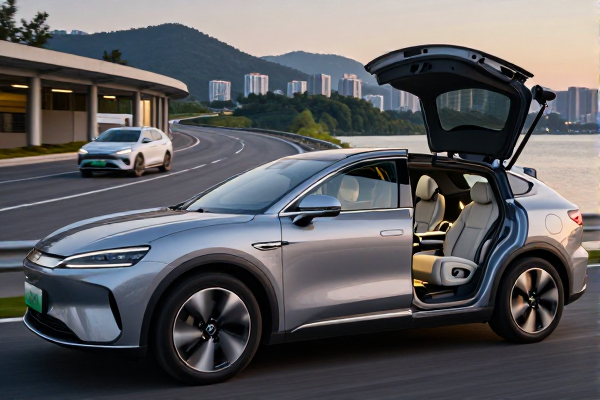
From the outside, the Essential is nearly identical to the pricier Premium trim. Both ride on 18-inch alloy wheels and share the same body panels. The easiest way to tell them apart: the Essential lacks the panoramic glass roof and standard roof rails of the Premium. The design itself dates back to the 2023 Chinese market Song Pro, which explains why it feels a little less cutting-edge than newer BYD models like the Atto 3. Still, it’s a clean, modern SUV that doesn’t shout for attention.
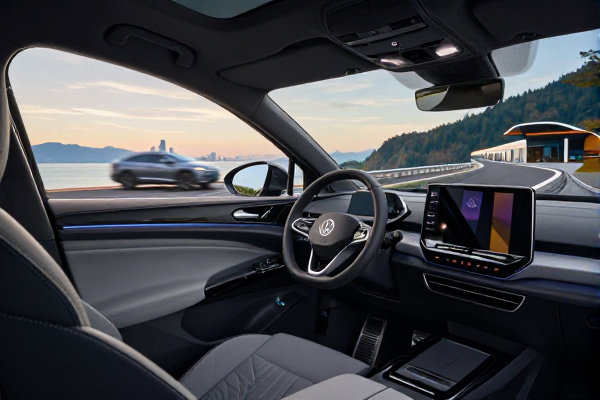
Step inside and you’ll notice the Essential makes trade-offs in equipment that were once unthinkable a decade ago. Missing compared to the Premium: 360-degree camera, auto-dimming mirror, power-adjustable and heated/ventilated front seats, and a wireless phone charger. The infotainment screen drops from 12.8 inches to 10.1, though wireless Apple CarPlay and Android Auto remain standard. Audio quality relies on six speakers rather than nine, but it’s adequate for most commutes.
What you do get: synthetic leather upholstery, dual-zone climate control with rear vents, a multi-function steering wheel, and BYD’s comprehensive Digital Key system. The 463-liter (16.3 cubic feet) boot is competitive for the segment, and the rear seats fold 60/40 – not perfectly flat, but good enough for IKEA runs. Rear legroom and headroom are generous for a medium SUV.
The omission of front parking sensors and a 360 camera is the biggest real-world annoyance. Parallel parking in tight city spots will require extra care – or an aftermarket sensor kit.
The Essential shares the same 1.5-liter four-cylinder engine and electric motor as the Premium, producing a combined 145 kW (194 hp) and 300 Nm (221 lb-ft) of torque. The key difference: a 12.9 kWh battery versus the Premium’s 18.3 kWh unit. BYD claims 71 km (44 miles) of EV range under NEDC, but real-world testing suggests around 60 km (37 miles). That’s slightly below the average for modern plug-in hybrids but still enough for most daily commutes without burning fuel.
BYD’s “super hybrid” system typically runs in EV mode, with the engine acting as a generator. Under hard acceleration or uphill climbs, the engine kicks in to assist. A rocker switch lets you hold the hybrid mode on demand. The single-speed transmission delivers smooth, linear power – 0-60 mph should land in the low 8-second range, plenty for family duty.
Fuel economy is impressive when you charge regularly: a combined 1.2 L/100 km (196 mpg) under the more lenient test cycle, but 4.5 L/100 km (52 mpg) in hybrid-only mode. For American buyers, the EPA would likely rate it around 40 mpg combined when running on gas.
The Sealion 5 Essential handles with a steady, understeer-biased attitude. Steering feel is light but accurate, and the suspension is tuned for comfort rather than sportiness. Noise insulation is decent for the price point. The biggest letdown for city drivers is the lack of a 360-degree camera and front parking sensors – you only get a rear camera and rear sensors. That’s a notable omission in 2025, especially for a family SUV.
Adaptive cruise control works well, and the lane-keeping assist is gentle enough not to irritate. Safety features include forward collision warning, blind spot monitoring, rear cross traffic alert with automatic braking, and traffic sign recognition. The Sealion 5 hasn’t been tested by IIHS or NHTSA yet, but it achieves a 5-star rating under New Zealand’s VSRR system.
BYD backs the Sealion 5 with a 6-year/150,000 km (93,000-mile) bumper-to-bumper warranty and an 8-year/160,000 km (100,000-mile) battery warranty. Service intervals are every 12 months or 20,000 km (12,500 miles), with an initial check at 6 months/5,000 km (3,000 miles). That’s competitive with mainstream brands.
At $26,000 equivalent, the Sealion 5 Essential offers strong value for a PHEV family SUV. The smaller battery and missing comfort features are real compromises, but the core powertrain, space, and fuel savings remain intact. Compared to the $32,000 Premium, you’re giving up about 40% more EV range and a lot of convenience gear – but saving $6,000.
For the American market, if BYD decides to bring the Sealion 5 Essential here, it would undercut the Toyota RAV4 Prime (starting around $43,000) by a wide margin. Even the Hyundai Tucson PHEV starts near $38,000. The BYD would be a compelling budget option, though the lack of a local service network and pending NHTSA certification are hurdles.
If you can live with less EV range and manual seat adjustments, the Essential is a smart, family-focused PHEV that doesn’t sacrifice the hybrid tech that matters. If you want the full experience, save for the Premium.
What kind of car is the BYD Sealion 5 Essential?
A medium-size 5-door plug-in hybrid SUV seating five.
Does it have enough EV range for daily commuting?
Real-world range is about 37 miles, enough for most Americans’ daily drives if you charge at home.
How does it compare to the Toyota RAV4 Prime?
The RAV4 Prime has 42 miles of EV range and more power, but costs nearly $17,000 more. The BYD is the value play.
Is it safe?