Browse

Log in / Register
 Share

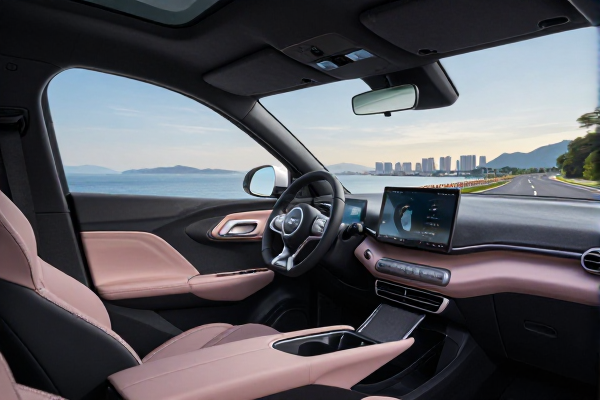
Sept. 2, 2026 — BYD has revealed the second generation of its Seagull EV, and the company's cheapest electric car doesn't look cheap anymore. Official interior images released Wednesday show a redesigned cabin with power-adjustable, massaging front seats, ambient lighting, and a larger touchscreen. Regulatory filings confirm the body has grown by 425 mm, with a 150 mm longer wheelbase and a more powerful rear-mounted motor. The overhauled model, expected to launch in China as the "Great Seagull" by the end of 2026, is BYD's opening move in a fresh round of competition for the budget EV crown.
Since its debut in 2023, the Seagull has been a phenomenon in China, starting at just ¥69,900 ($10,000) and proving that an EV can be genuinely cheap without being a compliance car. BYD moved more than 152,000 units of the Seagull and its export siblings — the Dolphin Surf in Europe and the Dolphin Mini in Latin America — in the first half of 2026, making it the world's sixth best-selling EV, according to CleanTechnica. Now BYD is betting that making its entry-level car bigger and more luxurious will keep it ahead of a growing line of rivals.
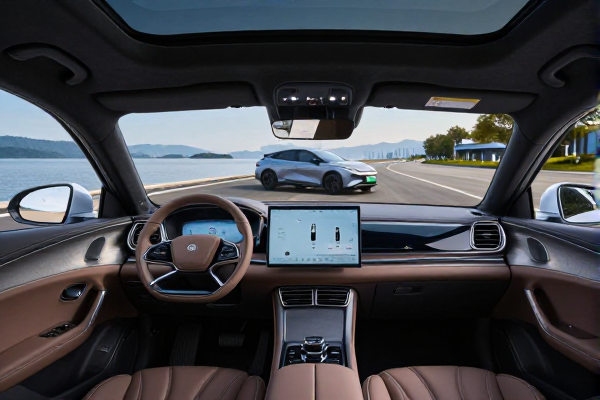
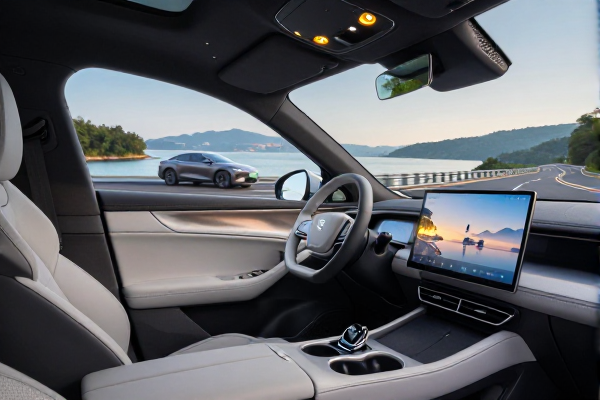
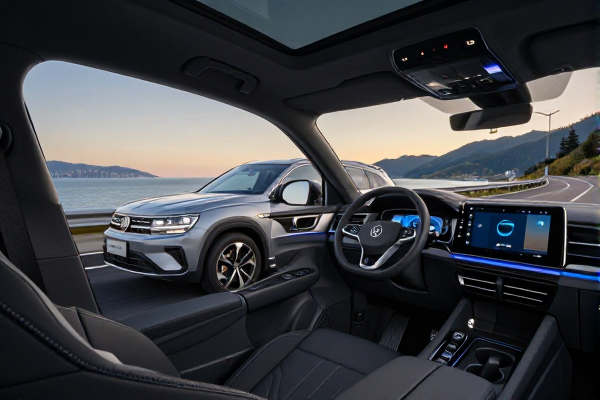
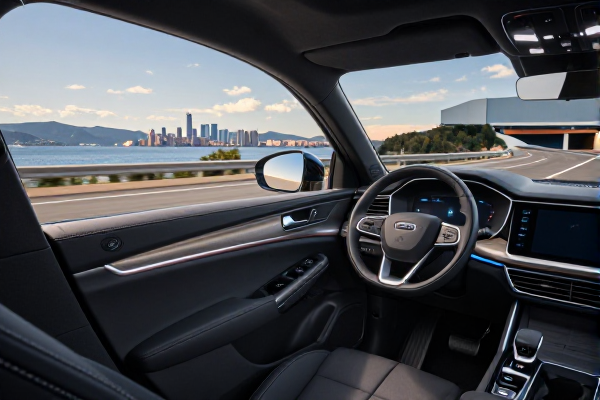
The cabin reveal, posted to BYD's social media channels on Wednesday, is the clearest sign yet of the Great Seagull's ambitions. BYD framed the redesign as a story of "growing up," and the details back that up. The front seats are power-adjustable and offer a massage function — equipment you'd normally expect from a much larger, pricier vehicle. Ambient lighting wraps the cockpit, and the center console has been restructured to add storage space. The rear bench, BYD says, now offers significantly more legroom.
The layout also reflects BYD's newer interior philosophy. There's no separate instrument cluster; the upgraded infotainment display — larger than the outgoing car's screen — handles driver information. It's joined by a two-spoke steering wheel and a redesigned center console. Physical buttons below the touchscreen remain for climate shortcuts, a pragmatic touch as more automakers chase fully digital cockpits.
BYD's Ocean series general manager, Zhang Zhuo, first teased the design with sketches posted last week. Captions on those preview images, translated into English, promised a "brand new layout" and said the "space size expands together." Wednesday's images were the detailed follow-up, confirming the production design.
The size increase had already surfaced through regulatory filings. China's MIIT documents, published in August, showed the new Seagull at 4,205 mm long and 2,650 mm between the wheels. That's 425 mm more length and a 150 mm longer wheelbase than the old car, which measures just 3,780 mm. Width and height grow slightly to 1,810 mm and 1,570 mm, respectively.
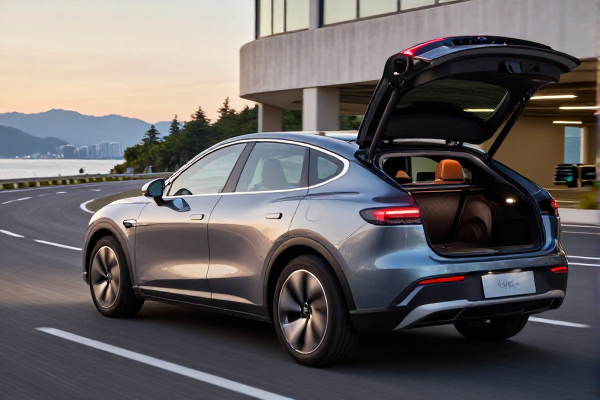
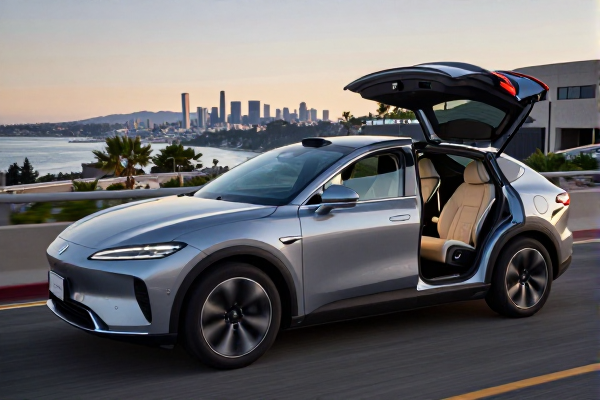
Those numbers move the Seagull out of the micro-car class and into the crowded compact-hatchback segment. The parking-friendly footprint that made it popular in dense cities remains, but there's now room for a genuinely useful cabin and cargo area. BYD quotes a class-rare 94-liter front trunk, along with up to 1,380 liters of luggage space with the rear seats folded. Chinese outlet Autohome also published new exterior images earlier this week, ahead of the official reveal.
Underneath, the second-gen Seagull adopts a rear-mounted electric motor. MIIT filings show the new unit making 95 kW (127 hp), a substantial jump from the outgoing car's 55 kW (75 hp) front motor. The switch explains the new frunk: with the motor relocated, the front of the car no longer needs to house the drivetrain.
Chinese outlets, including Autohome, have reported that higher trims could pack BYD's latest Blade LFP 2.0 batteries and the company's 5-minute Flash Charging system, technology previously reserved for BYD's premium lines. None of this is officially confirmed, but if it materializes, the Seagull would become the cheapest vehicle in the world with charging capability that matches luxury EVs. BYD has also been spotted testing prototypes with roof-mounted LiDAR, a strong hint that the top trim will offer the God's Eye B driver-assistance package — meaning highway-level assisted driving in a $10,000 car, a territory no Western automaker has touched. The company's push to democratize smart driving, which already put its God's Eye suite on sub-$10,000 models in China in early 2025, suggests the upgraded Seagull will continue that trend.
BYD isn't redesigning the Seagull out of generosity. China's budget EV segment has become a battleground, with domestic automakers including Geely and Wuling pushing smaller and cheaper models into the same price band. The Seagull's success — it has consistently ranked among the world's top-selling EVs since launch — makes it a strategic asset for BYD's global ambitions. The company can't afford for it to fall behind.
Hence the "Great Seagull" name, revealed by Zhang Zhuo at the Chengdu Auto Show last month. It's a fitting label for a car that now straddles two classes, offering premium comfort features while keeping a price tag that remains a fraction of the average cost of a new EV in Western markets.
US buyers won't see this car in showrooms. BYD doesn't sell passenger vehicles in the United States, and a 100 percent tariff on Chinese-made EVs makes a $10,000 Seagull impossible to replicate on American soil. The most affordable new internal-combustion car in the US, the 2026 Hyundai Venue, starts at just over $20,000; most mass-market EVs are priced in the low-to-mid $30,000 range before incentives.
But the Seagull's transformation matters beyond its availability. It sets the benchmark for what automakers worldwide must match on cost, feature content, and efficiency. A 127 hp EV with massaging seats, a 94-liter frunk, highway-capable assisted driving, and possibly flash charging — at a starting price below $12,000 in China — is a product the rest of the industry has no direct answer to. For executives in Detroit, Wolfsburg, and Tokyo, the second-gen Seagull is a refutation of the argument that cheap EVs can't also be good EVs.
European customers are closest to seeing the new model, since BYD sells the Seagull there as the Dolphin Surf. The current car starts at €22,900 ($26,500); a larger, better-equipped second generation is expected to open around €30,000 ($35,000). That positions it above budget rivals like the Dacia Spring but still well below the continent's average new-EV transaction price.
BYD hasn't announced an overseas launch date, but if the Chinese debut happens before the end of 2026 as promised, a European rollout in 2027 is widely expected. Until then, the Great Seagull offers a preview of where the EV market is heading: toward bigger, better, cheaper cars that keep squeezing every incumbent.
Sources: BYD, Autohome, MIIT filings, CleanTechnica