Browse

Log in / Register
 Share

July 24, 2025 – BYD, the world's largest electric-vehicle maker, has deleted references to "China" and "surveillance" from its consumer privacy policy, a quiet but telling shift as the Shenzhen-based automaker works to win over buyers and regulators in the U.S., Europe, and Latin America.
Archived versions of BYD's global privacy policy show that, until earlier this year, the document told drivers that personal data collected from vehicles "will be transmitted to and stored on servers located in the People's Republic of China." It also disclosed that the company could "carry out surveillance" inside the cabin through embedded cameras.
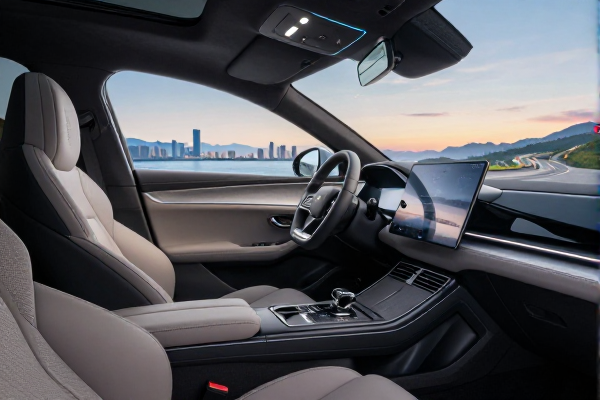
Both phrases are now gone. The current English-language version, posted in June, says user information "may be processed in jurisdictions where BYD operates" — a formulation broad enough to cover any market the company enters. The surveillance clause has been rewritten as "cabin monitoring features designed for user safety and convenience," with a promise that drivers will be alerted "in advance" before such features are activated.
The words "surveillance," "state security," and "government authorities," all present in earlier versions of the policy, are absent from the current English text. The Chinese-language version retains more expansive language about assisting government authorities in accordance with local law, but the international version has been scrubbed clean.
The changes were flagged by researchers who track automaker privacy disclosures, then confirmed through archived captures of BYD's policy page. A March 2025 snapshot contains a dedicated section on "Cross-Border Data Transfer" that repeatedly names China as the processing location; a June 2025 snapshot shows that section rewritten, with country-specific references replaced by "global service providers."
This week, BYD's investor relations team acknowledged the revision in a written response to a shareholder inquiry, calling it "an update to improve clarity for international users" and stating that "no data practices have changed." It was the first time the company publicly confirmed the edit, though it declined to say whether legal counsel had recommended it.
BYD is in the middle of its most aggressive global push. It is building manufacturing plants in Hungary, Brazil, Thailand, and Indonesia, and has been scouting locations in Mexico — widely seen as a staging ground for a future U.S. entry. The company already operates an electric-bus factory in Lancaster, California, giving it a foothold in North America, but a 100% U.S. tariff on Chinese-built passenger EVs currently keeps its cars out of American showrooms.
The expansion has made privacy a strategic issue rather than a legal footnote. European data-protection authorities have demanded that automakers disclose where driver data travels; the U.S. Federal Trade Commission has made connected-car data a stated enforcement priority; and consumer groups on both continents have published guides calling out automakers with opaque data practices.
"They are trying to have it both ways," said a compliance consultant who advises Chinese manufacturers on cross-border data rules and asked not to be identified. "Chinese law requires certain vehicle data to remain on domestic servers. Western regulators demand transparency about that exact arrangement. The least costly solution, from a public-relations standpoint, is to write a policy that does not raise the question in the first place."
BYD is not alone in softening its privacy language. Zeekr, Geely's premium electric brand, and MG, owned by Shanghai-based SAIC, have also revised their international privacy notices in recent months, stripping out explicit references to China as a data hub, according to archived versions reviewed for this report.
The shift mirrors a broader trend in the tech industry, where Chinese companies including Huawei and TikTok have hired armies of compliance lawyers to fence off data practices from political scrutiny. Automakers are now following the same playbook, adjusting both their engineering and their messaging for international audiences.
The softer wording does not mean BYD is collecting less data. The updated policy still lists location data, driving behavior, phone contacts, and "in-vehicle camera images where legally permitted" among the information it may gather. It still reserves the right to share data with "affiliates, partners, and service providers," and to retain it "for as long as necessary to fulfill the purposes described."
The statutory landscape has not changed either. Chinese regulations require certain automotive data — including precision GPS coordinates and driver-monitoring video — to be stored within China. BYD's English-language policy simply no longer advertises that fact.
"Removing the words does not remove the data flows," said a partner at a Washington-based privacy law firm who specializes in connected vehicles. "But from a marketing perspective, it lowers the temperature."
Privacy advocates say the vague new language raises its own concerns. The Electronic Privacy Information Center (EPIC) in Washington has urged the FTC to examine data-residency statements in the auto sector, arguing that phrases like "jurisdictions where BYD operates" do not tell consumers where their information actually goes.
European authorities are watching as well. Guidance from the European Data Protection Supervisor earlier this year told connected-car manufacturers to make privacy notices "specific rather than generic." BYD's formulation — deliberately avoiding any named country — could draw follow-up questions from national regulators in markets where the company sells the Atto 3, Dolphin, Seal, and Shark models.
The FTC has already acted against other players in the connected-vehicle ecosystem, settling cases against telematics firms that sold driver data to data brokers. Industry lawyers expect the agency to scrutinize automaker privacy policies next, particularly those that describe cross-border transfers in ambiguous terms.
For anyone considering a BYD vehicle, the policy update changes little in practice. The company's data collection remains broad, and consumers should assume that location, biometric, and cabin-camera data may leave their home country.
Buyers can take a few practical steps: review the privacy policy in their local language before purchase, disable cabin-camera features where possible, and limit connected services that require account creation. Under the updated policy, BYD says users can request access to and deletion of their data through a dedicated privacy portal — a provision that existed before but has been made more prominent.
Deleting "China" and "surveillance" from a privacy policy is more than cosmetic editing. It is a public acknowledgment that language matters, and that BYD's previous wording had become a liability in markets the company is determined to win.
For a prospective buyer, the practical takeaway is modest: BYD still collects the same categories of data and retains broad sharing rights. But the edit sets a precedent in an industry where trust is becoming a competitive advantage. Automakers that want to win privacy-conscious customers will increasingly be judged on how candid they are — not on how carefully lawyered their privacy pages happen to be.