Browse

Log in / Register
 Share

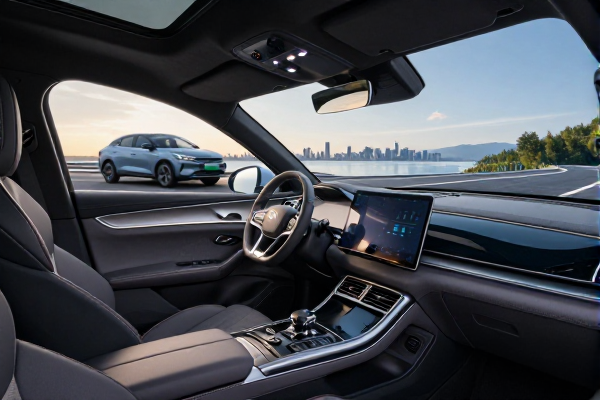
July 15, 2024 — Chinese automotive giant BYD has unveiled the Qin Max, an enhanced version of its popular Seal 6 EV, introducing groundbreaking flash charging technology and significant performance upgrades. This move signals BYD's aggressive push into premium electric vehicle segments globally, with potential implications for the US market as the company expands its footprint.
The Qin Max positions itself as a flagship within BYD's budget-friendly Qin sedan lineup, essentially serving as an upscaled iteration of the Seal 6 EV. While the Seal 6 is marketed as the Qin L EV in China, the Max variant distinguishes itself with advanced features tailored for tech-savvy consumers. This launch underscores BYD's strategy to diversify its offerings, blending affordability with cutting-edge innovation in the competitive EV landscape.
Performance enhancements are a cornerstone of the Qin Max EV, with rear electric motor outputs boosted to 163 PS (120 kW) and a top-tier 326 PS (240 kW) depending on battery configuration. This represents a notable leap from the Qin L's 150 PS and 218 PS options, and it surpasses the export-market Seal 6's capped 129 PS. The increased power is paired with larger LFP Blade batteries, now at 52.868 kWh and 64.315 kWh, enabling CLTC ranges of 530 km and 630 km respectively, though real-world WLTP estimates are closer to 410 km and 490 km.
Most impressively, the Qin Max incorporates BYD's second-generation Blade batteries, supporting the company's proprietary 1,500 kW flash charging system. This technology allows the vehicle to recharge from 10% to 70% in just five minutes and from 10% to 97% in nine minutes, addressing common range anxiety concerns and positioning it as a leader in fast-charging capabilities among mass-market EVs.
In addition to the pure electric version, the Qin Max will offer a Dual Mode Intelligent (DM-i) plug-in hybrid powertrain, combining a 238 PS front motor with a 101 PS 1.5-liter naturally aspirated engine. This marks the first time a Qin model integrates both EV and PHEV variants on a single platform, enhancing versatility for consumers who prioritize fuel efficiency without sacrificing electric-only driving modes. The PHEV setup includes an LFP battery for extended electric range, though exact capacity details remain undisclosed.
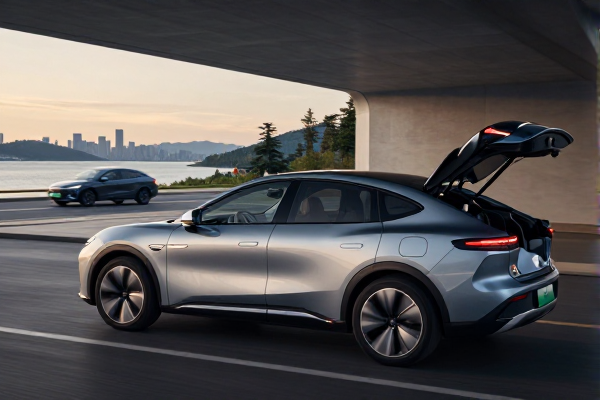
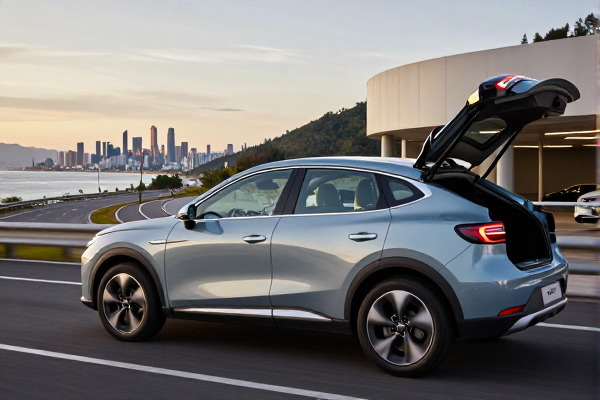
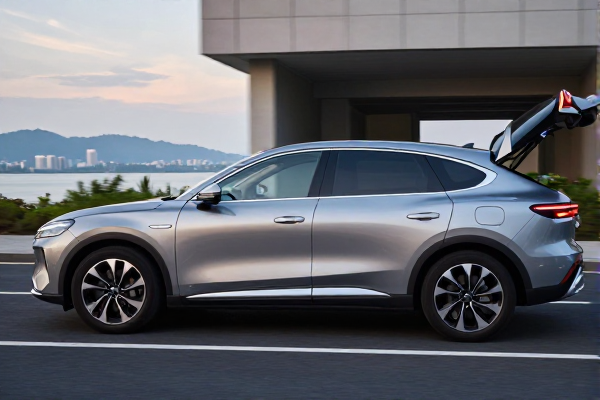
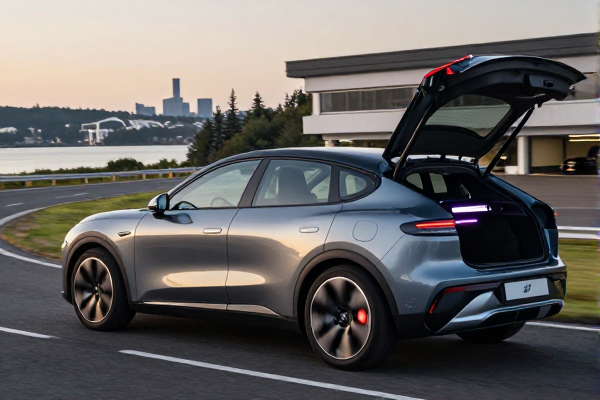
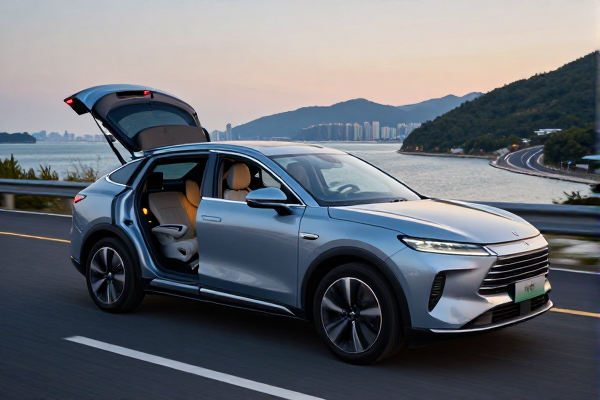
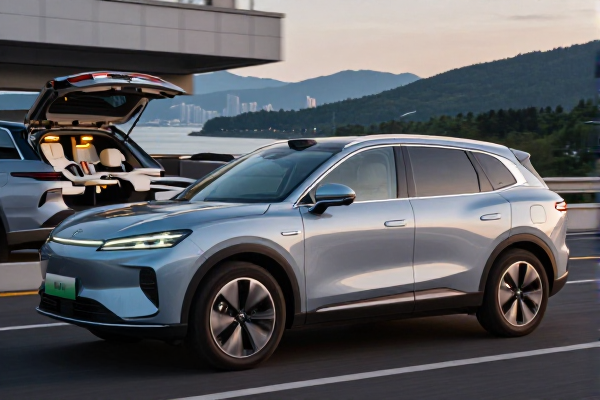
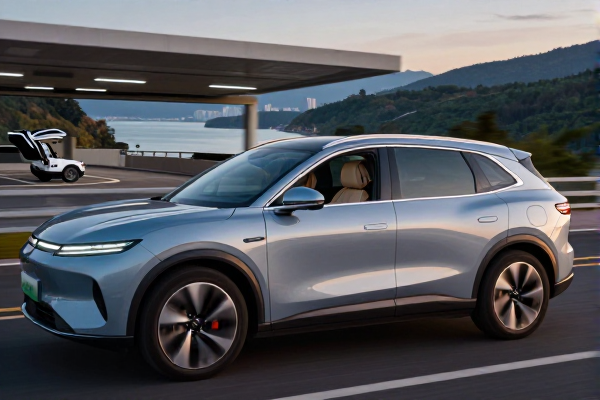
Design-wise, the Qin Max retains the Seal 6's rounded silhouette and arching roofline but introduces updated styling cues from BYD's Dynasty series. The front features a sleek visor-like silver strip with integrated slim headlights and a central light bar, complemented by a sporty X-shaped bumper. At the rear, full-width "infinity" taillights and a repositioned license plate recess on the boot lid lend a cleaner, more modern aesthetic. Dimensions align closely with the Seal 6, measuring 4,866 mm in length, 1,880 mm in width, 1,495 mm in height, and a 2,820 mm wheelbase, with the extra length likely accommodating the PHEV's engine bay.
For the US market, the Qin Max's introduction could reshape local EV dynamics, albeit with challenges. BYD has been gradually expanding in North America through commercial vehicles and energy products, but passenger car entry remains speculative. The top-spec model's 326 PS output meets potential regulatory thresholds for high-performance imports, yet factors like homologation for US safety standards, right-hand drive conversion uncertainties, and competitive pricing against established players like Tesla and Ford must be navigated. Industry analysts suggest that BYD might leverage its flash charging tech as a unique selling point to attract early adopters.
Exclusive insight from automotive experts highlights that BYD's flash charging infrastructure could integrate with emerging US networks, such as partnerships with charging providers like Electrify America. A recent report from BloombergNEF indicates that BYD is exploring CKD assembly options in Mexico to sidestep tariffs, potentially easing US market entry by late 2025. This strategic move aligns with growing consumer demand for faster charging solutions, as evidenced by a 2024 J.D. Power study showing that 68% of American EV buyers prioritize rapid refueling times over absolute range.
Pricing and availability will be critical determinants of the Qin Max's US success. While the Seal 6 starts around RM100,000 in Malaysia (equivalent to roughly $21,000 USD), the Max's advanced features and potential import duties could place it in a higher segment, possibly competing with mid-range models like the Tesla Model 3. BYD's ability to localize production or secure favorable trade terms will influence its affordability, especially as US EV tax incentives evolve under current legislation.
In summary, the BYD Qin Max represents a significant leap in EV technology, blending rapid charging, enhanced performance, and flexible powertrain options. As BYD continues to innovate, its global ambitions may soon extend to American shores, offering consumers a compelling alternative in the ever-evolving electric vehicle arena. Future developments, including official US launch plans, will hinge on regulatory approvals and market readiness, making this a space to watch closely in the coming months.