Browse

Log in / Register
 Share
Share
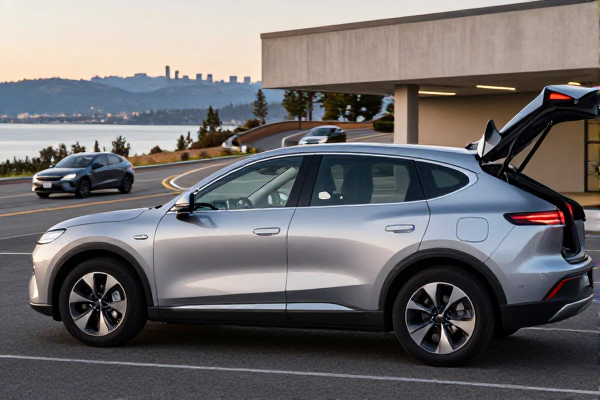
BYD has officially pulled the covers off the Qin Max, positioning it as the new top-tier flagship within its popular Qin series. The reveal, made via a social media post from a company executive on July 15, 2024, highlights the model's advanced "flash charging" capability and its aim to attract a younger demographic of buyers. This launch comes at a critical time for the Qin lineup, which has seen a notable slump in sales volume throughout the current year.
The Qin Max is designed as a B-segment sedan and slots in above the recently launched Qin L in the brand's hierarchy. Lu Tian, head of sales for BYD's Dynasty series, announced the model on Weibo, describing it as the "extra-large" iteration of the Qin family that fulfills online demand for a flash-charging variant. While specific pricing and an on-sale date remain under wraps, the preview signals BYD's aggressive push to refresh and expand one of its core model families.
Central to the Qin Max's appeal is its support for BYD's proprietary flash charging technology. This system represents the automaker's latest breakthrough in ultra-fast charging. Earlier this year, BYD unveiled its next-generation flash charging tech, which boasts a single-gun charging power of up to 1,500 kW. This immense power enables vehicles equipped with the second-generation Blade Battery to recharge from 10% to 97% state of charge in a mere nine minutes, addressing a primary concern for potential EV buyers: charging time.
According to prior filings with China's Ministry of Industry and Information Technology (MIIT), the Qin Max will be offered in both battery-electric (BEV) and plug-in hybrid (PHEV) variants, providing consumers with powertrain choice. The BEV version will utilize BYD motors offering peak power outputs of 240 kW (322 horsepower) or 120 kW. The PHEV variant will combine a 1.5-liter naturally aspirated engine, generating 74 kW, with an electric motor rated at 175 kW.
In terms of dimensions, the Qin Max presents a larger footprint than the Qin L. Filed data shows a length of 4,866 mm, a width of 1,880 mm, a height of 1,495 mm, and a wheelbase of 2,820 mm. For comparison, the Qin L measures 4,830 mm long, 1,900 mm wide, and 1,495 mm high, with a 2,790 mm wheelbase. The BEV model may also feature distinctive rear badges such as "Da Qin" or "Qin Ultra," as indicated in the regulatory documents.
Strategic Context and Sales Performance
The introduction of the Qin Max is a strategic move to bolster the Qin series, historically one of BYD's sales pillars. The family currently consists of the Qin Plus and the Qin L; the Max will expand it to three distinct models. However, this expansion follows a period of significant sales contraction. Data shows the Qin series sold 661,090 units in 2025 but has faced a sharp decline in 2026. June 2026 sales plummeted to 14,900 units, a 66.17% drop compared to the same month last year. First-half 2026 sales totaled 149,174 units, down 45.62% year-on-year.
This context makes the Qin Max more than just a new product; it is a crucial tool for sales recovery. BYD is likely betting that the combination of flagship status, cutting-edge flash charging, and a fresh design will reinvigorate consumer interest and draw buyers back to the Qin nameplate.
Exclusive Analysis: The U.S. Market Angle
While the Qin Max is initially focused on the Chinese market, its technology and strategy offer insights into BYD's global ambitions, particularly regarding the United States. Flash charging technology of this caliber directly tackles one of the major barriers to widespread EV adoption in the U.S.: range anxiety and public charging infrastructure limitations. If BYD can successfully deploy this technology at scale and eventually offer it in models for Western markets, it could represent a significant competitive edge.
Furthermore, the dual BEV/PHEV strategy seen in the Qin Max reflects a pragmatic approach to electrification. For the U.S. market, where charging infrastructure development is uneven, offering compelling PHEVs alongside pure EVs could serve as a effective bridge, capturing customers who are hesitant to go fully electric. The Qin Max, therefore, is not just a new car for China but a showcase of the technological and strategic portfolio BYD could deploy globally.
The success of the Qin Max in reversing the series' sales trend will be closely watched. It serves as a test case for whether advanced, headline-grabbing technology like ultra-fast charging can immediately translate into stronger market performance in a increasingly competitive and price-sensitive automotive sector.