Browse

Log in / Register
 Share
Share
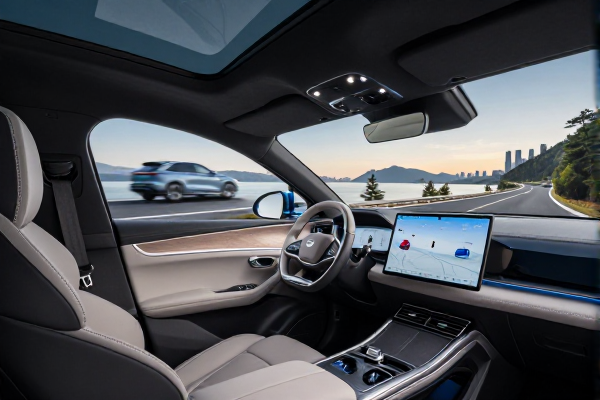
As of Oct. 16, 2025, BYD and Honor are no longer treating the phone-car link as a simple projection feature. The two companies announced Oct. 12 that they have formed a strategic partnership built around AI agent collaboration, connecting Honor's YOYO assistant directly to BYD's DiLink cockpit. The move goes beyond the usual "phone mirroring" approach and points to a future where the car and the phone run their own agents that talk to each other.
The technical core of the partnership is an agent-to-agent, or A2A, protocol. Instead of having a phone merely cast its screen to the vehicle display, the new link allows YOYO, Honor's voice agent, to interact with the vehicle system's own agent. In practical terms, each device understands what the other one is doing and can act on that understanding.
For BYD, this removes the need to pre-install a separate adaptation layer for every mobile application. For Honor, it means its assistant can operate inside the vehicle without asking the user to manually switch between devices.
This is a notable shift from the industry's conventional phone-vehicle integration. Most current systems rely on Bluetooth, NFC, or screen mirroring, which is essentially a visual handoff between devices. The A2A approach is different: both sides stay active, and the voice assistant becomes a bridge for intent. When a user speaks to YOYO in the car, the assistant can trigger actions in the vehicle's own software rather than just playing a phone-based command.
The initial rollout focuses on two practical areas. The first is remote vehicle control through YOYO. Drivers can ask the assistant to locate the car, check its status, or prepare the cabin before entering. That could mean warming the interior in cold weather or switching on the air conditioning on a hot day, all through voice commands from the phone.
The second use case is a mirrored smartphone desktop that carries the full suite of mobile applications into the infotainment system. This gives BYD owners access to the phone's complete app environment without looking down at the handset. The feature is tied to the DiLink 100 smart cockpit platform or a newer version, and it will be made available across more than 100 BYD models.
The phrase "more than 100 models" is worth pausing on. BYD's model range spans affordable city cars, sedans, SUVs, and high-end off-road vehicles. Rolling out a single AI integration across such a broad portfolio suggests this is not a test project or a premium-only feature. The company is treating agent-based voice interaction as a standard part of its cockpit experience.
BYD and Honor did not start with AI. Their cooperation began in 2023 with NFC digital car keys, which let Honor phone users unlock and start a BYD vehicle with a tap. In 2024, the partnership extended to in-car fast charging, meaning the phone could draw more power when docked in the car.
The new strategic agreement, signed in Shenzhen in October 2025, formalizes a broader direction: cross-device ecosystem work and AI agent integration are now the priority. The trajectory shows a clear pattern. The first steps solved specific pain points, such as keyless entry and charging convenience. The current step attacks the larger problem of how a phone and a car should behave as one connected system.
There is also a timing element. Voice assistants have been in vehicles for years, but most automakers treat them as isolated skill sets. BYD's approach with Honor suggests a willingness to let an external assistant reach into the vehicle's core functions. That carries both user experience benefits and system design risks.
This partnership is not just a feature update. It signals how automakers and phone makers may structure their AI strategies going forward.
In the past, a car company had to decide whether to build its own voice platform or integrate with an existing mobile assistant. The typical result was a narrow set of commands: climate control, navigation, or media playback. The A2A model, at least in this early form, allows a brand like BYD to keep its car-side logic while letting a partner's agent handle the conversation and planning layer.
For other automakers, the BYD-Honor deal is a useful case study in partnership design. Hardware-level cooperation, such as digital keys and fast charging, can be done by many companies. Agent-level cooperation is harder. It requires the vehicle operating system to expose enough control points to an external AI while still keeping the driver safe and the system stable.
The same logic applies to smartphone vendors. Honor, as a company with its own device ecosystem, gains a direct line into one of the world's largest automotive groups. That is valuable as the industry moves toward cars that accept voice instructions for a growing list of tasks.
What remains to be seen is how far the A2A connection can go. The first use cases are relatively simple: remote commands and app access. The next stage could involve multi-step tasks, such as planning a route, checking traffic, adjusting the car's energy mode, and sending a message to a contact, all in one conversation. That would require even tighter coordination between the two agents.
For now, the BYD-Honor partnership stands out because it represents a shift from connecting features to connecting intelligence. The groundwork laid in 2023 and 2024 gave the two companies enough trust to attempt something more ambitious. The October 2025 agreement makes that ambition explicit, and the rollout across more than 100 models will test whether AI agent collaboration works outside the demo environment.
The biggest takeaway is not that two consumer brands have added another integration. It is that the modern smart cockpit is starting to treat voice assistants as independent participants in the car, not as remote controls glued onto the dashboard.