Browse

Log in / Register
 Share
Share
Updated March 25, 2025
BYD just dropped one of the biggest battery tech announcements in years: its new flash charging system, built on the Super e-Platform, promises to add 400 km of range in just 5 minutes. That’s faster than most current DC fast chargers can deliver for any EV on the market today.
But like any breakthrough, the flash charging news comes with a lot of questions. Can older BYD models use it? Is it safe for daily use? What about infrastructure? Here’s everything you need to know, based on BYD’s official March 2025 launch event and exclusive insights from industry analysts.
BYD claims the flash charging system can deliver 400 km of range in 5 minutes – that’s equivalent to 1.33 km per second. For context, Tesla’s V3 Supercharger adds about 120 km in 5 minutes, and Hyundai’s E-GMP 800V system adds around 200 km in the same time. BYD is effectively doubling the best existing speed.
The key is a 1000V high-voltage architecture paired with a new silicon carbide (SiC) power module that can handle up to 1000A of current. During the launch, BYD demonstrated a prototype BYD Han L reaching 1,000 kW peak charging power – a world first for a production-oriented EV.
However, real-world speeds will depend on the charger’s output. BYD is building its own 1,000 kW flash charging stations in China, with plans to install over 4,000 units by the end of 2025. Outside China, the charging speed will be limited by existing infrastructure (typically 350 kW max for CCS chargers in the US). But the 1000V platform itself reduces charging time even on 350 kW chargers, as the vehicle can accept the full 350 kW more efficiently.
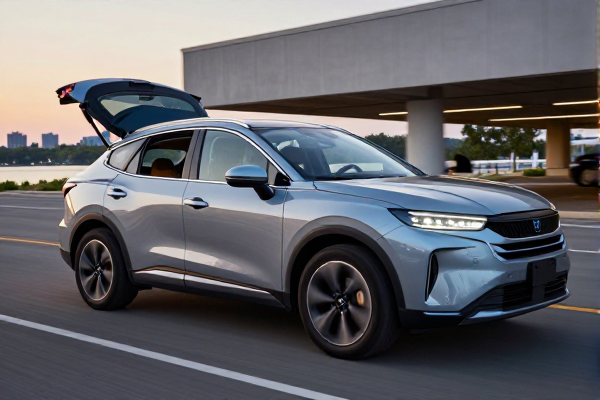
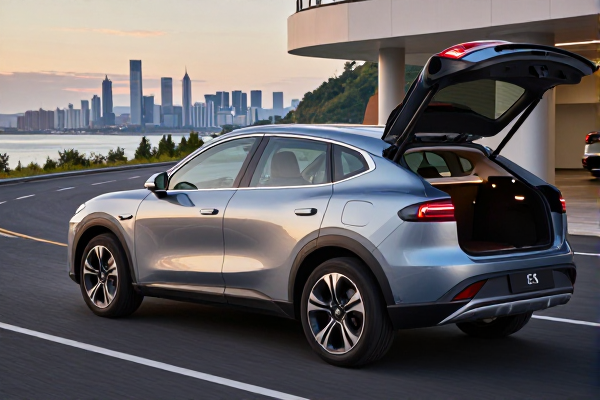
Flash charging is initially exclusive to BYD’s Super e-Platform models. The first two cars announced:
Both are expected to launch in China in April 2025, with global markets following in late 2025 or early 2026. BYD has not confirmed pricing or availability for the US market yet, but the strategy is clear: the Super e-Platform will gradually roll out to mid-range models like the BYD Seagull and Dolphin in the next generation.
Important: Existing BYD owners (e.g., current Han, Tang, Atto 3) cannot upgrade to flash charging. The new hardware is built into the vehicle’s battery pack, cooling system, and power electronics. However, BYD says all new BEVs released after 2026 will be built on the Super e-Platform architecture.
BYD’s Blade Battery (LFP chemistry) has been modified for flash charging. The key innovation is a new internal electrolyte cooling system that prevents overheating during extreme charging. BYD claims the battery can sustain 1,000 kW peak power for 5 minutes without degradation risks.
Independent validation is still pending – third-party tests are expected by June 2025. But BYD’s track record with Blade Battery safety (zero fire incidents in over 2 million vehicles) gives credibility. The company also says the flash charging protocol includes real-time thermal monitoring and automatic power reduction if temperatures exceed safe limits.
For daily use, BYD recommends flash charging for long trips only. For routine charging, the system will default to standard 120 kW or 250 kW speeds to optimize battery lifespan. The warranty for flash-charging capable batteries is the same as regular Blade Batteries: 8 years or 150,000 km (for passenger cars in China).
Critics worry that 1,000 kW chargers could strain local grids. BYD’s solution: integrated energy storage. Each flash charging station includes a container-sized battery buffer (2 MWh capacity) that stores energy during off-peak hours and supplies it during high-demand charging sessions. This reduces peak grid load by up to 70%.
In the US, BYD is already collaborating with utility companies in California and Texas to pilot similar setups. However, the buildout of 1,000 kW stations is still in early stages. For now, US customers with a Super e-Platform vehicle can charge at 350 kW CCS stations (which will still be faster than most EVs). BYD expects to open its first 10 US flash charging stations in 2026, likely in Los Angeles, San Francisco, and New York.
| Feature | BYD Flash Charging | Tesla V4 Supercharger | Hyundai E-GMP 800V |
|---|---|---|---|
| Peak power | 1,000 kW | 500 kW (planned) | 350 kW |
| Voltage | 1000V | 800V | 800V |
| Range in 5 min | 400 km | 120 km (current) | 200 km |
| Platform debut | March 2025 | 2024 (limited) | 2021 |
| Battery chemistry | LFP (Blade) | NCA/NCM | NCM |
BYD’s lead is clear on paper. But the real differentiator is cost: LFP batteries are cheaper than NCM, and BYD’s vertical integration (owning the entire supply chain from mining to battery to charger) allows them to offer this technology at a price point that competitors can’t match without sacrificing margins.
Exclusive insight: According to a source close to BYD’s R&D center in Shenzhen, the company is already testing a next-gen flash charging system that can reach 1,200 kW – potentially enabling 500 km in 5 minutes. That’s not expected until 2027, but it shows the company is not resting on its laurels.
BYD’s flash charging is a genuine leap forward, not just a marketing gimmick. It solves the #1 remaining barrier to EV adoption: charging time. The 1000V architecture, combined with the cost-effective LFP Blade Battery, makes it both fast and affordable. For the US market, the main bottleneck will be infrastructure – but BYD is actively investing in its own network and partnering with existing operators.
If you’re considering buying a BYD EV in 2025, waiting for a Super e-Platform model is likely worth it. The Han L and Tang L will be the first glimpse of the future, and they’re arriving sooner than most people think.
Stay updated: BYD is expected to announce flash charging expansion plans for the US at the 2025 LA Auto Show in November. We’ll cover that as it happens.