Browse

Log in / Register
 Share

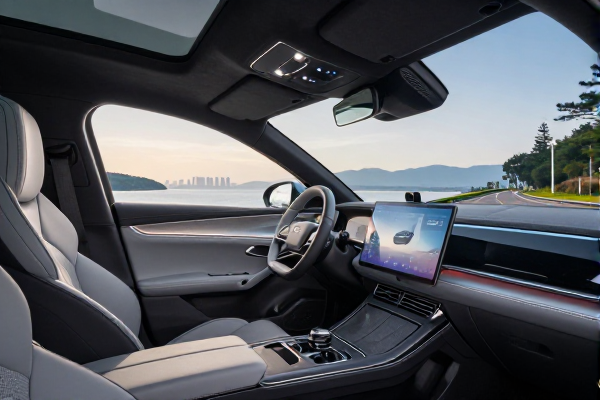
In a strategic move highlighting the intensifying global competition in electric vehicles, former Hungarian Foreign Minister Péter Szijjártó has joined Chinese automotive giant BYD as an executive, as confirmed on July 20, 2024. Szijjártó, 47, announced his resignation from the Hungarian National Assembly to take on a role overseeing external relations and new business lines at BYD, one of the world's leading new energy vehicle manufacturers. This appointment comes amid BYD's aggressive expansion into Europe, with Hungary serving as a key hub, and reflects broader geopolitical shifts in the automotive industry.
The decision by Szijjártó, who served as Hungary's top diplomat from 2014 to earlier this year, underscores the deepening economic partnership between Hungary and China, particularly in the high-stakes EV sector. BYD, which surpassed Tesla in global EV sales in recent quarters, has been rapidly establishing its presence in Europe, breaking ground on its first European production plant in Szeged, Hungary, in 2024. This facility, with a planned capacity of 300,000 vehicles annually, is poised to become a cornerstone of BYD's strategy to capture market share in the European Union, challenging established players like Volkswagen and Stellantis.
From a geopolitical perspective, Szijjártó's transition from government to corporate leadership highlights Hungary's unique positioning within the EU as a bridge to Chinese investment. Under Prime Minister Viktor Orbán, Hungary has actively courted Chinese firms, offering tax incentives and streamlined regulations to attract manufacturing projects. This approach has drawn criticism from some EU members concerned about dependency on China, but Hungary views it as a catalyst for economic growth and technological advancement. Szijjártó's expertise in international diplomacy is expected to bolster BYD's navigation of complex regulatory environments across Europe.
Exclusive industry analysis reveals that BYD's hiring of a former high-ranking official is part of a broader trend among Chinese EV makers to leverage local talent for market entry. According to a recent report by BloombergNEF, Chinese automakers are increasingly appointing former politicians and diplomats in Europe to ease regulatory hurdles and foster partnerships. For instance, other Chinese EV firms like Nio and Xpeng have similarly recruited executives with government backgrounds in Norway and Germany, respectively. This strategy not only enhances credibility but also accelerates supply chain integration, as seen with battery giants CATL and EVE Energy setting up factories in Hungary.
The timing of this appointment is particularly significant given the evolving U.S. policies on electric vehicles. With the Inflation Reduction Act incentivizing domestic EV production and sourcing, BYD's European expansion through Hungary may serve as a workaround to access the U.S. market indirectly via trade agreements. However, U.S. officials have expressed concerns about Chinese dominance in EV supply chains, prompting calls for stricter tariffs. Szijjártó's role could involve mitigating such tensions by promoting BYD's compliance with international standards and fostering transatlantic dialogues on clean energy cooperation.
In Hungary, the move has been met with optimism by local businesses. Prime Minister Orbán has previously emphasized that partnerships with Chinese companies like BYD are essential for Hungary to lead in automotive innovation. During the 2024 signing of a strategic cooperation agreement, Orbán noted that China's advancements in battery technology and manufacturing efficiency offer a competitive edge. Recent developments show that Hungarian firms are already collaborating with BYD on components, with over 20 local suppliers integrated into its supply chain, according to data from the Hungarian Investment Promotion Agency.
From a market dynamics viewpoint, BYD's investment in Hungary aligns with its global ambition to reduce reliance on Chinese exports and establish localized production. The company's European headquarters in Budapest, coupled with a new R&D center, aims to tailor vehicles to European preferences, such as longer ranges and faster charging capabilities. This localized approach contrasts with Tesla's strategy, which relies heavily on gigafactories in Germany and the U.S., and could give BYD an advantage in cost-effectiveness and customization, as highlighted in a 2024 study by the International Energy Agency.
The personal dimension of Szijjártó's career shift also reflects a growing trend of politicians transitioning to the private sector in the post-pandemic era. With his extensive network in European capitals, Szijjártó is expected to facilitate BYD's negotiations for additional factory sites and partnerships. In a statement on social media, he described BYD as a "global leader in the automotive revolution," emphasizing its innovation in battery-swapping technology and sustainable mobility solutions. This narrative resonates with European consumers increasingly prioritizing environmental credentials, potentially boosting BYD's brand perception.
Looking ahead, the success of this appointment will depend on BYD's ability to balance growth with regulatory compliance. The European Union is tightening emissions standards and investigating subsidies for Chinese EVs, which could pose challenges. However, with Szijjártó's diplomatic acumen, BYD may proactively engage with EU institutions to shape policies favorably. Meanwhile, in the U.S., the company is exploring partnerships with American firms for battery technology, as reported by Reuters in June 2024, indicating a multifaceted strategy to globalize its operations without triggering trade disputes.
In conclusion, Péter Szijjártó's move to BYD is more than a personnel change; it symbolizes the convergence of politics and industry in the EV era. As BYD cements its foothold in Europe through Hungary, the implications for global automotive leadership are profound. For American stakeholders, this development underscores the need for accelerated innovation and strategic alliances to compete in a market increasingly shaped by Chinese prowess and European integration. The coming years will test whether such cross-border collaborations can drive sustainable mobility while navigating the complexities of international relations.