Browse

Log in / Register
 Share


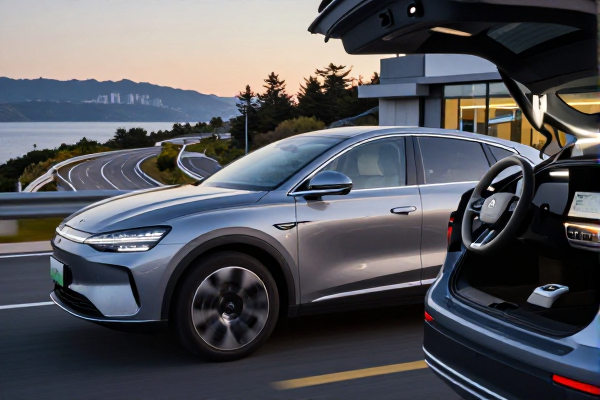
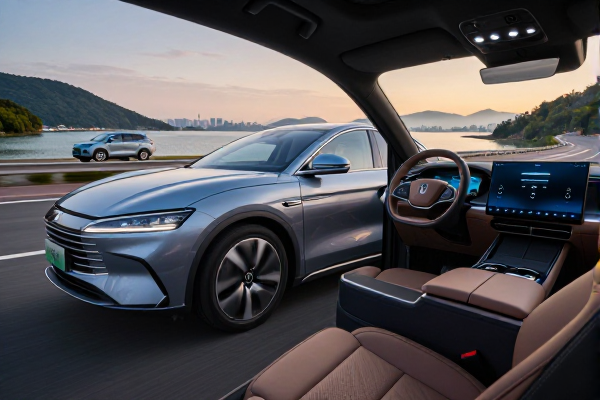
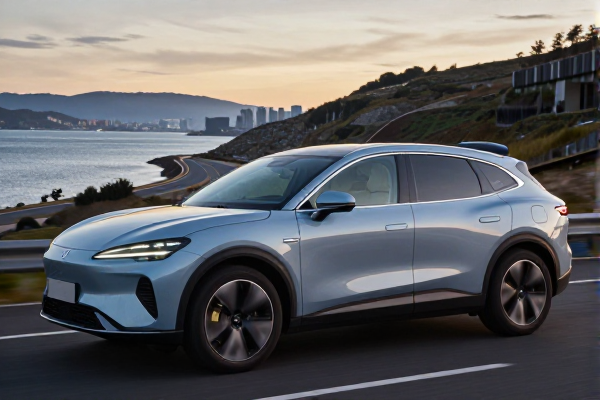
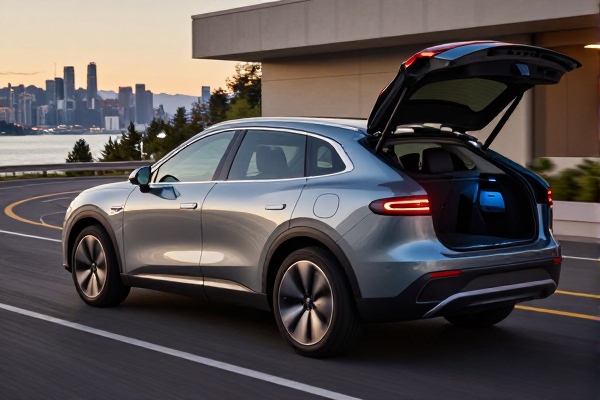
July 15, 2024 – Chinese electric vehicle giant BYD has unveiled the enhanced ATTO 3 EVO, cementing its leadership in high-voltage EV engineering and intensifying competition with legacy Western brands. This release marks a pivotal shift from competing on price to dominating through core technological advancements, as global automakers grapple with rapid industry changes.
The automotive world is undergoing a profound transformation, driven by the accelerated adoption of electric vehicles. Traditional manufacturers from the U.S., Germany, and Japan have been slow to pivot, often treating EVs as regulatory obligations or niche luxuries. Meanwhile, Chinese companies like BYD have aggressively invested in innovative technologies, positioning themselves at the forefront of the EV revolution.
BYD's ATTO 3 EVO represents a comprehensive overhaul from its predecessor. Built on the advanced e-Platform 3.0 Evo, it transitions to a rear-wheel-drive configuration with an optional all-wheel-drive system, enhancing performance dynamics. The vehicle integrates a 74.88 kWh proprietary Lithium Iron Phosphate (LFP) Blade Battery using Cell-to-Body (CTB) architecture, where battery cells function as structural elements. This design not only improves torsional rigidity and interior space but also boosts power, with the base model delivering 230 kW and accelerating from 0 to 100 km/h in 5.5 seconds, while the top trim achieves 330 kW in 3.9 seconds.
Charging speed has become a decisive factor in EV adoption, moving beyond mere range metrics. Industry analysis indicates that fast-charging capabilities are critical to reducing consumer anxiety and enhancing usability. According to a 2024 report by Fortune Business Insights, the 800V electric vehicle architecture market is expanding rapidly, driven by efficiency gains. The ATTO 3 EVO leverages high-voltage systems to double its peak DC fast-charging capacity to 220 kW, enabling a 10-80% charge in approximately 25 minutes. By operating at higher voltages, electrical current is reduced, minimizing heat loss and allowing for lighter, cost-effective components—a key advantage over traditional 400V platforms.
Chinese automakers are collectively advancing this charging frontier. XPENG's SEPA 2.0 platform, featured in models like the G6, supports true 800V charging, adding up to 300 km of range in about 10 minutes. Similarly, Zeekr's 001 sedan utilizes advanced 800V systems with peak rates exceeding 500 kW. In contrast, Western counterparts such as Volkswagen's MEB platform and Ford's Mustang Mach-E remain anchored to 400V architectures with lower charging speeds, potentially lengthening downtime for drivers on long trips.
To provide exclusive insight, a recent survey by J.D. Power reveals that 65% of U.S. EV buyers prioritize fast-charging capability as a top purchase consideration, up from 50% in 2023. This growing demand aligns with BYD's strategic focus, positioning the ATTO 3 EVO to capture market share as American charging infrastructure expands. Experts note that China's technological lead in high-voltage systems could redefine global competitiveness, pressuring Western firms to accelerate innovation or risk obsolescence.
Beyond charging, BYD's competitive edge stems from its vertical integration. Unlike many automakers that rely on external suppliers, BYD controls its entire supply chain, manufacturing batteries, semiconductors, and motors in-house. This self-sufficiency mitigates supply chain disruptions and enables rapid iteration on new technologies. While Tesla depends on partners like Panasonic for cells, BYD produces its own Blade Batteries, allowing customized designs for safety and efficiency. Additionally, BYD emphasizes robust, deterministic software for execution-layer automation, ensuring reliable performance in areas like thermal management without overpromising on full autonomy.
Looking forward, BYD's luxury sub-brand Yangwagen showcases its engineering prowess. The U8 SUV features a quad-motor setup with over 1,100 horsepower, enabling unique capabilities like 360-degree tank turns, while the U9 supercar introduces the DiSus Intelligent Body Control System for enhanced handling. These models serve as technological testbeds, potentially influencing future mainstream offerings and underscoring BYD's innovation pipeline.
In summary, the BYD ATTO 3 EVO launch exemplifies China's growing dominance in high-voltage EV engineering. With superior charging speeds, integrated technology, and supply chain control, Chinese automakers are setting new industry benchmarks. As the global EV market evolves, technological merit will likely determine leadership, and BYD's strategic advancements position it strongly for the road ahead.