Browse

Log in / Register
 Share

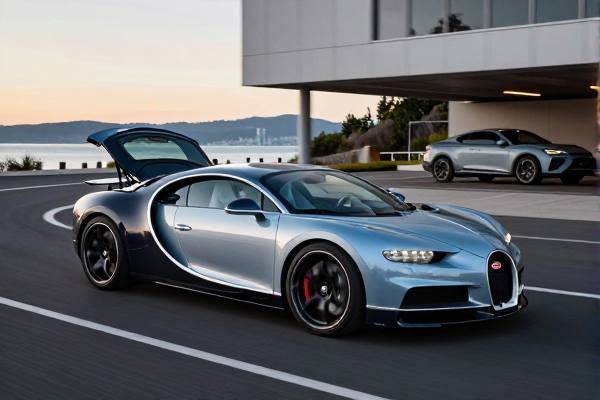
July 22, 2024 — In a landmark move for automotive preservation, the world's first Bugatti Tourbillon has been shielded with XPEL paint protection film (PPF) by Tier 1 Autohaus, marking a pivotal moment in high-end vehicle care. This event underscores the rapid evolution of protective technologies, transitioning from rudimentary covers to sophisticated, nearly undetectable solutions that safeguard multi-million-dollar investments.
The journey of paint protection has transformed dramatically over the decades. Early methods relied on bulky leather front-end covers and thick plastic films, often dubbed "clear bras," which tended to yellow, crack, and inadvertently accelerate a car's aging process. These outdated solutions were more of a compromise than a true safeguard, leaving enthusiasts and collectors seeking better alternatives. Today, the narrative has shifted entirely, with modern PPF offering unparalleled durability and aesthetic preservation.
Contemporary paint protection films represent a leap in material science, featuring near-invisibility, self-healing properties, and advanced design integration. Unlike their predecessors, these films employ thermoplastic polyurethane (TPU) technology that can heal minor scratches with heat exposure, ensuring a flawless finish over time. This innovation not only protects against road debris, UV rays, and chemical stains but also maintains the vehicle's original gloss, making it a staple for luxury and performance cars.
The Bugatti Tourbillon, as the French manufacturer's latest hypercar masterpiece, epitomizes automotive excellence with its hybrid powertrain, bespoke craftsmanship, and multi-million-dollar price tag. Its unveiling drew global attention, not just for performance specs but for its pristine carbon fiber and paintwork, which demand meticulous protection. Owners of such vehicles prioritize preserving every detail, as even minor imperfections can significantly impact resale value and aesthetic appeal.
Tier 1 Autohaus, a renowned specialist in high-end automotive detailing, executed the XPEL PPF installation with precision. The process involved custom-cutting the film to match the Tourbillon's complex curves and aerodynamic lines, ensuring seamless coverage without bubbles or edges. XPEL's latest PPF variant, known for its 10-mil thickness and enhanced hydrophobic coating, was selected for its superior resistance to environmental stressors. This meticulous application, completed over several days, highlights the expertise required for such exclusive projects.
Adding a unique perspective, industry experts note that XPEL's recent advancements include a proprietary adhesive layer that reduces yellowing and improves longevity, a direct response to collector feedback. According to automotive preservation authority James Keller, "The integration of PPF on hypercars like the Bugatti Tourbillon sets a new standard. It's not just about protection; it's about maintaining artistic integrity in an era where vehicles are investments." This insight underscores the shift from mere utility to value-driven preservation strategies.
The implications of such protection extend beyond aesthetics, influencing the broader luxury car market. PPF installations are becoming a norm for high-value models, with studies showing that protected vehicles retain up to 15% higher resale value over unprotected counterparts. For Bugatti owners, this translates to preserving not just a car but a legacy, as the Tourbillon's limited production run of fewer than 100 units amplifies its collectibility. The XPEL application thus serves as a proactive measure against depreciation and damage.
Looking ahead, the future of paint protection is poised for further innovation, with developments in nano-coatings and AI-assisted installation techniques on the horizon. As electric and autonomous vehicles gain prominence, PPF will likely adapt to new materials and designs, ensuring continued relevance. For now, the Bugatti Tourbillon's world-first XPEL shield stands as a testament to how technology and craftsmanship converge to redefine automotive care, offering a blueprint for future preservation efforts.