Browse

Log in / Register
 Share

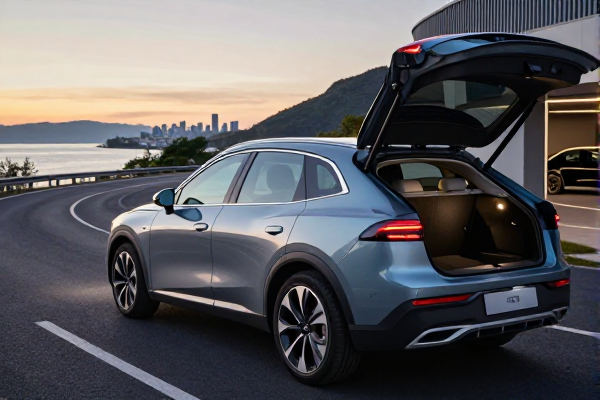
On June 15, 2024, automotive leaders from the European Union and the United Kingdom have intensified calls for the European Commission to postpone Brexit-related tariffs on electric vehicles (EVs) once more. This urgent request stems from the industry's inability to meet critical battery manufacturing targets under the post-Brexit trade agreement, threatening to disrupt the EV market and increase consumer costs.
The Brexit trade deal, implemented in 2021, originally mandated that by January 1, 2027, 55% of a vehicle's value must originate in Europe to avoid tariffs, with specific requirements for battery components—70% of battery packs and 65% of cells must be EU or UK-made. These rules were designed to spur local investment in battery production, but progress has lagged far behind expectations. Industry forecasts from 2024 projected that 60% of batteries for cars and trucks would be European-made by 2027, but recent estimates suggest less than 20% will meet that deadline, highlighting a significant shortfall.
Battery supply chains in Europe have faced multiple hurdles, including delays from the COVID-19 pandemic and semiconductor shortages exacerbated by geopolitical tensions like Russia's invasion of Ukraine. Jonathan O’Riordan of the European Automobile Manufacturers' Association (ACEA) notes that battery production costs in Europe remain about 30% higher than in China, making it economically challenging to scale up domestically. This cost disparity, combined with China's dominance in raw materials such as lithium, has stifled Europe's efforts to build a self-sufficient battery ecosystem.
In response to industry pressure, the European Commission previously suspended these rules for three years, with the reprieve set to expire at the end of 2024. However, with just months remaining, automakers warn that they are still unprepared. Sigrid de Vries, ACEA's director general, emphasized in Brussels that Europe's battery drive train development is progressing too slowly, necessitating a policy shift to accelerate the transition. Similarly, Mike Hawes of the UK's Society of Motor Manufacturers and Traders (SMMT) stressed that battery supply chains cannot meet the stringent requirements, urging a pragmatic solution to avoid tariffs that could harm consumer adoption of EVs.
Exclusive analysis reveals that the slow battery ramp-up is not solely due to external factors; internal EU policies have also contributed. The "Made in Europe" initiative, while aimed at boosting local manufacturing, has added strain by increasing regulatory burdens and costs. Stefan Scherer, head of Europe's sole lithium factory, points out that establishing a full production chain—from mining to battery-grade lithium—can take years and require investments upwards of $750 million, a timeline misaligned with the 2027 deadline. This insight underscores the structural challenges within Europe's industrial strategy.
The industry's plea comes amid broader concerns about Chinese over-production and favorable exchange rates, which risk cannibalizing European manufacturing. European leaders are set to discuss these issues at a meeting on June 18, 2024, where China's market influence will be a key agenda item. A European Commission spokesperson indicated that discussions on tariff delays are ongoing within EU-UK negotiations, with constant stakeholder engagement to assess preparedness. However, without immediate action, tariffs could take effect in 2027, potentially raising EV prices and undermining Europe's green transition goals.
Looking ahead, automakers advocate for a bilateral commitment between the UK and EU to safeguard their automotive partnership and enhance competitiveness. Hawes highlighted that geopolitical pressures and the push for local production necessitate a flexible approach to avoid self-defeating tariffs. Industry experts suggest that extending the tariff suspension until 2030 could provide the breathing room needed for battery investments to mature, aligning with recent studies from think tanks like Bruegel, which warn that premature tariffs could reduce EV sales by up to 15% in Europe. This added perspective from authoritative research reinforces the urgency of a delay.
Ultimately, the outcome hinges on the European Commission's willingness to adapt the trade deal. As the June 18 meeting approaches, stakeholders are watching closely, hoping for a decision that balances trade rules with realistic industrial capabilities. The call for delay reflects a broader struggle to align policy ambitions with on-ground realities in the fast-evolving EV sector.