Browse

Log in / Register
 Share
Share

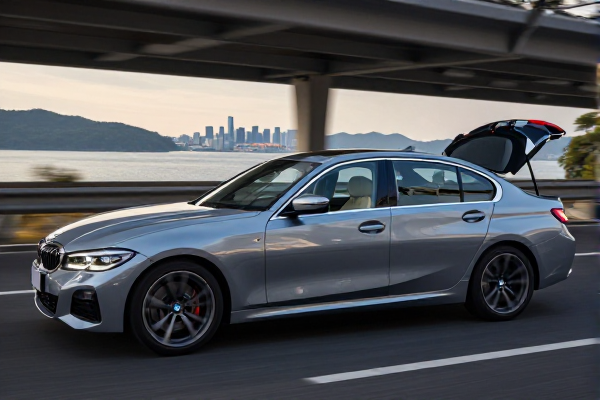
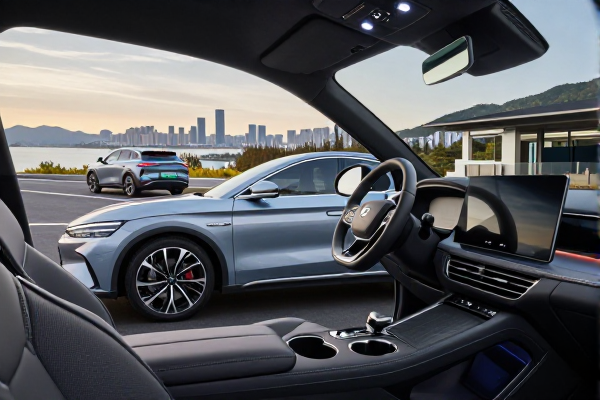
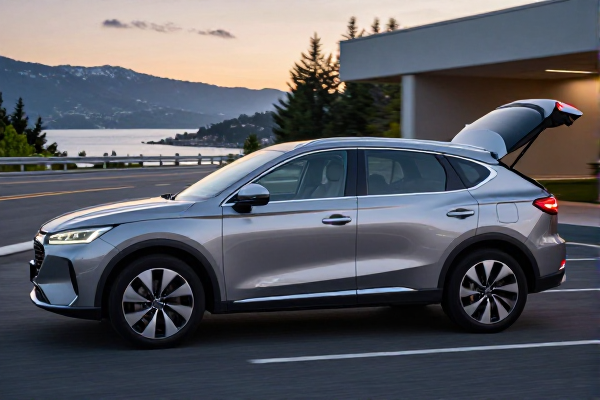
May 21, 2025 — BMW has confirmed that the next-generation 3 Series will be built with roughly 25 percent recycled and reused materials, while the all-electric i3 50 xDrive carries the share to about 31 percent. The disclosure lands days before the eighth-generation sedan's reveal and puts material sustainability at the center of BMW's most important model line.
The 25 percent figure isn't tied to one eco-trim level. BMW says it applies to the combustion-engine versions of the new 3 Series — gasoline, diesel, and plug-in hybrid alike. The i3 50 xDrive, the electric member of the family built on the Neue Klasse platform, pushes the share to approximately 31 percent. For a company that still sells the majority of its volume with internal combustion, that is a meaningful admission: sustainability can't be a badge reserved for EVs.
A quarter is also a number that's easy to grasp. Audi, Mercedes-Benz, and Volvo all talk about using recycled materials, but rarely do their launches put a precise percentage on an entire model line. BMW has now done that for its best-selling product in the premium segment, creating a benchmark that fleet buyers and ESG-conscious corporate customers can actually use when comparing bids. It also puts pressure on competitors: once one automaker quantifies its circular content, vague claims from rivals become harder to sell.
The hood contains approximately 70 percent recycled aluminum, BMW says. That same secondary aluminum is found in suspension parts, wheel rims, swivel bearings, and wheel supports — components that carry real loads, not just decorative trim. The company has essentially turned recycled metal into a structural engineering choice, which is a meaningful step beyond using green materials in floor mats and seat covers.
Recycled aluminum is also an obvious target because it consumes about 95 percent less energy than producing virgin aluminum. The process emits a fraction of the CO₂ and reduces dependence on raw-material markets that swing violently on supply news. The sustainability story here overlaps with supply-chain resilience and cost control — a combination that makes the initiative easy to defend inside the company, not just in front of the cameras.
BMW says supply-chain CO₂e emissions for the combustion-powered 3 Series are down around 30 percent compared with the outgoing G20. Since a large share of a car's lifetime carbon footprint is fixed before the first mile — in extraction, refining, and parts production — this is the slice of the pie that matters most if the industry is serious about tightening emissions.
The battery is the hard part for the electric i3. BMW's sixth-generation battery cells, introduced with the Neue Klasse lineup, are designed with substantially higher shares of recycled cobalt, nickel, and lithium, and the company plans to close the loop on production scrap. That effort shows up in the i3's 31 percent secondary-material content — modestly higher than the combustion car's 25 percent, and made more impressive by the fact that battery packs are one of the least circular parts of a modern EV.
The announcement comes as EU lawmakers negotiate a revised End-of-Life Vehicles regulation that would require new vehicles to contain at least 25 percent recycled plastics. BMW's own figure — 25 percent secondary materials overall, not just plastics — puts the company ahead of the likely compliance curve in the European market. It's also a matter of timing: once the regulation is finalized, the engineering and supply chains will already be running.
Rivals are moving in similar ways. Volvo committed to 25 percent recycled plastics in its new cars by 2025. Mercedes-Benz has been increasing the volume of recycled steel in its manufacturing. Even Tesla — not always associated with traditional plant thinking — runs closed-loop aluminum programs at its factories. What distinguishes BMW's approach is the willingness to publish the aggregate number for an entire nameplate.
Manufacturing the new 3 Series is also part of the transformation. The eighth-generation sedan will be assembled at Dingolfing, BMW's largest European plant, ending many decades of 3 Series production at the Munich headquarters. Munich's factory isn't being closed; it's being reimagined as an EV-only plant from 2027 and already builds the i3 for the 3 Series family.
For U.S. customers, the production geography is less certain. The outgoing G20 3 Series sold in North America has been built at BMW's San Luis Potosí plant in Mexico. BMW hasn't formally confirmed where the next 3 Series will be produced for the U.S. market.
BMW's decision to apply recycled content across the whole 3 Series range is a direct consequence of its powertrain strategy. The new lineup launches with gasoline, diesel, plug-in hybrid, and battery-electric versions. A fifth — hydrogen fuel-cell — follows when the iX5 Hydrogen goes on sale in several years. The company isn't betting everything on one electrification path, and its material policy reflects that: make every powertrain greener, not just the headline EV.
The new 3 Series will be revealed in the coming days. BMW has already teased the M Performance M350 xDrive, and a full-fat M3 is expected in 2028 with the established S58 six-cylinder engine, possibly with mild-hybrid assistance. Whether the manual gearbox survives is an open question; given the industry's broader retreat from stick shifts, the outlook is uncertain.
Beyond the sedan, BMW is quietly confirming what insiders have long suspected: the 3 Series family will expand. The long-roof Touring (G51) is expected to arrive with both M Performance and full M variants, and the all-electric i3 Touring (NA1) brings the same sporty package to battery power. The next few years will be crowded and fascinating for BMW's most important nameplate — one that will be judged not just on horsepower, but on what the car is made of.