Browse

Log in / Register
 Share

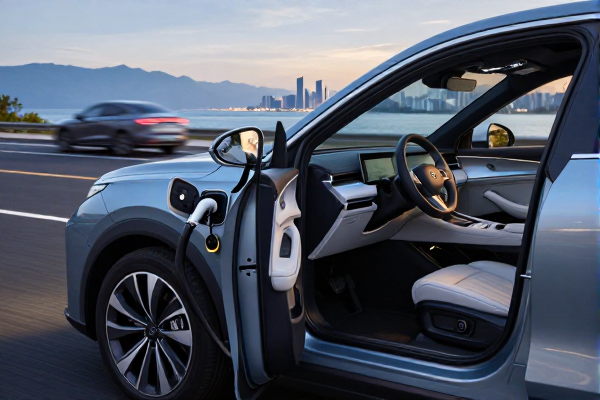
May 24, 2024 — A strategic partnership aims to drastically reduce the cost of vehicle-to-grid (V2G) technology, a key hurdle for widespread adoption, as another major player expands the nation's fast-charging network with integrated energy storage. These parallel developments highlight the accelerating and multi-faceted evolution of electric vehicle infrastructure beyond simple plug-in points.
The core innovation comes from a collaboration between Verdek LLC and Andromeda Power LLC, focusing on a patented system called the MotorTransformer bidirectional power platform. Unlike conventional V2G setups that require expensive additional hardware both on and off the vehicle, this approach repurposes the EV's own traction motor as a high-frequency isolation transformer when the vehicle is parked. This elegant engineering hack is projected to cut the onboard vehicle Bill of Materials to around $1,500, representing a potential 90% reduction in infrastructure deployment costs compared to traditional systems. Initial bench testing has demonstrated a round-trip efficiency rate of 97.9% at 50 kW.
This cost breakthrough could be a game-changer for commercial fleets, where the economics of V2G—selling power back to the grid during peak demand or powering buildings—have been challenging. Under the partnership, Andromeda Power manages the intellectual property and engineering, while Verdek leverages its extensive deployment experience and manufacturer relationships to scale the technology. The roadmap includes prototype validation using a modified Nissan Leaf, funded in part by the California Energy Commission, with initial fleet integration targeted for late 2026 and commercial deployments beginning in early 2027.
Simultaneously, the public charging network is seeing significant capacity upgrades. Electrify America has inaugurated a large-format charging hub in downtown Santa Barbara, California, built on the site of a former Greyhound bus depot. The station features 20 Hyper-Fast DC chargers capable of up to 350 kW, designed to alleviate congestion in high-demand urban corridors. Notably, the site integrates a substantial 1.9 MW battery energy storage system (BESS), the largest in Electrify America's network, to manage peak grid demand and optimize energy costs.
The inclusion of large-scale storage at charging stations is becoming a critical strategy. These systems store lower-cost electricity during off-peak hours or when solar generation is high, then discharge it during periods of high charging demand. This not only reduces stress on the local grid but also helps stabilize operating costs for network operators, a factor essential for long-term sustainability and potentially lower consumer prices. While the Santa Barbara hub currently uses CCS connectors, the company plans to add North American Charging Standard (NACS) compatibility in line with industry shifts.
Together, these announcements signal a maturing phase for EV infrastructure. The focus is expanding from merely building more chargers to developing smarter, more integrated, and economically viable systems. The push for affordable bidirectional charging unlocks the potential of EVs as distributed grid assets, while large-format hubs with storage address the practical challenges of power demand and reliability. As major automakers from Ford to Volkswagen prepare an influx of new electric models, advancements in both innovative V2X technology and robust public charging networks are equally critical to support the next wave of adoption.
The V2X market, encompassing vehicle-to-grid, vehicle-to-building, and other applications, is projected to grow into a $50 billion opportunity. Developments like the MotorTransformer platform demonstrate how technological simplification, rather than just incremental improvement, can be the key to unlocking this potential. The industry's challenge now is to move these promising technologies from successful prototypes and pilot sites into widespread, interoperable, and user-friendly reality.