Browse

Log in / Register
 Share

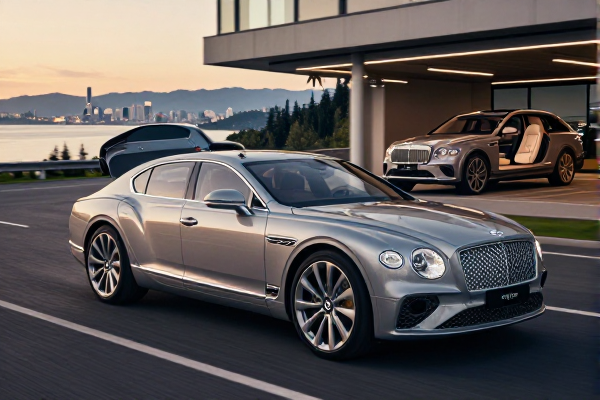
Updated: May 9, 2026 – Bentley has taken the wraps off its first fully electric model, a midsize SUV named Torcal. The reveal marks a major step in the company’s Beyond100 electrification roadmap and follows similar moves from Rolls-Royce and Jaguar Land Rover. With underpinnings shared with the Porsche Cayenne Electric, the Torcal brings serious performance and some of the fastest charging speeds in the ultra-luxury segment.
The Torcal sits on the Premium Platform Electric (PPE), developed by Porsche and Audi. That means it shares its fundamental bones with the Cayenne Electric, but Bentley has tuned everything to deliver a distinctly relaxed yet forceful character. It uses a 113-kilowatt-hour (gross) battery pack, which, according to Bentley, delivers 375 miles of range on the more optimistic WLTP standard. Translated to the EPA’s stricter testing cycle, that’s expected to be over 300 miles. Not a segment record, but more than enough for a buyer who, let’s face it, probably has access to a private jet for anything longer.
Where the Torcal really surprises is charging. The 800-volt architecture supports a peak rate of 400 kilowatts, which is exceptional for a vehicle in this class. A 10–80% charge takes under 20 minutes, and Bentley claims you can add 100 miles of WLTP range in just seven minutes—provided you can find a charger that actually delivers 400 kW. That’s faster than a typical meal break and makes the Torcal a more practical long-distance cruiser than many battery-electric rivals.
Bentley is calling the Torcal the most powerful and torque-rich model ever to leave its Crewe factory. The dual-motor all-wheel-drive setup produces 876 horsepower and a mammoth 995 pound-feet of torque. Launch control handling those outputs yields a claimed 0-60 mph sprint of just 2.8 seconds. For comparison, that betters the outgoing Bentayga Speed by a wide margin and puts it in supercar territory, while still carrying the calm, effortless demeaner buyers expect from a Bentley.
The numbers are impressive, but the Torcal is not designed to be a track weapon. Instead, Bentley’s engineers focused on delivering seamless, wafting acceleration with a surge of power that arrives instantly, yet with the steely composure of a much smaller vehicle.
The front end is busy and dramatic, dominated by an illuminated diamond mesh grille. The squared-off nose and long bonnet give it a visual presence not unlike a Rolls-Royce Cullinan, which is no bad thing when you’re selling into China—Bentley’s largest market. Slim daytime-running lamps sit above the main LED headlights, like raised eyebrows, and the lower bumper is chunky and aggressive. The rear is far more restrained, with slim horizontal taillights and a clean tailgate that keeps the design uncluttered.
The cabin is where the shared Porsche DNA shows most clearly. A curved OLED infotainment screen dominates the dashboard and runs Bentley’s own software. Interestingly, there is no passenger-side display, a feature increasingly common in premium EVs. During a media briefing in Crewe, Bentley’s product line director Martin Page said the company will never add a passenger screen. “Technology has to add value. It should not dominate the experience,” he explained. That philosophy also applies to the propulsion sound. The Torcal’s Dynamic Symphony system is generated from real instruments—drums, viola, bass guitar—recorded and synthesized to mimic the brand’s iconic V8 burble. Owners can switch it off entirely for silent cruising, and Bentley says the synthetic tone is continuously refined to avoid becoming annoying.
The interior appointments are suitably lavish. Merino wool seat fabrics, responsibly sourced, are standard, along with dozens of customization options for leather, stitching, and trim accents. The base audio is a 16-speaker, 620-watt system; the upgrade is a 1,780-watt Naim setup with 28 speakers and Dolby Atmos 7.1 surround, a genuine concert hall on wheels.
Bentley says the Torcal will go on sale in America early next year as a 2028 model, meaning the first customer deliveries likely begin around the first quarter of 2027. Official U.S. pricing hasn’t been finalized, but company officials have indicated to Car and Driver that it will slot below the flagship Bentayga, which currently starts near $230,000. That suggests a base price in the low-to-mid $200,000 range, putting it in direct competition with the Cadillac Escalade IQ, Mercedes EQS SUV, and the upcoming Volvo EX90, though with far more badge prestige.
The Torcal is not merely a technology showcase; it is a commercial necessity. Bentley’s U.S. showrooms are increasingly dependent on SUVs, and the Torcal is positioned to become the brand’s top seller in America. Its combination of huge charge speed and generous range directly addresses the two biggest EV objections: charging time and range anxiety. While rivals rely on 350 kW or less, the Torcal’s 400 kW capability gives it a real edge at the few high-powered stalls that exist today—and future-proofs it as the charging network expands.
Industry observers also note that Bentley’s decision to skip a passenger display foreshadows a broader shift in luxury interfaces, where minimalism and driver focus are coming back into vogue. Combined with the synthetic V8 soundtrack, the Torcal creates a uniquely Bentley experience that isn’t simply a badge-engineered Porsche. The Crewe team reportedly spent months adjusting the PPE platform’s suspension and steering calibration to deliver a softer, more isolated ride than the sportier Cayenne Electric.
Bentley has not specified full U.S. EPA numbers or official pricing yet, but the early specifications are compelling. If the Torcal delivers on its promised charging speed and refinement, it could quickly become the default choice for wealthy buyers seeking an EV without compromising on opulence—or lunch breaks.