Browse

Log in / Register
 Share
Share

May 14, 2026 — Australia’s new-car market has turned into a live laboratory for the global auto industry, and overseas regulator and industry bodies are flying in to study its rapid transformation. Senior Nissan executives say the country’s recent “brand explosion” is drawing attention from Canada and other markets that are trying to prepare for the arrival of lower-cost, Chinese-built EVs.
The result, they argue, is not just an Australian story. It is a preview of the pressure that mature auto markets may face once Chinese automakers pursue serious scale beyond their home turf.
Steve Milette, managing director of Nissan Oceania, said the speed of change in Australia has been unlike anything he saw during his decades working in North America.
“I started my job in April, and there are more brands today than when I started,” Milette said. “You wouldn’t see that in other markets.”
What makes Australia different, he added, is the unusually fast influx of affordable Chinese-built vehicles, particularly EVs.
“There’s more accessible EVs, or a number of EVs that have proliferated over the last few years,” Milette said.
That shift is being watched far beyond Australia. Milette said he met representatives from Canada’s equivalent of the Australian Automotive Dealer Association at a recent AADA convention in Australia.
“There’s a lot of governing bodies that are coming and just learning, and just studying what the impact is,” he said.
The scale of the challenge is easy to see in official VFACTS data cited by Nissan executives.
Australia’s new-car market sits at about 1.2 million vehicles per year. The top 15 or so brands still control roughly 900,000 of those sales. The remaining 300,000, however, are split among 60 to 70 other brands — a number that could reach 90 by next year.
Angus Thompson, senior corporate communications manager at Nissan Australia, described the result as a much busier and more fragmented marketplace.
“The pieces of the pie are getting smaller,” Thompson said.
The overall market is not growing. Year-to-date sales are effectively flat at 914,312 vehicles, just 127 fewer than the same period a year earlier. So when a newcomer gains volume, an established player loses it.
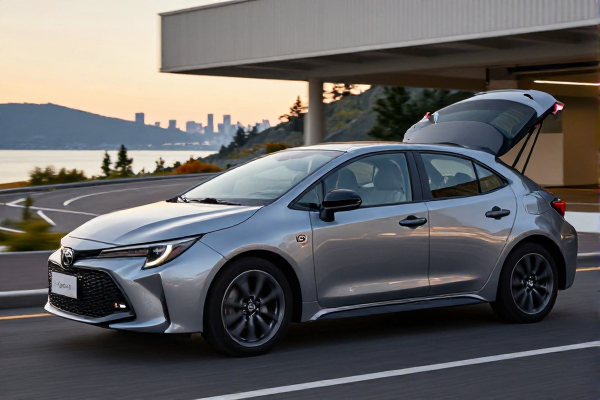
The shift toward Chinese-made product is striking. Sales of vehicles built in China are up 72.6 percent year-to-date to 281,359 units, while Japanese-built vehicle sales have fallen 19.9 percent to 218,747.
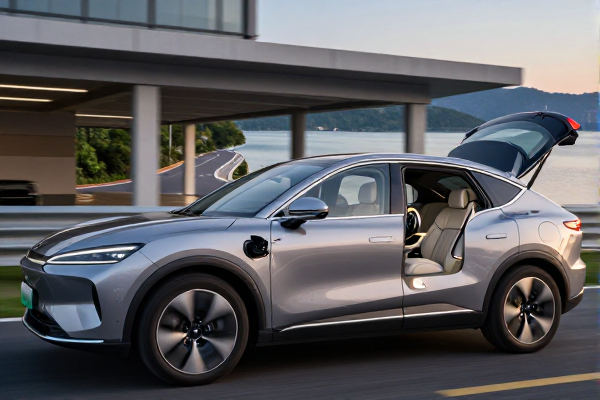
Much of that growth is being driven by names that barely registered in the market a few years ago. BYD alone has more than doubled its Australian sales, up 102.0 percent to 76,614 units. Emerging brands such as Zeekr, Geely, GAC, Xpeng and Denza are all posting major percentage gains.
Milette said the Chinese influence has also reshaped Australia’s most popular vehicle segment. The medium SUV class, a cornerstone of family and fleet sales in Australia, is up 22.3 percent to 256,445 sales.
For context, medium SUVs are also a dominant category in the United States, which is one reason Australian trends are getting attention from North American industry observers.
The United States has kept most Chinese-built EVs out of showrooms through tariffs and trade policy, so the Australian experience is not a direct forecast for America. But it does offer an early signal of what happens when legal and political barriers are lower.
The Australian pattern suggests that a flood of new brands can expand consumer choice without expanding the total market. That means every sale gained by a challenger is a sale lost by someone already on the dealership floor.
For US dealers, the key lesson may be about speed. Australia’s fragmentation is happening within a few years, not over a generation. The number of active brands in Australia is climbing while overall volume stays flat, a scenario that forces incumbents to defend share far more aggressively.
Rather than retreat, Nissan says it is adjusting to the new reality. Milette said Nissan Oceania is rebuilding its mid-term plan around three priorities: more Chinese-sourced Nissan product, more electrification, and a return to growth.
That response mirrors what many established automakers will likely need to consider in other markets if Chinese-built EVs become more accessible in the future. The brand mix may look different, Nissan executives acknowledge, but the competitive pressure is already taking shape.
For the rest of the world, Australia is an early-warning system. The country is not the largest auto market, but it is one of the first mature markets to experience the full force of the Chinese EV push. What happens there over the next couple of years will likely shape how other governments, regulators and dealer groups respond when the same wave reaches their shores.