Browse

Log in / Register
 Share

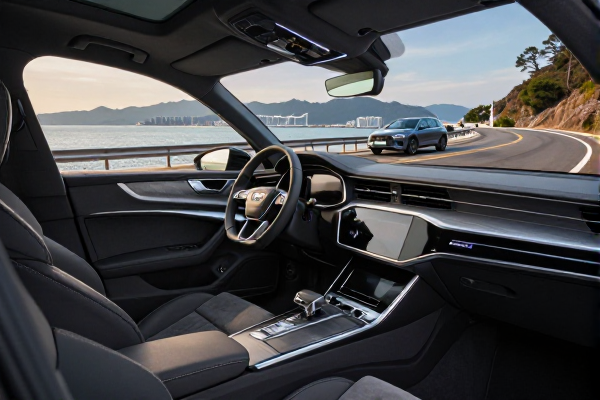
On April 3, 2025, Audi AG and its Chinese joint venture partner SAIC Motor officially inaugurated a new research and development hub in Shanghai, staffed by 300 engineers. The facility is dedicated to creating four electric vehicle models that will be sold exclusively in China — a move that underscores Audi’s intensifying push to reclaim relevance in the world’s largest and most demanding EV market.
The new R&D center, located in the Shanghai Free Trade Zone, marks a significant deepening of the Audi-SAIC collaboration. Unlike previous joint ventures that focused on adapting global models, this hub will lead the full-cycle development of EVs from platform design to local production, targeting Chinese consumer preferences. The four models — expected to include a sedan, an SUV, and possibly a crossover — are slated to launch between 2026 and 2028.
Audi has been under pressure in China, where its sales of battery-electric vehicles lag far behind domestic incumbents like BYD, NIO, and Xpeng, as well as Tesla. In 2024, Audi sold roughly 70,000 EVs in China, compared to BYD’s 1.5 million. The company’s premium EV lineup, such as the Q6 e-tron, has struggled to compete on both price and software features.
“This is not just another joint venture plant — it’s a dedicated innovation engine for China,” said Dr. Frank Stieler, Head of Audi’s China Region, at the opening ceremony. “We are investing in local talent, local supply chains, and local intelligence to deliver products that truly resonate with Chinese customers.”
Industry sources familiar with the project reveal that the R&D center will operate with a high degree of autonomy, bypassing the usual approval loops from Ingolstadt. The 300 engineers — half of them recruited from Chinese tech companies and EV startups — will work on three core areas:
This “in China, for China” approach mirrors the strategy of Volkswagen’s ID. lineup, which partnered with Xpeng on software. However, Audi’s hub is more vertically integrated, covering both hardware and software under one roof.
The timing of the announcement is critical. China’s EV market has entered a phase of fierce price wars and rapid consolidation. Legacy automakers that fail to localize development risk being left behind. Audi’s German rival BMW already operates a large R&D center in Shanghai, while Mercedes-Benz has deepened ties with local battery suppliers.
“Audi’s 300-strong hub is a good start, but scale matters,” commented Liang Yu, an automotive analyst at Shanghai-based consultancy SinoAuto Insights. “BYD has over 10,000 engineers in its Shenzhen headquarters. To truly compete, Audi will need to triple this team within two years and leverage SAIC’s manufacturing muscle.”
Liang also noted that the four China-only EVs must hit the market before Chinese rivals refine their own premium offerings. “If Audi delays past 2028, the window for foreign brands to command a premium in China’s EV segment will close.”
The Shanghai hub also serves as a testbed for technologies that could later be adapted for other markets. Sources indicate that Audi’s parent company, Volkswagen Group, is closely watching the outcomes, particularly in battery cell-to-pack