Browse

Log in / Register
 Share

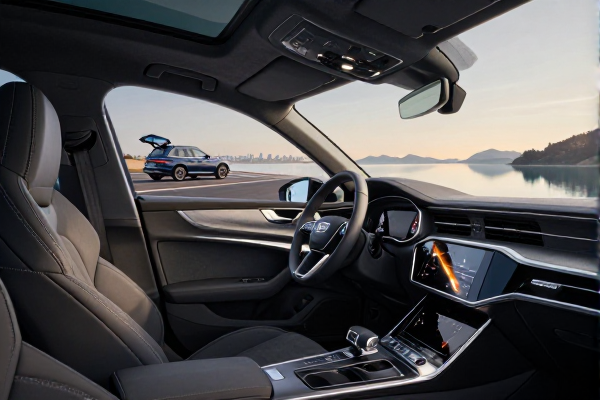
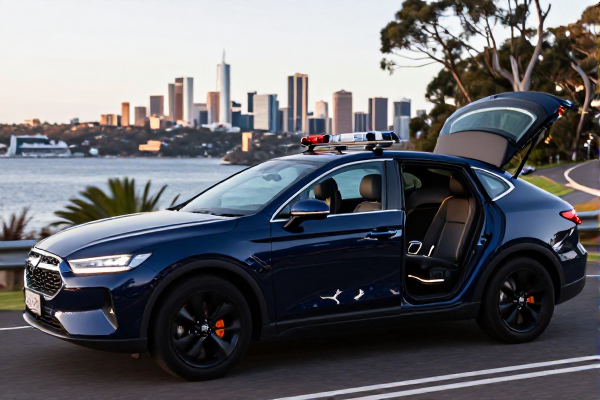
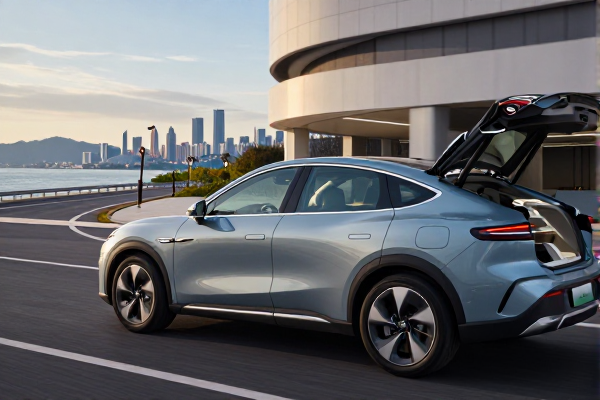
Audi China has drawn a sharp line between its two Chinese ventures. After 2027, the four-ring badge stays with FAW Audi, while Audi SAIC will focus on the letter-logo AUDI brand. The question many owners are asking is simpler: if you bought a four-ring Audi through Audi SAIC's channel, who fixes it after that date?
As of May 9, 2026, the answer is still not fully public. Audi China says Audi SAIC can keep selling four-ring products until the end of 2027 and that after-sales for both four-ring and AUDI-letter vehicles “will all maintain stable operation.” But no detailed handover plan for post-2027 service has been released.
Audi China’s latest strategic agreements give FAW Audi the lead on the four-ring brand across both intelligent-luxury new-energy vehicles and traditional fuel cars. Audi SAIC, by contrast, is expected to concentrate on the AUDI letter logo and the EV market.
The arrangement was not a surprise. Audi’s relationship with FAW goes back to 1988, when the Audi 100 went into production through a technology transfer. In 2006, the FAW-Volkswagen Audi Sales Division unified sales, channels and after-sales for domestic and imported four-ring models. Audi SAIC arrived in 2021, and with it came a dual sales network selling vehicles bearing the four-ring logo.
Signs of the split were visible before the agreement. A Caijing Magazine report from early September noted that Audi SAIC had started cutting prices on four-ring models, a likely signal of inventory clearing. Production data also showed declining output for some models, with July output falling to zero across the board. The official agreement simply made the direction clear.
A reporter from Chinese finance outlet Zhongxin Jingwei called both Audi SAIC and FAW Audi to press for details.
Audi SAIC’s official customer service said its agent network will continue to sell four-ring products before the end of 2027. Four-ring vehicles sold through those agents will keep receiving after-sales support from Audi SAIC’s authorized agents. The A5L Sportback is being sold until the end of 2027, while other four-ring models already in the series — the Q6, A7L and Q5 e-tron — are not tied to that deadline. After-sales for all of them will continue.
The customer-service representative added that no matter when the vehicles are sold, Audi SAIC can provide after-sales support for four-ring products sold through its agent channel. Owners with later problems were told they can call the official hotline for help.
FAW Audi’s customer-service line gave a different angle. Four-ring models sold within the FAW Audi system can still be serviced at FAW Audi authorized dealers. Existing four-ring stock from Audi SAIC can still be maintained and repaired at Audi SAIC agents, and buyers were told to check with Audi SAIC and its authorized network for model-specific questions. The upcoming A5L Sportback, for example, will be displayed and sold at FAW Audi authorized dealers, with the detailed sales rules still being finalized.
For the period after the 2027 transition, FAW Audi’s customer service said the status quo is being maintained for now. No definitive reply was available, and the company said it would issue further notice if policy changes.
Audi China itself has not given a clear public answer on the matter as of publication.
Audi delivered 617,500 new vehicles in China in 2025, a year-on-year drop of about 5%. FAW Audi’s cumulative sales reached 567,000 units, including imported vehicles. Audi SAIC retailed 47,300 units, up 23% from the previous year.
Those numbers show that most four-ring volume sits with FAW Audi. But Audi SAIC’s share is growing, and its customers are the ones inside the gray zone. For them, the warranty question is not academic.
Legal experts say the uncertainty does not erase the statutory duties of the original seller.
Li Min, senior partner at Shanghai Hansheng Law Firm, points to Article 21, Paragraph 2 of China’s Administrative Measures for Automobile Sales. Once a supplier stops producing or selling a model, it must promptly tell the public and ensure spare parts and corresponding after-sales service for at least 10 years afterward.
For each individual vehicle, the rules are even more specific. Under the Provisions on Liability for Repair, Replacement and Return of Household Automobile Products, the three-guarantee period is no less than two years or 50,000 kilometers, whichever comes first. The warranty period is no less than three years or 60,000 kilometers, whichever comes first. The clock starts from either the invoice date or the delivery date, depending on which comes later. Li Min stresses that this applies to each specific vehicle, regardless of whether the model is discontinued.
The phrase “maintaining stable operation” in the Audi China agreement, Li Min says, is essentially a commercial arrangement between operators. Car owners are not parties to that contract and cannot easily rely on it. At the same time, the agreement’s silence about the post-transition period cannot erase mandatory legal obligations. If the agreement is unclear, the law provides the default answer.
Zhang Hong, a member of the Expert Committee of the China Automobile Dealers Association, takes the same line in simpler terms: the original seller is the primary responsible party. The three-guarantee liability for household automobiles is borne by the seller, and a seller cannot use “expired authorization” as an excuse to walk away.
Zhang warns that vague promises carry limited weight. An effective after-sales undertaking should specify the responsible entity, applicable models, the list of repair outlets, the spare-parts supply period, how costs will be covered, and how long the arrangement lasts. Without those details, the guarantee is mostly words.
When responsibility is unclear, experts suggest a layered approach. Car owners should first submit a written three-guarantee application to the original dealer, stating the fault, the demand and a deadline. At the same time, they should notify the manufacturer in writing and ask for the fault cause, test conclusions and a responsibility opinion.
Evidence matters. Keep maintenance work orders, fault videos, communication records, vehicle data and expense receipts. If negotiation fails, file a complaint with the market supervision department or the consumer association. If the case goes to court, name both the dealer and the manufacturer as responsible parties. The dealer is the primary target for the three-guarantee claim, and the dealer can then seek recovery from the manufacturer.
This is a China-specific dispute, but it carries a broader lesson for American Audi owners and anyone buying through a manufacturer's separate sales channels. Brand logos and service obligations are not always tied together. A manufacturer can reorganize its dealer network, shift brands between joint ventures, or retire a logo, but the duty to support what it has already sold does not disappear.
In the U.S., federal warranty law and state lemon laws create similar backstops. The critical difference is that in China, the original seller remains the gatekeeper for enforceability. For consumers on either side of the Pacific, the practical advice is the same: document every purchase, repair and communication, and know who the legal seller is before signing.