Browse

Log in / Register
 Share

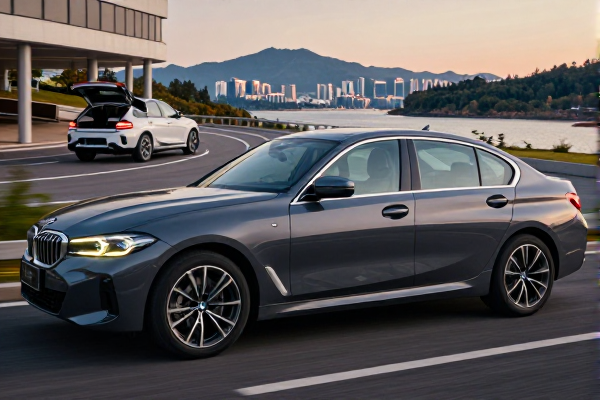
January 16, 2026 — Audi's A6 has never been easier to buy in either of its two most recent forms: the facelifted 4G generation (C7.5, roughly 2015–2018) and the current 4K (C8, 2019 onward). The specs tell a stark story. The 4G costs about 48 percent less, while the 4K offers close to 79 percent more power and a decisive jump in technology. Here is the full comparison.
The 4G facelift is the last of Audi's C7 family, with angular MLB-era styling and a cabin that still leans on physical buttons and rotary MMI controls. The 4K moved to the MLB Evo platform, gained sleeker, wider lines, and switched nearly everything to touchscreens. Both cars compared here are fully imported German-built sedans, and both carry the A6 nameplate with conviction — but they come from very different eras.
One important note for American readers: the 4G tested here uses a 1.8 TFSI four-cylinder that Audi never sold in the US, where the C7 was offered with a 2.0 TFSI or a supercharged 3.0 TFSI. The 4K variant in this comparison — a 3.0 TFSI with a 48-volt mild-hybrid — is essentially the same car US buyers know as the A6 55 TFSI.
In Malaysia, the 4G facelift lists at RM 309,375 (about US$66,000), while the 4K is priced at RM 589,900 (roughly US$126,000) — a difference of about 48 percent. Those Malaysian CBU prices include heavy import duties, so they exaggerate the gap compared with US transaction prices. In America, a clean 2016–2018 A6 typically changes hands in the low-$20,000s to mid-$30,000s range, while a used A6 55 TFSI usually commands the mid-$30,000s to low-$50,000s depending on mileage and options. Either way, the 4G is the far cheaper entry point to the A6 badge.
Malaysian annual road tax works out to RM279 for the 4G and RM2,118 for the 4K — about 7.6 times more for the newer car. That exact ratio doesn't transfer to the US, where registration fees vary by state, but the principle does: the 4K's higher value, greater power, and 20-inch tires mean larger insurance bills and, in many states, higher annual fees.
Fuel economy tells a similar story. The 4G's 1.8 TFSI is rated at 5.7 L/100km — about 41 US mpg — while the 4K returns 7.2 L/100km, roughly 33 US mpg. In other words, the 4G posts a 21 percent consumption advantage, while the 4K needs about 26 percent more fuel to cover the same distance. CO2 follows the same pattern: 133 g/km for the 4G versus 172 g/km for the 4K. American drivers should note that the EPA's own figures for the 4K's 3.0 TFSI are less optimistic than the European cycle — expect roughly 22 mpg city and 29–30 mpg highway in daily use.
The 4G facelift uses a 1,798 cc turbocharged four-cylinder with 16-valve DOHC architecture, variable valve timing, and direct fuel injection. Output is 190 hp and 320 Nm. The 4K steps up to a 2,995 cc V6 with twin-scroll turbocharging, variable valve timing and lift, direct injection, and a 48-volt mild-hybrid system that adds 16 hp and 60 Nm of electric assistance from a 0.5 kWh battery. Total system output is 340 hp and 500 Nm.
That translates to a 0–100 km/h sprint of 5.1 seconds for the 4K versus 7.9 seconds for the 4G, and a 250 km/h top speed against 233 km/h. The 4K is nearly 80 percent more powerful on paper, and on the road the difference is impossible to miss. The mild-hybrid also lets the 4K coast with the engine off, softening the fuel penalty in city traffic. But the extra hardware adds mass: the 4K tips the scales at 1,760 kg versus 1,610 kg for the 4G — a 150 kg penalty.
Both generations use a seven-speed wet-clutch S-tronic dual-clutch automatic. Under the skin, the 4G's gearbox is an Audi AG design, while the 4K's comes from BorgWarner. The bigger difference is at the wheels: the 4G in this spec is front-wheel drive, while the 4K sends power to all four corners via quattro. For US buyers in northern states, that is often the deciding factor — the 4K delivers the all-weather reassurance that has made Audi a default winter choice, whereas the FWD 4G demands more careful tire selection and a lighter right foot.
The 4G is built on Audi's older MLB architecture with double-wishbone front suspension; the 4K uses a multi-link front setup and multi-link rear, matching the 4G. The 4K adds adaptive dampers and dynamic all-wheel steering, a combination that should give it better body control on paper. Yet it rides on 20-inch Pirelli P Zero tires, against the 4G's 17-inch Pirelli Cinturato P7s. Bigger wheels usually mean firmer secondary ride quality, so on broken pavement the older car may well feel more settled. If comfort is the priority, the 4G's smaller footprint is arguably a benefit.
The 4G scored five stars in both EuroNCAP and ANCAP testing, a solid foundation. But its equipment in this spec stops at eight airbags (front, front-side, and full-length curtain), ABS, stability control, ISOFIX, and seatbelt reminders. The 4K adds rear side airbags and, more importantly, active safety: Audi pre sense front with autonomous emergency braking, pre sense rear, collision warning, and lane-departure warning (though not active lane-keeping). None of that exists on the 4G facelift. US shoppers should also consult IIHS ratings for the specific model year; the 4K's driver-assistance suite gives it a clear real-world edge in avoiding crashes altogether.
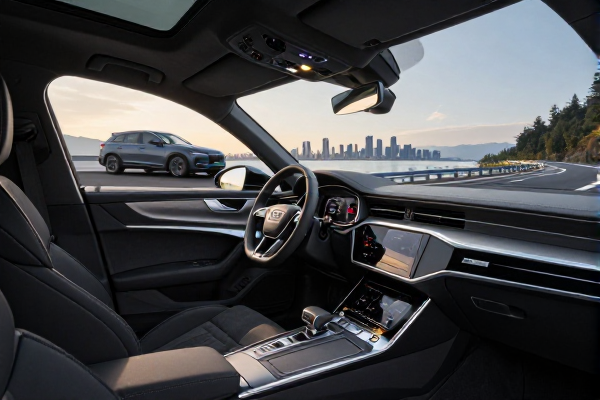
Interiors highlight the generational divide most vividly. The 4G has a 6.5-inch MMI radio, a 180-watt ten-speaker sound system, and analog instrument dials. The 4K brings a 10.1-inch MMI touchscreen paired with an 8.6-inch haptic response display, a 730-watt Bang & Olufsen system with 16 speakers, Audi virtual cockpit, a reversing camera, paddle shifters, soft-close doors, a powered tailgate, and an electrically adjustable steering column. The 4G, by comparison, doesn't even offer a reversing camera in this specification.
Lighting also separates the two: the 4G uses bi-xenon projectors with automatic high beam, while the 4K upgrades to Matrix LED projectors with dynamic rear turn signals.
Practicality, however, is a tie. Both are four-door, five-seat sedans with 530 liters of trunk space. The 4K is 6 mm longer with a 12 mm longer wheelbase — differences you won't feel. The 4G's lower curb weight is more noticeable, giving it a slightly lighter dynamic character.
Audi Malaysia covers both cars with a five-year, unlimited-mileage warranty, which is generous for the region. American buyers looking at a young 4K may still benefit from Audi's new-vehicle limited warranty or a certified pre-owned policy. The 4G facelift, by 2026, is generally out of factory coverage. The 1.8 TFSI's simpler turbocharged engine has a strong reliability reputation, while the 4K's 3.0 TFSI with its mild-hybrid ancillaries adds more electrical components to worry about down the road.