Browse

Log in / Register
 Share


March 19, 2025 – Audi has officially resurrected the A2 as a fully electric compact car, positioning it as the brand’s entry-level EV and a direct replacement for the A1 and Q2. The new A2, unveiled at a studio event in Germany, blends a retro-inspired silhouette with modern aerodynamics and a focus on utility. It aims to prove that small EVs can be both efficient and practical enough for family use.
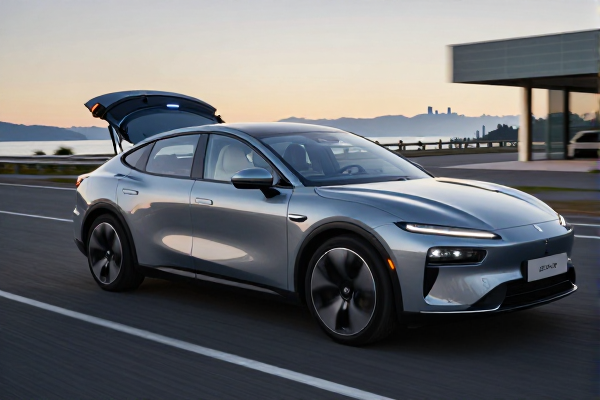
The design team, led by Jakob Hirzel, deliberately avoided a pure teardrop shape to give the A2 a distinct identity. Sharp edges, sculpted surfaces, and a black panel nose that houses sensors create what Audi calls “a proud volume at the front.” The result is a drag coefficient of just 0.24, achieved through smooth underfloor transitions and wheel-arch gap reducers. Wheels range from 18 to 20 inches, wrapped in 225–235 mm tires optimized for low rolling resistance and higher-than-standard pressure.
Under the skin, the A2 rides on the VW Group’s MEB platform, but Audi has thoroughly reworked the suspension and powertrain. It uses the latest generation of permanent-magnet synchronous motors (APP350 and APP550) with low-viscosity oil, polished gearbox spurs, and advanced stator/rotor components. Four power outputs are available: 167 hp, 187 hp, 228 hp, and 322 hp. All versions remain rear‑wheel drive – no quattro option – but the 322 hp variant reaches 100 km/h in 5.7 seconds. According to Audi, the 187 hp version with the efficiency package achieves 7.72 km/kWh (WLTP), making it the most efficient Audi ever. In a prototype drive, we saw more than 8 km/kWh on a mixed route.
Battery options include three gross capacities: 52 kWh, 61 kWh, and 84 kWh. The two smaller packs use LFP chemistry (cheaper, no cobalt), while the largest is an NMC battery for higher energy density and faster charging at up to 183 kW. The 228 hp A2 is the range champion, with Audi claiming “up to 645 km” on a full charge. Charging curves vary by pack, but the NMC version is happier between 20% and 80% for longevity.
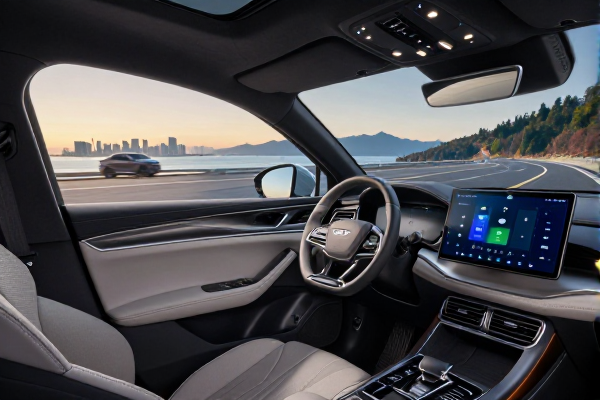
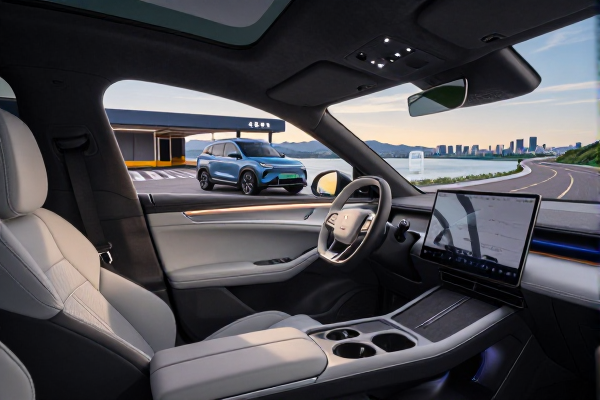
Inside, the A2 embodies CEO Gernot Döllner’s “strive for clarity” philosophy. The dashboard uses a recycled fabric called Softwrap that sweeps across the cabin, punctuated by vertical air vents and oblong furniture-like inserts. Physical buttons are kept to a minimum: drive mode selector is on the steering column, freeing the center console for a dual wireless phone charger (25 W, cooled) and a five-button array for drive mode, ADAS shortcut, hazard lights, cameras, and traction control. The car is the first production vehicle to integrate Fidlock, a German magnetic‑mechanical fastening system that secures cup holders and bags without rattling.
The multimedia setup combines an 11.9-inch instrument display and a 12.8-inch curved touchscreen running the latest Panoramic MMI. Voice control, AI functions, and even Microsoft Outlook/Teams onboard are available. The optional Sonos sound system has 14 speakers and 660 watts. For quietness, a tailgate seal and optimized aero‑acoustics keep interior noise impressively low.
Exclusive perspective: The A2 marks a strategic shift for Audi: it’s the first model fully designed under Döllner’s mandate to reduce complexity. Sources confirm that Audi will offer only two steering wheel variants, and the number of trim levels is expected to be half that of the outgoing A1/Q2 range. That simplification directly addresses the “more than 100 steering wheel variations” Döllner lamented last year. The A2’s interior prioritizes logic over gimmicks – door lock buttons are on the door, not the touchscreen – a deliberate departure from the trend of burying controls in submenus.
Latest developments: Audi has confirmed production will begin at the Ingolstadt plant in Q4 2025, with first deliveries in early 2026. European pricing is expected to start around €35,000 for the entry-level 167 hp variant. US availability has not been announced, but Audi of America executives have privately indicated strong interest in bringing the A2 stateside as a rival to the Tesla Model 3 and Volvo EX30, pending final feasibility studies.
Driving impressions: In a brief prototype drive, the A2 feels taut and responsive. The steering is linear as standard (variable-ratio optional with Tech Plus pack), and the regenerative braking – adjustable via paddles – supports one‑pedal driving. Ride comfort is compliant in Balanced mode, while Dynamic sharpens throttle response. Underbody aero and low‑rolling‑resistance tires pay off in real‑world efficiency; on a 40‑km loop we averaged 8.3 km/kWh without hypermiling.
Market context: The A2 arrives as the compact EV segment heats up. It faces competition from the aforementioned Tesla Model 3, Volvo EX30, and next‑generation Volkswagen ID.3. However, the A2’s combination of best‑in‑class aerodynamics, up to 645 km range, and Audi’s interior sophistication could give it a unique niche. If Audi can deliver on the promised efficiency and keep pricing competitive, the A2 may well reclaim the “game‑changing” mantle of its 2000s predecessor.