Browse

Log in / Register
 Share

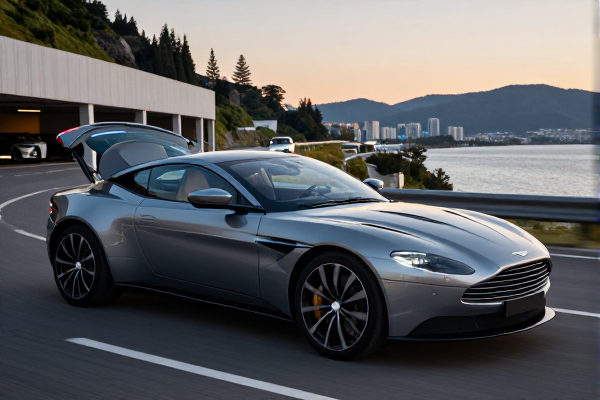
In a strategic pivot that prioritizes its heritage, Aston Martin has charted a clear path to keep its legendary V12 engine alive well into the next decade. The key to this survival is a deliberate decision to limit the engine's annual production, a move that cleverly aligns with regulatory frameworks. This development, confirmed on May 18, 2024, offers a significant reprieve for enthusiasts and signals a nuanced approach to the industry's electrification transition.
The cornerstone of this strategy is a specific provision within global emissions legislation. Aston Martin CEO Adrian Hallmark has clarified that by capping annual sales of its V12-powered models at under 1,000 units, the company qualifies for an exemption that extends until at least 2035. This framework is designed for ultra-low-volume manufacturers, and Aston Martin is leveraging it to preserve the 5.2-liter twin-turbocharged V12—an engine synonymous with the brand's peak performance and emotional appeal. The tactic transforms scarcity from a marketing point into a legal and operational lifeline.
This decision reflects a broader, pragmatic recalibration of Aston Martin's powertrain roadmap. Instead of investing heavily in complex plug-in hybrid systems for its flagship models, the company is now focusing on integrating 48-volt mild-hybrid technology. These systems will primarily bolster the turbochargers and ancillary functions, offering marginal efficiency gains without fundamentally altering the character, sound, or responsiveness of the combustion engine. For the foreseeable future, refined internal combustion remains central to the Aston Martin driving experience.
Concurrently, the timeline for Aston Martin's first fully electric vehicles has been adjusted. Initial plans targeted a launch in the latter half of this decade, but the debut has now been rescheduled for the 2030s. This shift mirrors a wider trend among luxury and high-performance automakers, where initial exuberance for a rapid EV transition has been tempered by real-world challenges in charging infrastructure, raw material costs, and nuanced consumer demand in key markets. The delay affords Aston Martin crucial time to develop a bespoke EV platform that meets its exacting standards for luxury and dynamics.
The flexibility to execute this multi-pronged strategy is enabled by a new, modular vehicle architecture currently in development. This scalable platform is engineered to underpin a diverse future lineup, ranging from sports cars and SUVs to potential mid-engined supercars. It will seamlessly accommodate the V12, new mild-hybrid powertrains, and eventually pure-electric drivetrains. This shared foundation is critical for controlling development costs and manufacturing complexity while ensuring each distinct model retains the unique driving feel and craftsmanship expected of the brand.
Industry Context: A Broader Reassessment of Electrification This move by Aston Martin is not an isolated case but part of a significant industry recalibration. Recent statements from executives at brands like Ferrari and Porsche indicate a more measured approach to phasing out internal combustion engines, especially for their most iconic models. Ferrari has reintroduced a manual transmission option for its V12 models, emphasizing driver engagement over pure electrification. Similarly, Porsche has repeatedly committed to keeping the 911 combustion-powered for as long as legally possible. This collective hesitation underscores a realization that for ultra-luxury and high-performance segments, customer desire for traditional, emotive powertrains remains robust and economically viable under niche-volume exemptions.
For Aston Martin loyalists and performance car enthusiasts, this announcement is unequivocally positive news. It guarantees that the visceral soundtrack and linear power delivery of a hand-built V12 will remain a part of the automotive landscape for another decade. The strategy adeptly plays to the brand's strengths as a low-volume manufacturer, using its exclusivity as a tool for regulatory compliance rather than viewing it as a limitation. In an era of increasing homogenization, the sustained roar of Aston Martin's V12 is a welcome testament to engineering passion and strategic ingenuity.