Browse

Log in / Register
 Share

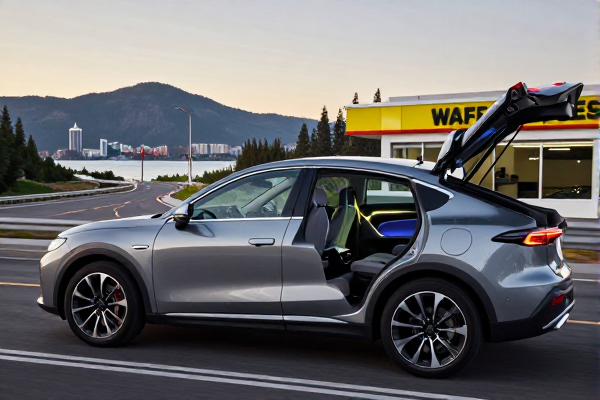
A Waffle House employee in Arkansas died Monday, March 24, 2025, after a car slammed through the front of the restaurant and into the dining area. The driver was arrested at the scene and taken to the county jail. Police have not yet identified the employee, saying family members have not all been notified.
The crash happened in a matter of seconds, but the aftermath will stretch well beyond this week. Investigators are already studying the vehicle’s path, pulling surveillance video from surrounding businesses and asking anyone with dashcam footage to contact them. The restaurant has been temporarily closed while police process the scene and inspectors check the structural damage.
Department officials have not released the driver’s name or the specific charges tied to the booking. A preliminary arrest report could be made public later today, and a court date is expected to follow within the next few days. In the meantime, standard toxicology results are being processed. Those tests are routine after any fatal vehicle crash and will help determine whether alcohol, drugs, fatigue or a medical emergency played a role.
At this stage, authorities are not treating the crash as an intentional act. The evidence points toward an accident, but the legal picture is far from settled. Investigators will use the vehicle’s event data recorder to examine speed, braking and throttle input in the moments before impact. Depending on what that data shows, the driver could face charges ranging from careless driving to negligent homicide. Prosecutors have not commented while the investigation is open.
The death inside a 24-hour diner has also put a spotlight on an overlooked danger: vehicles striking commercial buildings.
Storefront crashes are more common than many people believe. Drivers press the gas instead of the brake, shift into the wrong gear, or suffer a sudden medical emergency while moving through a parking lot. In restaurants, the risk is especially high because buildings are often located just a few feet from parking spaces, with customers and employees sitting or standing directly behind the exterior wall.
Waffle House restaurants fit that pattern. The front door, cash register and first row of booths are often within a car’s length of the parking space. In many older locations, there is no raised curb, no reinforced planter and no steel post between the asphalt and the tables. A glass storefront offers almost no protection against the force of a moving vehicle.
That is why safety experts have pushed for wider use of bollards—short concrete or steel posts designed to absorb and stop an incoming car. Bollards are common around gas pumps, utility boxes and drive-through pharmacies, but they are rarely required around sit-down restaurants. Adding a row of bollards costs far less than the price of a wrongful death lawsuit, a workers’ compensation claim, or a funeral.
This crash could become a turning point for restaurant design. Commercial building codes rarely mention vehicle-into-building impacts, and only a handful of states have moved toward requiring crash barriers in high-risk areas. A fatal storefront crash inside a Waffle House in Arkansas may renew pressure on national chains to retrofit older buildings, not just new ones.
Storefront crash prevention has drawn growing attention from trauma physicians and construction safety specialists in recent years. Studies of building intrusions show that many occur at relatively low speeds, but severe injuries still result because a person becomes pinned between the car and a rigid wall. Unlike a car crash on a highway, there is no crumple zone, no airbag and no escape route when the impact happens inside a restaurant.
Restaurant workers are particularly vulnerable because of where they stand. Waitstaff spend shifts near the counter. Cooks work near open kitchen windows. Cashiers face the parking lot all night long. None of those positions has a safety barrier. In a 24-hour restaurant, the risk is even greater overnight, when there is less traffic to slow a driver down and employees are often cleaning, stocking or resetting tables close to the front entrance.
For the employees working that morning, the crash was a violent interruption of a routine shift. A normal morning of brewing coffee, checking supplies and prepping food turned into a chaotic scene with emergency lights and yellow tape. Officers interviewed the workers who were in the building at the time, a standard step in crash reconstruction but one that adds another layer of trauma.
The victim was on duty when the vehicle struck the building and was pronounced dead at the scene after first responders arrived. The surviving employees have not spoken publicly, and the company has not said when they will be expected back at work. Waffle House, best known for staying open through hurricanes and power outages, is now left with the task of rebuilding both a physical space and a shaken team.
The company has not released a detailed statement beyond confirming that the location is closed and that it is cooperating with investigators. That response is typical in the early hours after a workplace fatality, when legal teams and human resources are still gathering facts. Publicly, the restaurant will remain closed until the building passes inspection and the investigation no longer requires access to the crime scene.
Workplace safety advocates argue that this tragedy should not be treated as a random event. Restaurants, convenience stores and banks have long been built close to parking lots without crash protections, and workers have paid the price. The phrase “predictable surprise” is often used in safety circles: a hazard that was obvious, known and ignored until the worst possible outcome occurred.
If that message gains momentum, Monday’s crash may lead to real changes. Requiring impact-rated bollards at the entrances of new restaurants, updating older franchises and adding simple landscape barriers are all steps that can save lives. None of them brings back the worker who died, but each one can reduce the odds that another family receives that same phone call.
The next few days will bring more details. The victim’s name is expected to be released once relatives are notified. The driver will appear in court, and formal charges will be read on the record. Police will release additional findings from the crash reconstruction as the investigation progresses.
But the broader questions remain open. Why are restaurant employees allowed to stand so close to parking lots with nothing between them and a car? Why is a few thousand dollars in protective barriers treated as optional? Why does a preventable crash have to become a death before safety is revisited?
There is no way to undo what happened Monday. But if this crash changes how restaurants are designed, the employee who died will be more than a line in a police report. That worker will be the reason someone else gets a meal, finishes a shift and walks back to the parking lot safely.
This is a developing story. Authorities are expected to release additional updates later today, including the identity of the employee and the driver’s formal charges. This article will be updated as those details become available.