Browse

Log in / Register
 Share

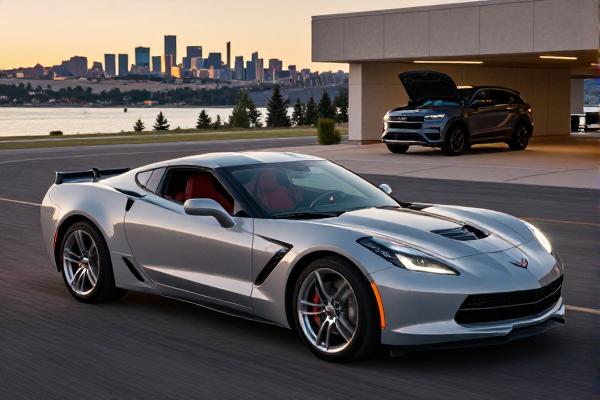
June 27, 2025 — A Phoenix driver's night on Interstate 10 ended with a 20-day wait for his Chevrolet Corvette after an Arizona Highway Patrol trooper clocked him at more than 120 mph in a 65 mph zone. When the driver asked to keep the car because he needed it for work, the trooper's follow-up produced an answer so blunt that DPS decided to share it: "I know it's dumb."
According to the Arizona Department of Public Safety, just after midnight on June 13, a trooper on I-10 near 27th Avenue in Phoenix saw two sports cars pull up next to each other and hold up the traffic behind them. Then, at the same moment, both cars surged forward hard. DPS described it as an exhibition of speed and street racing.
The Corvette's driver later tried to frame it as a quick "pull" with the other car. In street-racing shorthand, a pull is a rolling contest: two cars match speeds side by side, and when both drivers decide to go, they stomp the accelerator at the same time. It sounds casual. On a public freeway, it isn't. Every driver behind the two cars becomes a spectator without signing up for the show.
The trooper followed the Corvette and measured its speed at more than 120 mph — at least 55 mph above the posted 65 mph limit — before hitting the lights.
The trooper had a front-row seat from the moment the pair started moving. Two cars pacing across adjacent lanes is exactly the kind of driving that makes other motorists call 911, and it rarely ends with a friendly wave. This time, the Corvette was the one that got caught.
At some point during the arrest, the driver asked whether he could keep the Corvette, saying he needed it for his job. The trooper asked the obvious question: If the car was essential for work, why was he racing it?
The driver's reply, as DPS recounts it, was "I know it's dumb." No long explanation, no excuse, just four words that likely sounded as true at the roadside as they will in court. The car was ordered into a 20-day impound.
The "I need it for work" argument might work with a boss after a late shift. It doesn't move Arizona's vehicle-removal law. Under Arizona Revised Statutes § 28-3511, an officer who stops a driver for racing or reckless driving must have the vehicle impounded or immobilized if the officer reasonably believes allowing that driver to keep driving would put others in danger. The statute sets the hold at 20 days.
That makes the impound mandatory, not a decision made from the driver's seat. The owner still has to pay towing and storage fees before picking up the car, and those costs are on top of any fine a court later imposes. Some valley impound lots charge enough per day that a 20-day stay can climb into four figures.
The law lets the officer choose impound or immobilization, but towing is usually the route that sticks. Once the car is hauled away, the 20-day clock starts and the driver isn't getting it back early. There is no statutory tool for a trooper to reward a sunrise confession.
DPS listed three charges in its account:
Those are allegations, not convictions. The driver's name wasn't released, and no court file could be matched to the case, so the legal outcome remains open.
Arizona's misdemeanor classes carry different maximum penalties. A class 1 misdemeanor can mean up to six months in jail and a fine well above the mandatory minimum. A class 3 misdemeanor caps at 30 days behind bars. Jail time is unlikely for a first-time speeding case, but the racing charge gives a judge room to make an example of the behavior.
The racing charge also carries a consequence that could affect the driver's daily life even after the car comes home. On a first racing conviction, a judge can suspend the driver's license for up to 90 days. The Corvette could be released from the impound lot on day 20, but the owner may not be allowed to drive it to work anytime soon.
To understand what 120 mph feels like on a city freeway, try the math: a vehicle moving at 120 mph travels about 176 feet per second — longer than a football field, every second. At that speed, a single glance at a phone or a mirror covers dozens of feet. The stretch of I-10 near 27th Avenue is an urban corridor with commercial trucks and late-night commuters, not an empty test track.
DPS's post included two photos: one showing the silver Corvette stopped between two patrol vehicles with emergency lights flashing, and another showing the driver, face blurred, sitting in the back of a cruiser. No body-camera or dashboard-camera footage was included, so the "I know it's dumb" exchange exists only as the agency reported it.
DPS's narrative confirms that two cars accelerated together. But the official account only follows the Corvette. It does not say whether the second car was identified, pulled over, or cited. That silence leaves a question hanging: Where did the other racer go?
Arizona's street-racing statutes are written broadly enough to cover any speed competition on public roads, not just a traditional drag race with a finish line. The "exhibition of speed" language DPS used points to that definition. But if the second driver wasn't found, the public gets only half the story — one car's bad decision and a very quiet driver.
There is no indication in the DPS post whether any other motorists called in complaints during the race, or whether traffic was forced to brake hard before the trooper arrived. If witnesses come forward, their statements could become part of the case. As of now, the agency's account is the only public window.
A "pull" between two cars can last only seconds. The aftermath lasts much longer. In addition to the mandatory impound and potential fines, a conviction for racing or reckless driving can send insurance rates climbing for years. Some insurers treat racing as a high-risk behavior and will nonrenew a policy outright.
The psychology of street racing deserves a moment, too. For many drivers, a "pull" doesn't feel like a race. It feels like a private conversation conducted with throttles — no trophy, no finish line, no spectators. But the law doesn't care about the feel of the moment. It looks at speed, at the road, and at the other drivers who were put at risk.
For a worker who depends on that Corvette to get to the job, the practical consequences are immediate. Twenty days without the car — plus a possible 90-day license suspension — can mean missed shifts, lost income, and a mountain of fees out of pocket. By the time the math is done, the "dumb" line the driver gave at the roadside doesn't just describe the race. It describes the price.
DPS ended its post with a tag that basically told drivers to take their speed contests to a track. The driver in this story reached the same conclusion on his own, one question into his arrest. He just got there about 120 mph too late.
There's a lesson underneath the headline: the car you need on Monday morning is still the car you used to blow past everyone Sunday night. What's the dumbest thing you've watched someone risk their commute car for?