Browse

Log in / Register
 Share

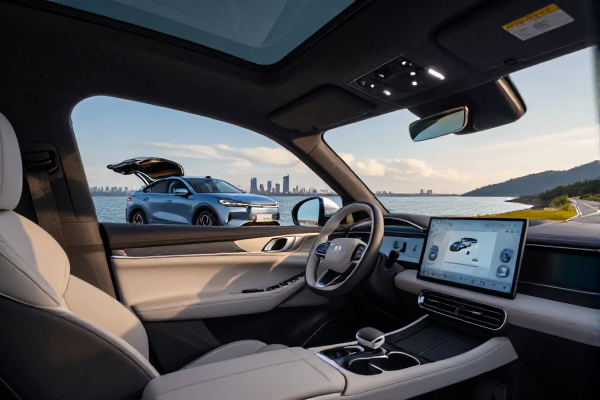
SUVs remain America's default answer for most driving needs. The RAV4, CR-V, Rogue and Model Y dominate sales, but many 2026 buyers want to know which crossover will still feel smart after five or six years. As of May 10, 2026, I've been evaluating this year's compact and subcompact models. Safety scores, reliability data and ownership costs weigh heavily. Three keep rising to the top: Subaru Forester, Honda HR-V and Hyundai Tucson.
To narrow my list, I used a simple screen: a 2026 model with a strong IIHS safety record, above-average dependability and resale scores from J.D. Power, and a starting price below $30,000. That eliminates luxury badges and big three-row SUVs that get expensive fast. It also highlights crossovers that are genuinely built for the long haul.
A quick note on the two benchmarks before we get to the picks. The Toyota RAV4 and Honda CR-V are excellent vehicles, and you're not making a mistake with either. But demand for them remains high, so popular trims often carry dealer markups. If the goal is strictly safety, reliability and value, both can climb too high on the price sheet. The three below deliver similar peace of mind at a lower entry point. They aren't the only good choices on sale in 2026; they're the ones that make the fewest compromises for a typical American household.
Subaru doesn't market the Forester as an image vehicle, and that's fine. It's a boxy, practical compact SUV with one huge advantage: symmetrical all-wheel drive is standard on every trim. At a starting price of $29,995, that's a meaningful value, especially for anyone who deals with snow, gravel roads or winter commutes.
The IIHS gives the 2026 Forester good ratings in crashworthiness, crash avoidance and mitigation, and seat belt and child restraint categories. Under the institute's stricter 2026 testing requirements, those scores carry extra weight. Subaru also ranks above several mainstream volume brands in the latest J.D. Power vehicle dependability study, which matches what I've seen from the press fleet: the 2026 Outback I drove felt tight and solid, and the Forester follows the same formula.
Standard equipment includes brake assist, whiplash-reducing front seats and traction control. The Forester is offered in six trims, including the Wilderness model for off-road-minded buyers. For most families, though, the regular base or Premium trim delivers almost everything they need at a price that won't wreck the budget. Cabin materials aren't flashy, but they're durable, and the controls are refreshingly simple to operate.
If you value a clear view of the road, low maintenance surprises and all-weather confidence, the Forester is the most honest recommendation I can make in this class.
The HR-V is easy to overlook because it sits below the CR-V in Honda's lineup. That would be a mistake. It shares its platform with the Civic, which means it inherits the car's agile handling and reputation for modest repair costs. For 2026, it's also an IIHS Top Safety Pick+, one of the highest safety honors available.
The base HR-V starts at $26,600, making it the cheapest model on this list. Three trims are available, and even the range-topping EX-L starts at only $30,450. That keeps payments reasonable for younger buyers, commuters and small families who don't need a third row.
Every HR-V includes Honda Sensing, the automaker's standard suite of active safety tech. That includes collision mitigation braking, lane keeping assist and road departure mitigation. J.D. Power gives the HR-V above-average predicted reliability and resale value, a combination that makes it a low-risk purchase in a segment full of me-too crossovers. It won't win any races, but the accelerator is responsive around town and the CVT behaves well.
What the HR-V sacrifices is adult-friendly rear seat space and a taller view, both of which go to the CR-V. But if the priority is an efficient, safe subcompact with a small footprint and a brand you can trust, the HR-V earns serious consideration.
Hyundai's Tucson has been a strong compact-SUV contender for years, and the 2026 model continues that run. It starts at $29,700 and comes in six trims, so there's a configuration for nearly every budget. The Tucson also holds an IIHS Top Safety Pick+ award for 2026, putting it in the same safety conversation as more expensive rivals.
What separates the Tucson from the crowd is how much standard equipment Hyundai packs in. Forward collision-avoidance assist, blind-spot collision warning and rear cross-traffic collision-avoidance assist all come standard. In many competing SUVs, those features are optional or bundled into expensive packages.
J.D. Power's quality and reliability scores for the Tucson are solid, and its resale value rating is strong. There's also the Hyundai warranty: a 10-year/100,000-mile powertrain plan that remains one of the best ownership safety nets in the industry. That alone can offset a higher insurance quote or the occasional infotainment learning curve. The interior also feels larger than the exterior suggests, with a high seating position and easy sightlines.
The Tucson is a smart pick for families who want a roomy, tech-forward compact SUV without stepping up to a luxury badge. It drives nicely, parks easily and should still have plenty of life left when the loan is paid off.
Each of these 2026 SUVs checks the same core boxes, but the right choice depends on your life.
For all-weather capability and long-distance comfort, the Subaru Forester is my default. Standard all-wheel drive and Subaru's dependability record make it a five-year, 100,000-mile vehicle without much anxiety. For the tightest budget and the easiest urban lifestyle, the Honda HR-V wins on price and practicality. And for the strongest warranty, plus the most generous feature list at the base price, the Hyundai Tucson is the value champion.
All prices above are MSRP before destination charges, and dealer markups can change the math. Before buying any of them, get an insurance quote and compare out-the-door prices. Safety ratings and reliability studies are useful guides, but your wallet will appreciate a few extra minutes of homework.
The 2026 SUV market is crowded. But when safety, reliability and value are the three numbers on the board, the Forester, HR-V and Tucson are the crossovers I'd write a check for today.