Browse

Log in / Register
 Share

As of August 15, 2026 — The 2027 Toyota 4Runner is expected to roll into dealerships this fall as a carryover model of the sixth‑generation SUV introduced for 2025. No major mechanical or design changes are anticipated, but shoppers can still look forward to the same rugged body‑on‑frame platform, a standard turbocharged four‑cylinder, and the option of a hybrid powertrain. Pricing is predicted to rise modestly by 1–3%, consistent with Toyota’s typical annual adjustments. Here’s everything we know so far about the upcoming 2027 4Runner.
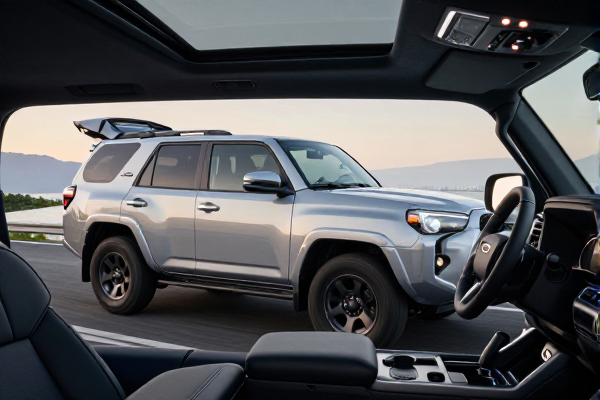
The 2027 Toyota 4Runner will retain the bold styling that debuted with the 2025 model. Key exterior features include narrow triangular headlights, a rectangular grille, and a chunky front bumper with prominent air intakes. The side profile continues with oversized fender flares, roof rails, and black door handles, while the rear end gets a spoiler, small circular taillights, and an upright liftgate. Toyota has not hinted at any new color options or trim‑specific decals for 2027, but some dealers privately expect a limited‑run “Trail” edition with exclusive badging — similar to the TRD Pro treatment seen on other Toyota trucks.
No cabin updates are planned for the 2027 model year. The 4Runner’s interior design differs noticeably by trim: base models offer a compact 8‑inch touchscreen, a flat dashboard, chunky air vents, and large physical controls on the center console. Higher trims upgrade to a larger 12.3‑inch display, plusher upholstery, and additional soft‑touch surfaces. All trims will feature a 7‑inch digital instrument cluster, wireless Apple CarPlay and Android Auto, eight speakers, Bluetooth, and multiple USB ports. Voice recognition remains standard as well.
One notable gap is the absence of a heads‑up display, which some rivals like the Jeep Grand Cherokee offer in upper trims. If Toyota decides to add it for 2027, it would be a mid‑cycle enhancement — but no official confirmation exists yet.
Under the hood, the 2027 4Runner will continue with the turbocharged 2.4‑liter four‑cylinder engine producing 278 horsepower and 326 lb‑ft of torque. The sole transmission is an eight‑speed automatic, and rear‑wheel drive is standard. Four‑wheel drive remains available across most trims. Fuel economy figures have not been updated; the current non‑hybrid model returns an EPA‑estimated 21 mpg city / 25 mpg highway (RWD).
The hybrid variant — sold as the 4Runner Hybrid — is covered separately. It pairs the 2.4L turbo with an electric motor for a combined 326 horsepower and 465 lb‑ft of torque. Toyota’s i‑Force Max system delivers improved low‑end grunt and slightly better fuel economy, making it ideal for off‑road use and towing (up to 6,000 lbs with the hybrid). For 2027, no changes to the hybrid drivetrain are expected.
The 2027 4Runner will come equipped with Toyota Safety Sense 3.0 as standard. This suite includes:
Compared to segment rivals, the 4Runner’s safety tech is comprehensive but lacks automated lane‑changing capability that some competitors (e.g., Ford BlueCruise) offer. Still, for a body‑on‑frame SUV, the standard safety kit is competitive.
Official pricing for the 2027 Toyota 4Runner has not been announced, but based on Toyota’s historical pattern, we anticipate a modest increase of 1% to 3%. The current 2026 model starts at $43,065 (including destination). Applying that range, the 2027 4Runner base price could land between $43,500 and $44,360. Higher trims such as the TRD Off‑Road and Limited will see proportional bumps.
For context, the key midsize SUV competitors include:
The 4Runner remains the only traditional body‑on‑frame SUV in this group, which justifies its premium pricing for off‑road capability and long‑term durability.
The 2027 Toyota 4Runner is scheduled to arrive at U.S. dealerships this fall, following the typical September–November launch window of previous model years. Toyota has not yet announced an official on‑sale date, but ordering banks are likely to open in early September 2026. More detailed information — including final pricing, fuel economy ratings, and any last‑minute changes — should surface in the coming weeks.
While the 2027 4Runner largely mirrors the 2026 model, industry insiders suggest Toyota may quietly add a wireless charging pad to all trims (currently limited to higher grades) and possibly introduce a new “Lunar Rock” exterior color. If confirmed, these would be minor but welcome updates. For buyers who missed the 2025–2026 models, the 2027 4Runner remains an excellent choice for a rugged, capable, and reliable midsize SUV — especially in hybrid form.
Stay tuned for official updates as Toyota releases them. We will update this preview with confirmed specifications and pricing as soon as they become available.
Pictured: 2026 Toyota 4Runner (2027 model expected to look identical)