Browse

Log in / Register
 Share


The 2027 Range Rover Sport Electric is Land Rover’s first battery-electric version of its sporty SUV, pitched directly against the BMW iX5, Polestar 3, and Porsche Cayenne Electric. It keeps the standard Sport’s confident, boxy styling while swapping the engine for a dual-motor setup with up to 550 hp. We drove a prototype around Land Rover’s Gaydon proving grounds in the U.K. and came away with a clear picture of how it will feel on U.S. roads. Here is our full review as of May 9, 2026.
What we like:
What we’re not sure about:
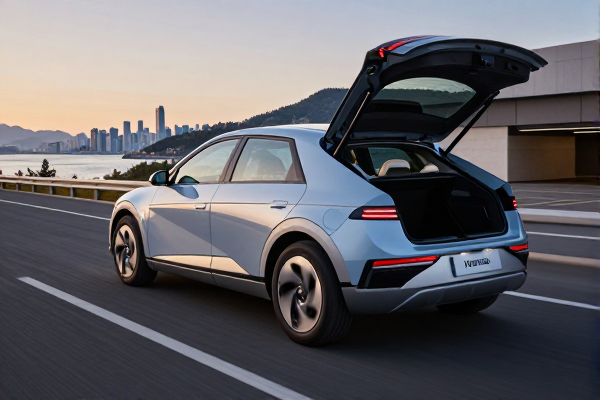
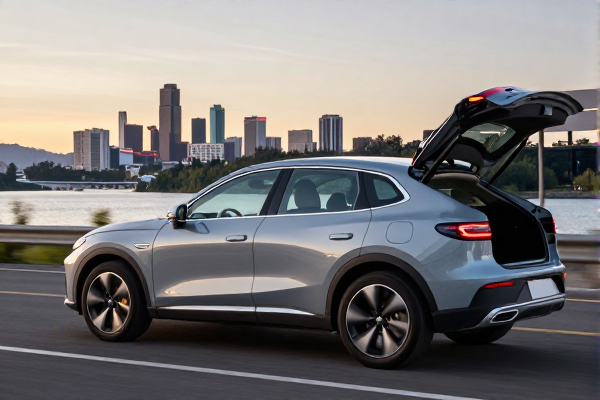
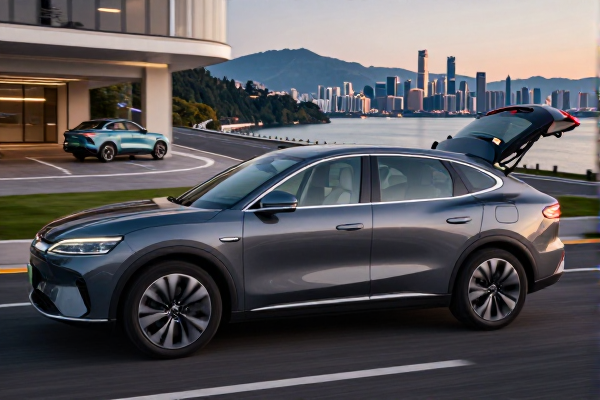
If you want an electric SUV that doesn’t scream about it, the Range Rover Sport Electric will be right up your alley. You have to look closely to tell it apart from the regular gasoline, hybrid, and diesel models, and that is a deliberate move. The exterior design was first shown in 2022, and the clean, almost minimal look has aged well.
The key clues are small. The 22-inch optional wheels can be ordered with “EV” center caps, or you can pick the newer double-R logo instead. The traditional Land Rover grille outline is still there, but the opening is smaller than on combustion versions. Slim LED headlights, flush door handles, and a high beltline give the SUV a chunky, monolithic stance. At the back, the thin light bar runs across the liftgate, with the Range Rover wordmark sitting on a gloss-black band. And, of course, there are no exhaust pipes.
A contrasting roof color can visually lower the roofline and change the whole personality of the car. Paint options run from regular hues to SV Bespoke Ultra Metallic and Satin finishes. The First Edition comes in Zadar Grey with Satin Wrap, or you can choose Gloss Varesine Blue or Santorini Black. Truly unique builds can even use Range Rover’s Match-to-Sample service on Autobiography versions.
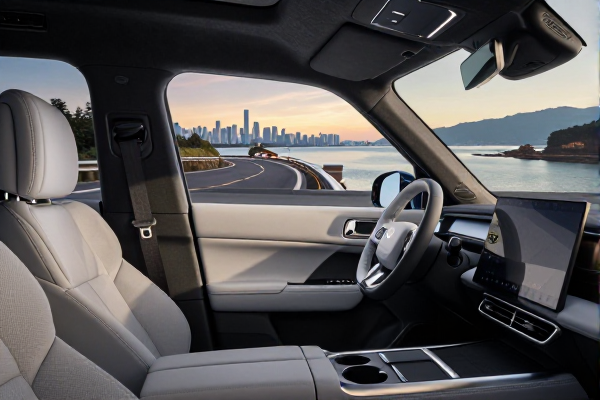
Step inside, and the quality is immediately apparent. The dashboard is clean and uncluttered, with a sweeping design that doesn’t try too hard. You can spec Windsor leather, soft semi-aniline leather, or if you’d rather skip animal products, there are lightweight technical textiles from Ultrafabrics in Duo Tone Light Cloud/Ebony or Ebony.
Getting comfortable is easy. The driver’s seat offers up to 22-way electrical adjustment with heating, cooling, and massage functions. The steering wheel is perfectly round — a rarity these days — and it feels nice in hand, with heating and electric adjustment for reach and rake. You sit 20 mm lower than in the larger Range Rover, but you still get a commanding view of the road. Large mirrors help, and the 360-degree camera makes parking this big SUV surprisingly painless.
Land Rover’s Pivi Pro infotainment system is displayed on a 13.1-inch curved touchscreen that sits slightly proud of the dashboard, so it looks like it’s floating. Behind the wheel, there’s a 13.7-inch digital driver display that keeps things simple without overloaded graphics.
The curved screen has sidebars for climate and volume controls, which are not as easy to use as physical knobs but are within reach of the steering wheel. Land Rover says up to 80% of common tasks can be done within two taps of the main screen. There’s also a voice assistant built on a large language model with ChatGPT integration, so you can talk to the car in a more natural, conversational way.
Wireless Apple CarPlay and Android Auto come standard, along with Bluetooth and a 15-watt wireless charging pad. There are plenty of USB-C ports through the cabin. If you want fresh air on long trips, the optional cabin air-filtration system uses PM2.5 filtration and nanoe X technology to remove bacteria, allergens, and odors. It also monitors carbon dioxide levels and can introduce outside air to keep the driver more alert.
The electric powertrain does not ruin the Sport’s practicality. There are cupholders in the center console, a deep storage bin under the armrest, and enough general space for daily gear.
The second row is genuinely roomy, despite the sloping roofline. Stadium-style rear seats sit 11 mm higher than the front chairs, giving passengers a better view out and improving knee room. The outer seats are sculpted like the fronts, which means this is really a four-seat SUV most of the time. Those side seats can be heated and ventilated, and they recline electrically. The middle seat is firmer and more of a compromise, as is common in this segment.
Outer rear seats have ISOFIX anchors for child seats. A booster seat might work in the middle position, but you should test it before committing to that setup.
The powered liftgate opens to a useful, square load area. With the rear seats up, you have 789 liters (about 27.9 cubic feet) of space up to the load cover. Fold those seats, and that jumps to 1,814 liters (64 cubic feet). If you stack items all the way to the roof, you get 835 liters (29.5 cubic feet) behind the second row and 1,860 liters (65.7 cubic feet) with the seats down.
The Range Rover Sport Electric can tow up to roughly 1,650 pounds with an unbraked trailer and 5,512 pounds with a braked trailer. That's less than the diesel version, but still enough for a small boat, camper, or car trailer. The brand also includes useful software to make hitching and parking a trailer easier.
The Range Rover Sport was crash-tested by Euro NCAP in 2022 and earned five stars. It scored 85% for adult occupant protection, 85% for child occupant protection, 69% for vulnerable road users, and 82% for safety-assist systems. The Electric version is built on the same structure, so those results should carry over.
The Sport Electric is offered with two power levels. Both use the same battery and a dual-motor all-wheel-drive system that can shift torque between wheels for better traction. Output starts at 450 hp and tops out at 550 hp, with peak torque of 850 Nm (about 627 lb-ft) on both versions.
That power figures to make the 550 hp model seriously quick, though Land Rover hasn't announced a 0-60 mph time yet. What we can say after driving it on bumpy U.K. roads is that the Sport Electric moves with enormous ease. The ride is firm — that’s intentional. It keeps the Sport character separate from the full-fat Range Rover. Low-speed impacts can send a noticeable jolt through the cabin, and the big wheels add to that stiffness. Even so, the lack of engine noise and gear changes makes progress feel even more refined than the gas versions.
The all-wheel-drive system and air suspension help off-road capability remain strong, and the instant torque delivery should make trail driving impressively controlled. For most owners, this will be more capable off-road than they’ll ever need.
The big question for U.S. buyers is whether the all-electric version makes more sense than the plug-in hybrid. On paper, the EV wins on smoothness, silence, and that immediate power delivery. But it costs more, and its towing limit is lower. If you regularly pull a large trailer, the diesel or PHEV might still be the smarter call.
Range remains the one area we’re watching. Land Rover hasn’t shared final U.S.-market EPA figures, so it's not yet clear how how the Sport Electric will stack up against the BMW iX5 or Polestar 3 on highway range. If the real-world efficiency matches the effortless driving feel, this could be the most convincing luxury electric SUV yet.
As with the rest of the range, the Sport Electric looks great, does almost nothing to limit passenger space, and gives you a high-end cabin with serious tech. It's expensive, but it delivers a special blend of excitement, comfort, and Land Rover capability.